There are very few things in this world that genuinely leave you speechless. The Northern Lights is one of them. You can watch a hundred videos, scroll through thousands of Instagram photos, and still, nothing prepares you for the moment you actually look up and see that green ribbon twisting across a dark sky. It does not feel real. Then a few seconds later it does, and you realize this is why people fly across the planet for a single night of clear weather.
The Northern Lights, or Aurora Borealis, is a natural light display caused by charged solar particles colliding with Earth’s atmosphere. That is the science part. The experience part is something else entirely. But here is the honest truth nobody really tells you: the Northern Lights are not guaranteed. They depend on solar activity, clear skies, and a little bit of luck. Going with the right expectations matters a lot. Go during peak season, pick a good location, and get away from city lights. Beyond that, you are in nature’s hands.
Here are the best places in the world to chase the Northern Lights — and what you actually need to know before you go.
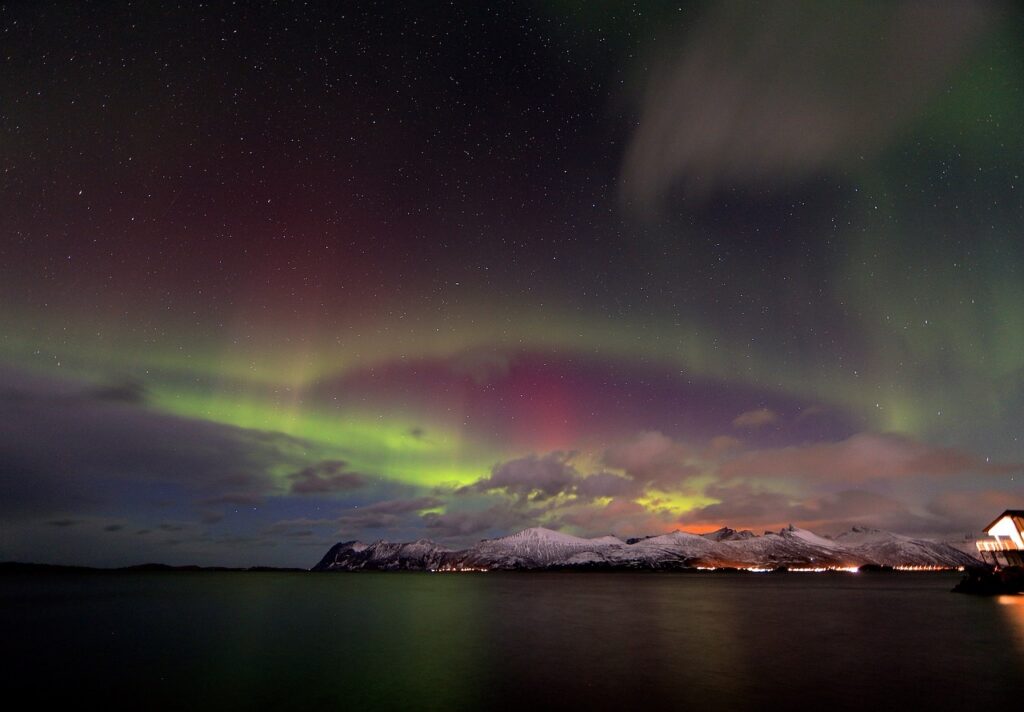
Tromsø, Norway
Tromsø is probably the most well-known Northern Lights destination on the planet, and for good reason. This city sits well above the Arctic Circle, right in the middle of the auroral oval — which is basically the sweet spot where Northern Lights activity is highest. The hunting season here runs from late September to late March, with January and February being the darkest and most reliable months.
What makes Tromsø special is that it has real city infrastructure around it. You are not roughing it in a remote cabin unless you want to. There are guided Northern Lights tours every evening during the season, where operators drive you out of the city lights and chase clear skies in real time. These tours are worth the money, especially on your first visit. They know the weather patterns and they move fast when the forecast changes.
During the day, Tromsø keeps you busy. The Arctic Cathedral, whale watching in Skjervøy, cable car rides, and dog sledding are all within reach. So even if one night is cloudy, you have plenty to fill your time.
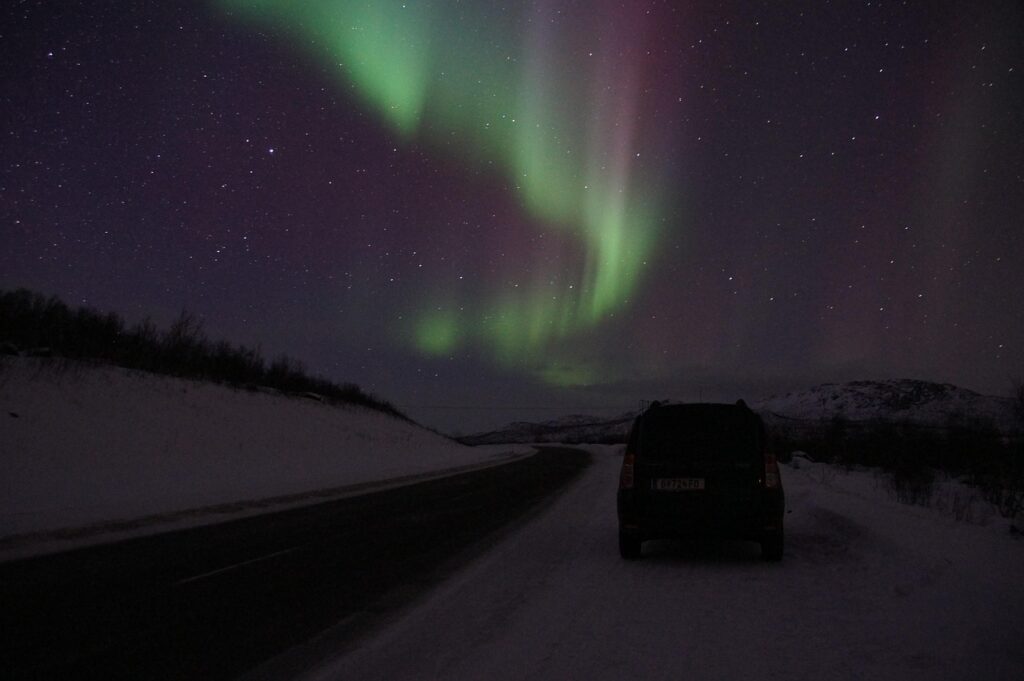
Abisko, Sweden
Abisko is a small village in northern Sweden that has a bit of a secret weapon — a microclimate. Due to its location near a lake and surrounded by mountains, Abisko gets significantly clearer skies than most places in Scandinavia. It is not just a claim either. Scientists have confirmed it. The Aurora Sky Station, which sits on top of Mount Nuolja accessed by a chairlift, operates specifically because of this micro-clear zone.
This is not a city. Abisko is tiny and remote. The main accommodation is the STF Abisko Tourist Station, a comfortable hostel and hotel setup right next to the national park. Getting here requires a train from Kiruna or a long train ride from Stockholm, but the journey through snow-covered forests is its own kind of beautiful.
If you want to maximize your chances of seeing the Northern Lights without city light pollution and without burning through too much of your budget, Abisko is arguably the smartest choice in all of Scandinavia.
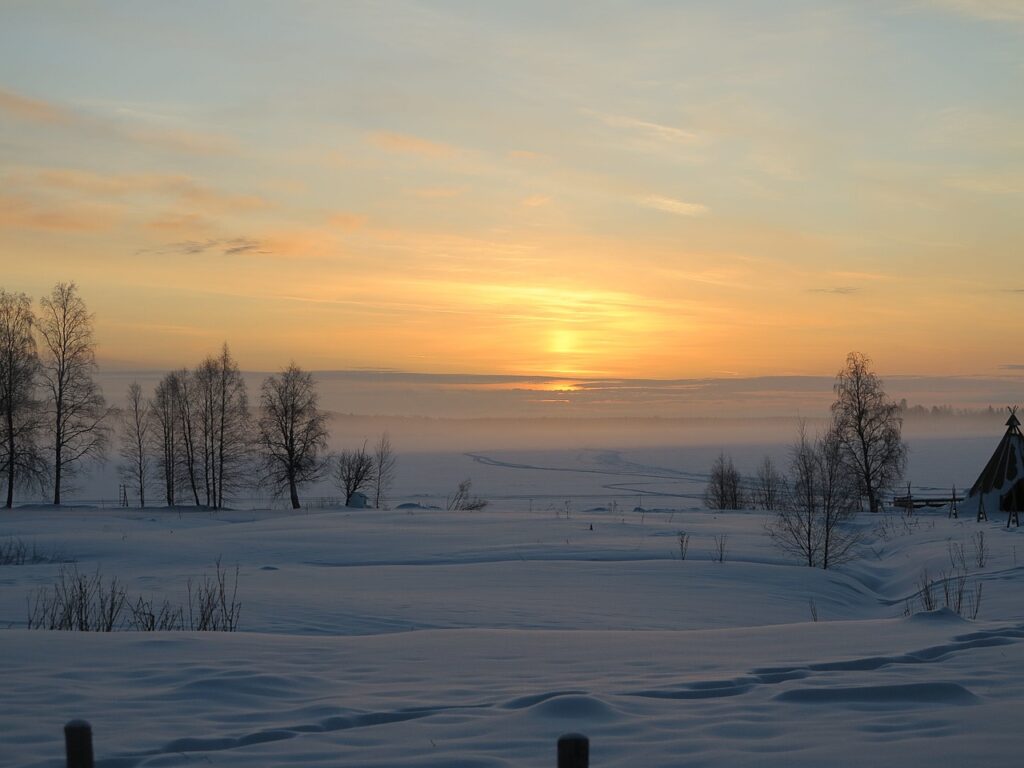
Rovaniemi, Finland
Rovaniemi is the official hometown of Santa Claus, which sounds gimmicky until you actually arrive in December and realize the whole place has a genuinely magical atmosphere. It is the capital of Finnish Lapland, sitting right on the Arctic Circle, and it is one of the most accessible Northern Lights destinations in Europe.
The aurora season in Rovaniemi runs from September to April. Yes, August is possible, but you need a dark sky and Rovaniemi still has brief nights in late summer. The best window is November to March when nights are long and dark enough for a proper show.
What sets Rovaniemi apart for a lot of travelers is the combination of activities. Reindeer safaris, snowmobile tours, ice fishing, and glass igloo stays are all available here. Those glass igloo accommodations are not cheap — and prices climb significantly during peak aurora season. Lying on your back watching the Northern Lights from inside a warm igloo is the kind of experience that is hard to put a price on.
For budget travelers, the glass igloos are obviously not the move. Grab a regular hotel or hostel, download a Northern Lights alert app like Space Weather Live, and head out to the outskirts of the city when the KP index hits above 3.
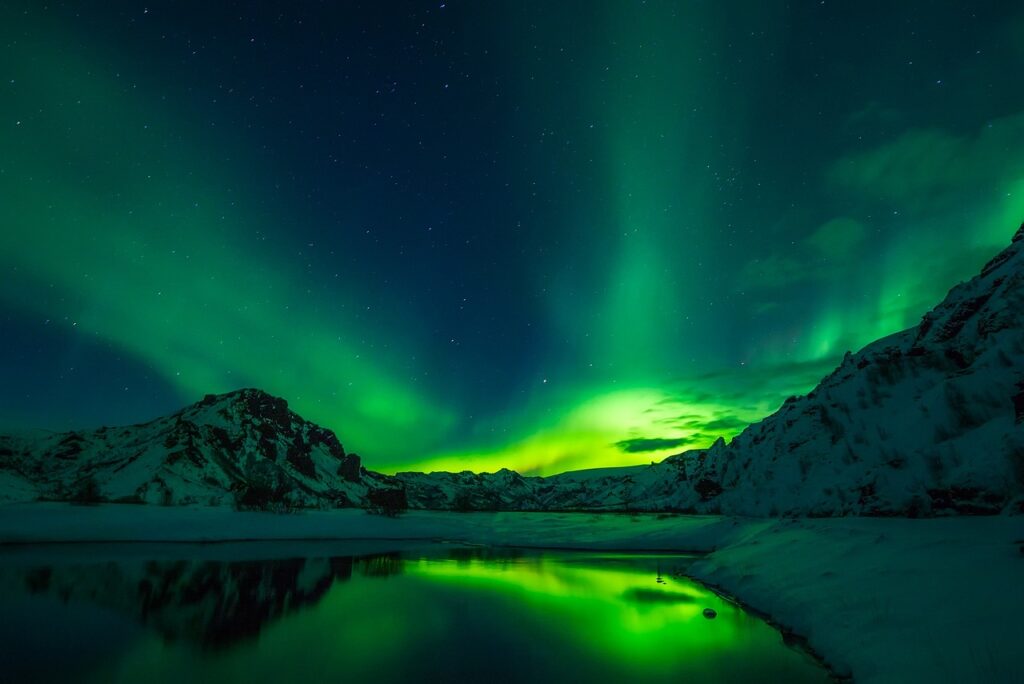
Iceland — Beyond Reykjavik
Reykjavik is a great base, but the city lights will work against you. The real game in Iceland is to get out. Rent a car and drive. The Ring Road gives you access to some of the darkest skies and most dramatic landscapes on earth — black lava fields, waterfalls, glacier lagoons, and fjords. Seeing the Northern Lights reflected in the water at Jökulsárlón Glacier Lagoon is one of those images that stays with you.
Iceland’s aurora season runs from September to March. The shoulder months of September–October and February–March often have more balanced weather compared to deep winter. That said, Icelandic weather changes constantly. It can be clear, then cloudy, then clear again within an hour. Locals will tell you to just wait it out.
One thing to be honest about with Iceland: it is expensive. Accommodation, food, rental cars, fuel — it all adds up quickly, and Iceland is consistently one of the priciest destinations in Europe. On top of that, Iceland introduced a new per-kilometre road tax in 2026, so factor that into your car rental costs. But what you get in return is an entire country that feels built for Northern Lights viewing, no matter which direction you drive.
Fairbanks, Alaska, USA
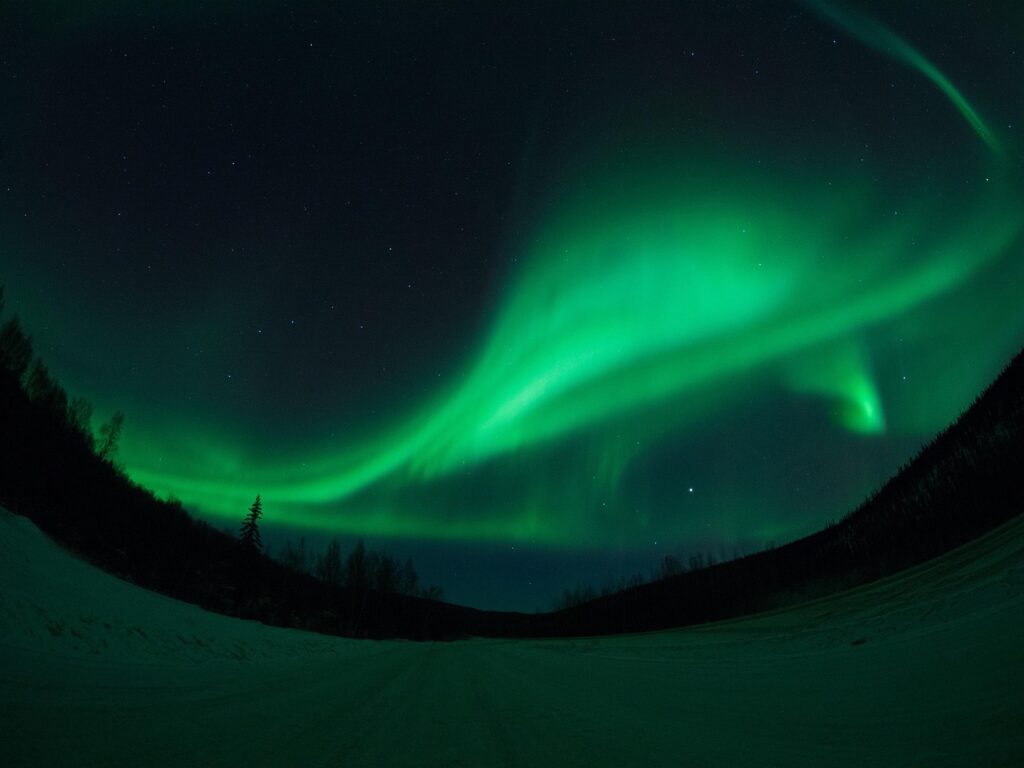
If you want to see the Northern Lights without leaving North America, Fairbanks is your answer. It sits directly under the auroral oval, which makes it one of the statistically best places on earth for aurora sightings. On a clear night with decent solar activity, the display here can be intense — not just a thin green band, but full curtains of light moving across the whole sky.
The season in Fairbanks runs from August to April, with the equinox periods in September and March often producing stronger solar activity. Chena Hot Springs Resort, about 60 miles from Fairbanks, is a favourite base for many visitors. Soaking in an outdoor hot spring while the Northern Lights dance above your head is exactly as good as it sounds.
Fairbanks is more affordable than Norway or Iceland if you are flying from within the US. Getting there internationally still requires a connection through Seattle or Anchorage, so factor in travel time and layovers when planning.
Yukon, Canada
The Yukon does not get nearly as much hype as Iceland or Norway in Northern Lights circles, which is a shame because it genuinely delivers. Whitehorse, the territory’s capital, sits under the auroral oval and gets dark winters with reliably cold, clear nights. Cold is the key word here — winter temperatures can drop to -30°C, so packing properly is not optional.
What makes the Yukon feel different from European destinations is the rawness of it. There are fewer tourists, fewer organized tours competing for your attention, and more of a sense that you are genuinely in the wilderness. You can drive a short distance from Whitehorse and pull over on the side of a completely empty highway under a billion stars and just wait. No crowds. No tour group chatter. Just silence and, hopefully, lights.
The best time to visit is January to March for peak darkness and clear skies. Many local tour operators offer small-group snowmobile trips and overnight wilderness camps specifically for aurora hunting.
Lofoten Islands, Norway
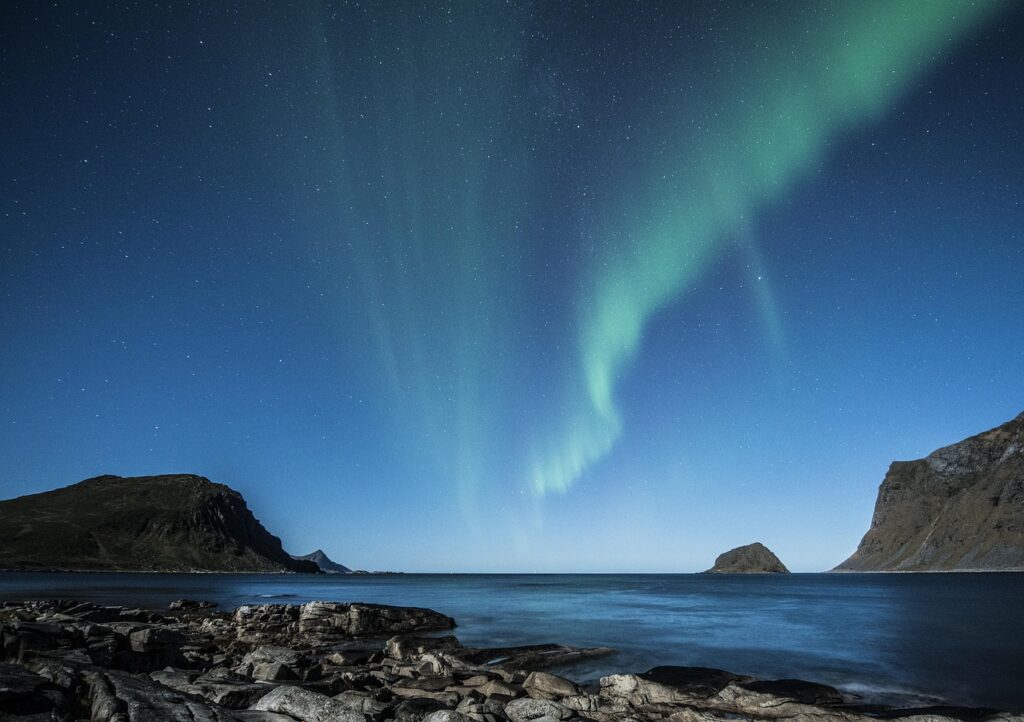
Most people think of Tromsø when they think of Norway and the Northern Lights. Fewer think of the Lofoten Islands, which honestly makes this one more interesting. This dramatic archipelago of jagged peaks, fishing villages, and dark fjords offers some of the most photogenic Northern Lights backdrops anywhere on earth. If you care about the scenery almost as much as the lights themselves, Lofoten is where you want to be.
The season here runs from late September to March. The tiny village of Reine consistently shows up in Northern Lights photography for obvious reasons — the combination of the mountain silhouettes and the reflections in the water is incredible. Staying in a traditional rorbuer (a red fisherman’s cabin) while hoping for a clear night adds to the whole atmosphere in a way that a hotel just cannot replicate.
Getting to Lofoten requires flying into Bodø or Svolvær, or taking the scenic coastal ferry. Plan at least 3–4 days here to give yourself multiple chances at a clear night.
A Few Things Worth Knowing Before You Go
KP Index is your best friend. The KP index measures geomagnetic activity on a scale of 0 to 9. Anything above 3 in a dark location gives you a real chance of seeing the lights. Apps like Space Weather Live or My Aurora Forecast send alerts straight to your phone.
Get away from city lights. Even the brightest aurora display can be washed out by light pollution. Driving just 20–30 minutes outside any city makes a significant difference.
Give your eyes time to adjust. It takes about 20 minutes for your eyes to fully adapt to the dark. Do not stare at your phone screen and then expect to see a faint aurora immediately after.
The lights are often stronger than they look to the naked eye. A camera sensor picks up far more green than your eye does in real time. Do not be disappointed if what you see looks softer or whiter than in photos. That is completely normal.
Have a backup plan. Chasing Northern Lights means accepting uncertainty. Pick destinations with other things going on so a cloudy night does not ruin the whole trip.
The Northern Lights have been on people’s bucket lists for generations. Once you see them properly for the first time, you will completely understand why. Go prepared, go patient, and go with an open mind. The sky will handle the rest.