Japan is one of the most rewarding countries to backpack — but it’s also one that trips people up on budget. Is it expensive? Compared to Southeast Asia, yes. Compared to Western Europe or Australia, not really. The honest answer is that Japan in 2026 is more affordable than it’s been in years, largely because the yen has stayed weak against the dollar, euro, and pound. This guide gives you real 2026 costs, a practical 10-day route, and the specific tips you need to keep your daily spend in check without cutting corners on what matters.
Is Japan Affordable for Backpackers?
Short answer: yes, if you go in with realistic expectations.
The backpacking japan cost sweet spot in 2026 sits between $65–100 USD per day for a comfortable budget — covering a hostel or capsule hotel, three meals, local transport, and a couple of paid attractions. That’s not rock-bottom Southeast Asia pricing, but it’s genuinely manageable.
Under $55/day is doable if you’re disciplined — eating mostly convenience store meals and overnight buses instead of shinkansen, staying in the cheapest dorm beds, and skipping paid attractions where possible. Most people find that level a bit exhausting to maintain, though.
The big unlock in 2026 is the exchange rate. The yen has been weak for several years running. At around 150–155 yen per dollar (rates fluctuate — check before you go), Japan feels meaningfully cheaper than it did in the early 2010s when the yen was much stronger. What costs ¥1,000 at a restaurant? That’s about $6.50–$7. A convenience store meal for ¥600? Under $4.
Japan is also cheap in ways that surprise people: food quality is high even at the lowest price points, public transport runs like clockwork so you’re not paying for taxis, and many of the country’s most iconic experiences — shrine visits, wandering markets, hiking, cycling through Arashiyama — cost nothing or close to it.
Japan Backpacking Budget Breakdown (2026)
Here’s an honest, category-by-category breakdown of what you can expect to spend.
| Category | Budget Range (USD/day) | Tips |
|---|---|---|
| Accommodation | $20–45 | Capsule hotels and hostels are the go-to. Prices spike during cherry blossom and autumn peak season — book early. |
| Food | $12–25 | Convenience store meals ($3–6 each) are legitimately good. A sit-down ramen lunch runs $7–12. Set lunch menus at restaurants are usually $8–15 and excellent value. |
| Transport | $8–20 | Day-to-day travel within cities is cheap with an IC card (Suica/Pasmo). Budget spikes on shinkansen days — plan those separately. |
| Activities & Entry Fees | $5–20 | Most temples charge $3–6 entry. Major museums are $10–20. Lots of free options: shrine grounds, neighborhoods, parks, markets. |
| Miscellaneous | $5–10 | SIM/eSIM, the odd café, laundry, souvenirs. |
| Total (comfortable) | $65–100 | Realistic for most backpackers |
| Total (tight budget) | $45–60 | Possible with effort — convenience store food, overnight buses, dorm beds |
JR Pass — Is It Worth It in 2026?
This comes up in every Japan travel thread, and the answer isn’t a simple yes or no.
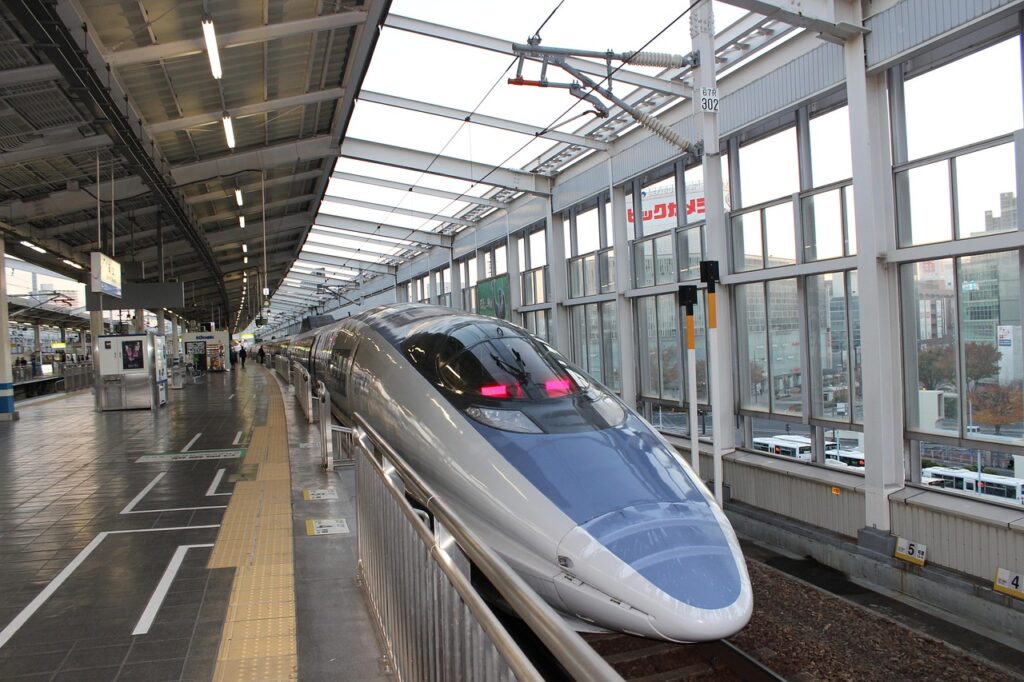
The Classic Tokyo–Osaka Route? Probably Not.
The JR Pass 7-day pass currently costs ¥50,000 (~$330 USD) following the October 2023 price increase (prices adjust slightly with yen rate — check the official site before buying). A one-way shinkansen ticket from Tokyo to Kyoto (Hikari train) runs approximately $90–95. Tokyo to Osaka is slightly more.
If your trip is basically Tokyo → Kyoto → Osaka and back, you’re looking at roughly $190–200 in shinkansen tickets if you buy individually — which is meaningfully less than the $330 JR Pass. Add one or two short regional trips and you might come closer, but you almost certainly won’t break even on a simple Tokyo–Osaka loop.
For Longer Routes? Yes, Absolutely.
If your itinerary includes Hiroshima, Hokkaido, or Kyushu, the JR Pass makes more sense. A shinkansen round trip from Tokyo to Hiroshima alone is around $250 (each one-way ticket is approximately ¥18,910/~$126), which already approaches the pass price. Add more legs and it pays for itself.
The 14-Day Pass for Japan’s Best Value
The 14-day JR Pass (¥80,000, around $530 USD) is the sweet spot for longer trips covering multiple regions. If you’re doing 2+ weeks with big inter-city moves, run the numbers on your specific route at Hyperdia or Japan Travel before buying.
One important note: you must buy the JR Pass before you arrive in Japan (or at a handful of authorized sellers at major airports, though the line is often long). Don’t wait until you land.
Suggested 10-Day Japan Backpacking Itinerary
This is the classic route — popular for good reason. It connects Japan’s major cities efficiently and gives you a genuine feel for the country without burning out.
Days 1–3: Tokyo
Getting there: Most international arrivals land at Narita (NRT) or Haneda (HND). Narita to central Tokyo by Narita Express (N’EX) runs about $20–21 (¥3,070–3,140). The Keisei Skyliner to Ueno is slightly cheaper at around $15. Haneda is closer and cheaper to reach — around $10–15 by train.
Where to stay: Shinjuku and Asakusa are the best neighborhoods for budget travelers. Shinjuku puts you near transport connections and nightlife. Asakusa has a more traditional feel and slightly cheaper accommodation.
Budget accommodation: Expect to pay $25–40/night for a decent capsule hotel or hostel dorm bed.
What to do:
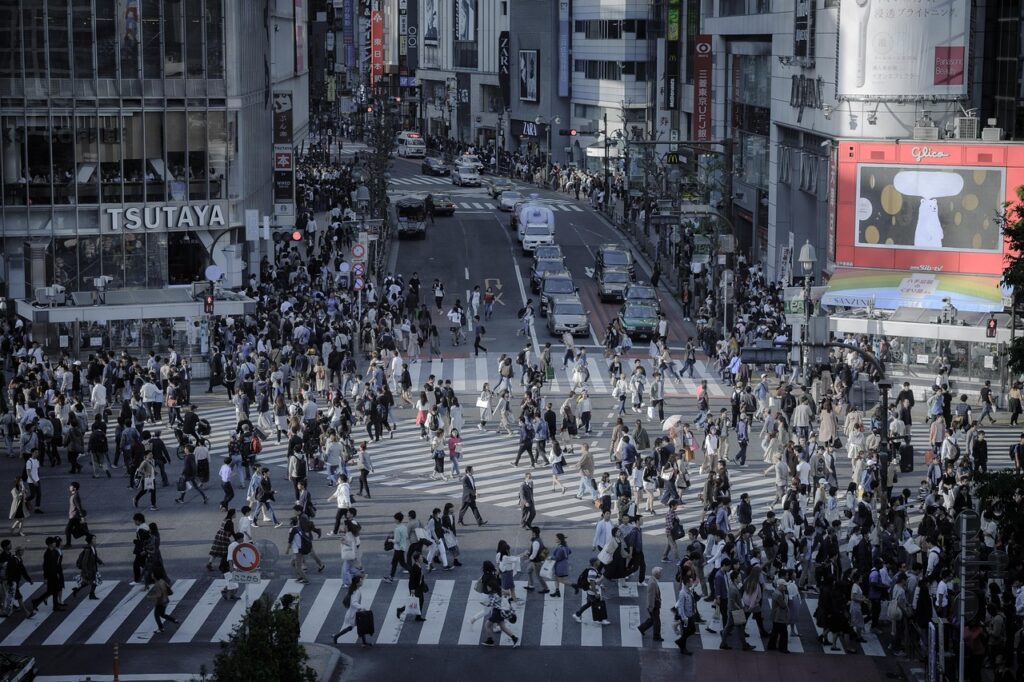
- Shinjuku and Shibuya for the full urban sensory overload. Shibuya Crossing is free and hits different at night. The Shinjuku Golden Gai bar district is tiny, packed, and worth an evening.
- Harajuku and Meiji Shrine — the shrine is free and genuinely peaceful. Takeshita Street is right there if you want to see the fashion scene.
- Asakusa and Senso-ji Temple — free to enter, best visited early morning before tour groups arrive.
- Akihabara if electronics/gaming culture interests you. Don’t try to do all of it in one day — Tokyo is massive. Pick 3–4 neighborhoods per day max.
Best cheap eats: Ichiran ramen for a solo-diner experience (~$10), convenience store onigiri and sandwiches ($3–5), Yoshinoya or Matsuya gyudon chains for a filling meal under $5.
Days 4–5: Kyoto
Getting there: Shinkansen (Hikari) from Tokyo to Kyoto takes about 2 hours 40 minutes (the faster Nozomi does it in 2h15m but isn’t covered by the JR Pass), costs approximately $90–95. Budget alternative: overnight highway bus from Shinjuku to Kyoto (~$30–45 on Willer Express), leaving around 11pm and arriving around 6:30am — saves a night’s accommodation too.
Where to stay: Kyoto Station area is convenient. Higashiyama district puts you close to the old city and temples but can be pricier. Budget: $25–40/night.
What to do:
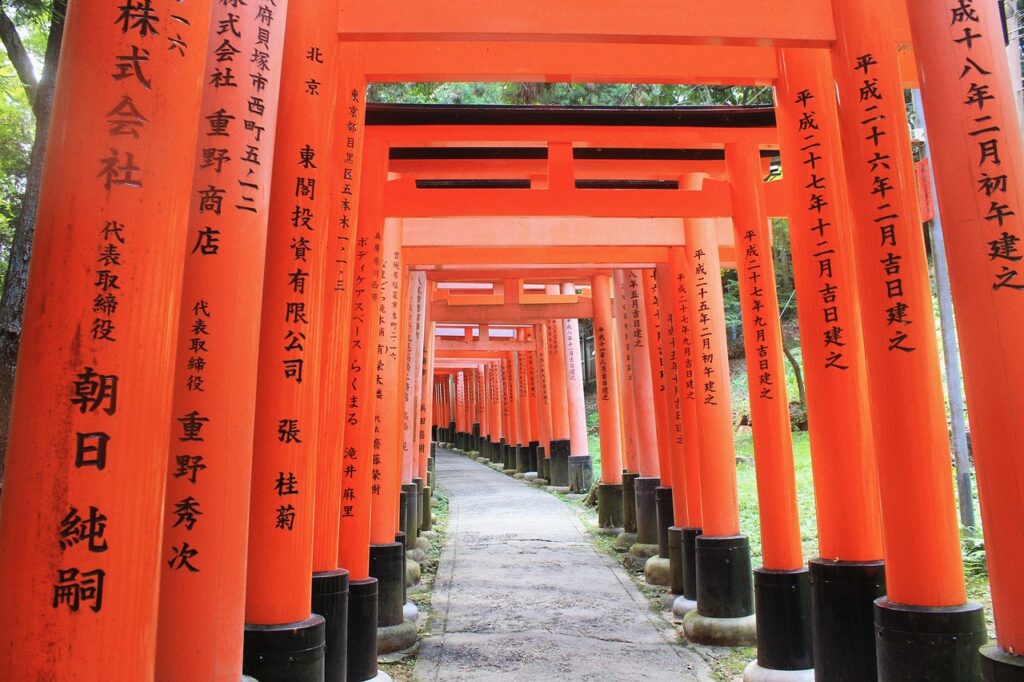
- Fushimi Inari Taisha — free entry, go at dawn or after 7pm to avoid the crowds. The full hike to the summit takes 2–3 hours and is worth it.
- Arashiyama Bamboo Grove — free, but genuinely overrun between 9am–4pm. Get there before 7:30am.
- Kinkaku-ji (Golden Pavilion) — entry ¥500 (~$3.50), often crowded but still impressive.
- Nishiki Market for browsing and snacking (free to wander).
- Philosopher’s Path on a quiet morning walk — free, beautiful.
Best cheap eats: Nishiki Market stall food, tofu set lunches (~$8–12), Ippudo ramen.
Day 6: Nara Day Trip
Getting there: Nara is an easy 45-minute train ride from Kyoto Station on the Kintetsu Nara Line (~$8). You don’t need a JR Pass for this trip.
What to do:
- Nara Deer Park — the deer roam free and are shockingly bold. Deer crackers cost about $1.50 a pack. Free to enter the park itself.
- Todai-ji Temple — entry ¥800 (~$5.35). Home to a giant bronze Buddha. Worth it.
- Kasuga Taisha Shrine and the forested paths around it — free and atmospheric.
Nara is a comfortable day trip. You don’t need to stay overnight unless you want a quieter experience after the crowds leave.
Day 7: Hiroshima + Miyajima Island
Getting there: Shinkansen (Nozomi or Hikari) from Kyoto to Hiroshima takes about 1 hour 40 minutes, costs approximately $75–80 (¥11,300–11,940 for a reserved seat). If you have a JR Pass, this route is covered on the Hikari.
What to do:
- Peace Memorial Museum — entry ¥200 (~$1.50). One of the most powerful museums anywhere in the world. Allow 1.5–2 hours minimum.
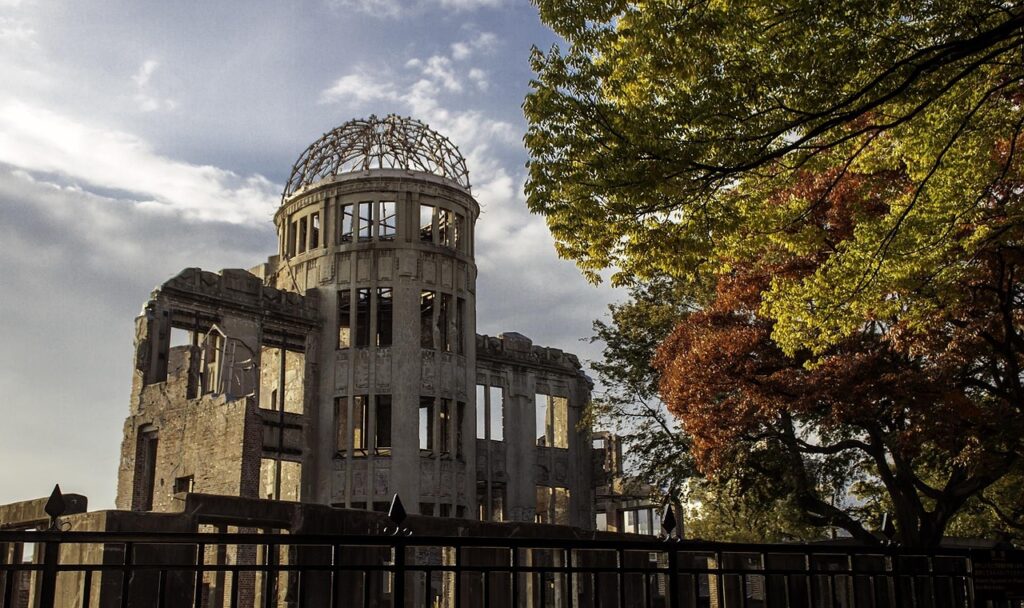
- Peace Memorial Park — free. The A-Bomb Dome is right here.
- Miyajima Island — accessible by JR ferry (covered by JR Pass) or regular ferry ($2). The island also has free-roaming deer.
Budget tip: Okonomiyaki (Hiroshima-style, a savory pancake) is the local specialty and a must-eat here. Expect to pay $7–10 for a proper one.
Days 8–9: Osaka
Getting there: Shinkansen from Hiroshima to Osaka (Shin-Osaka Station) takes about 1 hour, costs approximately $90–95 (¥14,040+). JR Pass covers this. If budget is tight, an express bus from Hiroshima to Osaka runs about $20–30 and takes around 3.5 hours — a real option worth considering.
Where to stay: Namba or Shinsaibashi area for the best access to food and nightlife. Osaka accommodation tends to be slightly cheaper than Tokyo or Kyoto — budget $20–38/night.
What to do:
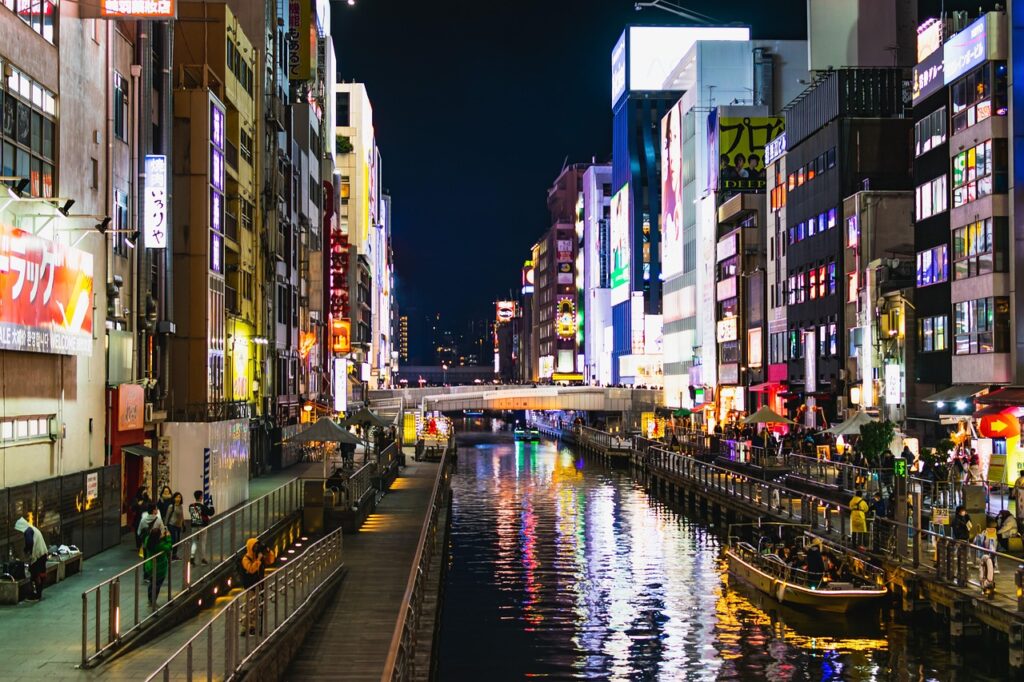
- Dotonbori for street food and the full neon-lit spectacle. This is where you eat takoyaki (octopus balls, ~$4–6) and try the conveyor belt sushi.
- Kuromon Ichiba Market for fresh seafood and snacking.
- Osaka Castle — the grounds are free, interior museum entry is ¥600 (~$4).
- Day trip to Kobe (30 min by train, ~$8) if you want to try authentic Kobe beef. It’s not cheap (teppanyaki lunch starts around $30–40), but a smaller portion at a market stall is more manageable.
Best cheap eats: Osaka is Japan’s food city. Street food in Dotonbori, kushikatsu (deep-fried skewers) in Shinsekai (~$1–2 per skewer), conveyor belt sushi chains like Kurasushi or Hamazushi (plates start at ~$1.20).
Day 10: Travel / Buffer Day
Use this day for overflow from anywhere in the itinerary, a slow morning in Osaka, or travel to your departure airport. Kansai International Airport (KIX) serves Osaka; it’s well-connected by train (~$15 to central Osaka). Alternatively, an overnight bus back to Tokyo is around $30–50 if your flight departs from Narita or Haneda.
Where to Stay in Japan on a Budget
Capsule Hotels
The best-value solo accommodation in Japan. You get a private sleeping pod — enclosed on most sides, with a curtain or door — plus access to shared bathrooms, lockers, and often a lounge area. Modern capsule hotels (especially brands like First Cabin, Anshin Oyado, or Nine Hours) are clean, comfortable, and quiet. Expect to pay $25–40/night. Most are mixed-floor or gender-segregated by floor. Not suitable if you need a lot of space, but perfectly fine for sleeping and storing your pack.
Hostels
Great for meeting other travelers. Dorm beds run $20–35/night in most cities, with private rooms starting around $55–80. Look for hostels with a common room or kitchen — they tend to have better social atmospheres. Highly rated options include K’s House (multiple cities), Khaosan (Tokyo/Kyoto), and a rotating crop of independent places on Hostelworld.
Manga Cafes (Manga Kissa)
A genuinely quirky budget option that works in a pinch. These are 24-hour internet cafes where you rent a small private booth by the hour or overnight. You get a reclining chair or sometimes a flat bed space, unlimited soft drinks, free manga/anime to browse, and shower access at some locations. An overnight stay (usually 8–10 hours) runs $15–25. They’re not comfortable in the conventional sense, but they’re clean, safe, and widely available in city centers. Good for a last-minute cheap night or a very early morning before a train.
Best Neighborhoods to Stay
Tokyo: Shinjuku for convenience; Asakusa for character and slightly lower prices; Akihabara for tech/anime travelers.
Kyoto: Kyoto Station area for transport convenience; Gion is atmospheric but pricier; Nishiki Market area is a good mid-point.
Osaka: Namba is the go-to — walkable to street food, nightlife, and trains. Shin-Osaka is better if you’re just passing through on shinkansen.
Eating in Japan on a Budget
Convenience Stores — Your Secret Weapon
This deserves real emphasis. Japanese convenience stores — 7-Eleven, FamilyMart, Lawson — are not like convenience stores back home. They stock fresh onigiri (rice balls, $1–2 each), hot sandwiches, noodles, bento boxes, hot drinks, and seasonal specials, all at consistently solid quality. A full convenience store breakfast costs $4–6. Lunch? $5–8. They’re everywhere, open 24 hours, and have clean bathrooms — you’ll use them constantly. If you’re trying to keep costs down, leaning on convenience stores for one meal a day makes a big difference.
Set Lunch Deals (Teishoku)
One of Japan’s great budget travel secrets: many restaurants that would be expensive at dinner offer a fixed lunch set — main dish, rice, miso soup, and a side or two — for $8–15. This is the best meal deal in the country. Look for “lunch set” signs (ランチセット) or “teishoku” on A-frame boards outside restaurants between 11:30am and 2pm.
Ramen Shops
A solid bowl of ramen at a dedicated shop runs $7–12. Ichiran and Ippudo are the chains that show up everywhere, but regional spots often hit harder. In Hiroshima, try the local layered-style okonomiyaki instead.
Conveyor Belt Sushi (Kaitenzushi)
Chains like Kura Sushi, Hamazushi, and Sushiro have plates starting at ¥110–165 (~$0.75–$1.10). You can eat well for $10–15. The quality is genuinely good for the price.
Supermarket Discount Sushi (The Pro Move)
Hit a supermarket near closing time — usually after 7pm — and you’ll find sushi, bento, and prepared foods marked down 20–50%. This is legitimately excellent food at rock-bottom prices. Look for yellow or orange discount stickers.
Getting Around Japan Cheaply
IC Card (Suica / Pasmo)
Get one of these rechargeable smart cards at any major train station. It covers virtually all trains, subways, and buses in major cities, and some convenience store purchases too. Tap on, tap off — no need to buy individual tickets. Much cheaper and faster than buying single tickets. You can load one onto your iPhone or Android via the Wallet app now, which is even more convenient.
Overnight Buses
The budget traveler’s best friend for long-distance travel. Willer Express and JR Bus operate comfortable highway buses between major cities overnight. Tokyo to Osaka: around $30–50. Tokyo to Kyoto: similar. You lose a night’s accommodation cost, which makes the math very attractive. Book online in advance — the cheap seats sell out.
Local Trains vs Shinkansen
The shinkansen is fast and comfortable but expensive. For shorter routes, local or limited express trains work fine. Kyoto to Nara is quicker on the Kintetsu Line (~$8) than anything involving the JR system. Osaka to Kyoto on a local train is only $5. Check Hyperdia or Google Maps for the cheap routing options before defaulting to the bullet train.
Bike Rental in Kyoto
Kyoto is flat and very bikeable. Rentals run around $8–12/day from shops near Kyoto Station or in the Gion area. Cycling between temples hits different from riding the bus — more flexible, more scenic, and faster on some routes. Just watch out for narrow streets in the Higashiyama district.
Japan Travel Tips & Things to Know Before You Go
1. Cash is still king. Japan has improved its card acceptance in recent years, but plenty of smaller restaurants, temples, and shops are cash-only. Always carry at least ¥3,000–5,000 in cash. 7-Eleven ATMs accept foreign cards reliably and charge minimal fees.
2. Get an eSIM or pocket WiFi before you land. You need connectivity for Google Maps, translation apps, and transport apps. eSIMs (Airalo, Ubigi) are the easiest option — buy before you leave, activate on arrival. Data-only SIMs are also available at airports.
3. Tattoos and onsen don’t always mix. Many traditional onsen (hot spring baths) prohibit visible tattoos. Some have relaxed this policy, especially in tourist areas. Research the specific onsen beforehand. Private baths (kashikiri-buro) are an alternative if you want the experience without the complications.
4. No tipping — ever. Tipping is not part of Japanese culture and can actually cause awkwardness. Don’t do it at restaurants, hotels, or taxis.
5. Shoes you can slip on and off easily. You’ll be removing shoes constantly — at temples, traditional restaurants, some guesthouses, and homes. Lace-up boots are a minor nuisance. Slip-ons save you 30 seconds of crouching every time.
6. Quiet on public transport. Talking on the phone on trains is considered rude. Conversations should be kept low. Earphones are expected if you’re listening to anything.
7. Google Translate’s camera feature is a lifesaver. Point it at any Japanese menu or sign for a live translation. Not always perfect, but good enough to order food and navigate.
8. Trash cans are almost nonexistent in public. Japan is remarkably clean precisely because there are very few public bins — people carry their trash and dispose of it at convenience stores or at home. Don’t be the person leaving rubbish on a temple bench.
9. The IC card works everywhere. Once you have your Suica loaded and ready, day-to-day transport in any major city is effortless. Don’t overthink it.
10. Download the apps before you arrive. Google Maps (works well in Japan), Hyperdia or Japan Travel for train planning, Google Translate with Japanese downloaded for offline use.
11. Budget for the departure tax. From July 1, 2026, Japan’s international departure tax triples from ¥1,000 to ¥3,000 (~$20) per person. It’s automatically built into your airline ticket price, so no separate payment needed — but factor it into your overall trip cost. Also note: Kyoto introduced a tiered accommodation tax in March 2026. For budget stays (hostels, capsule hotels under ¥6,000/night), the levy is minimal at ¥200/night — barely noticeable. Luxury hotels cop a much higher charge.
Best Time to Visit Japan for Backpackers
Cherry Blossom Season (Late March–Early April)
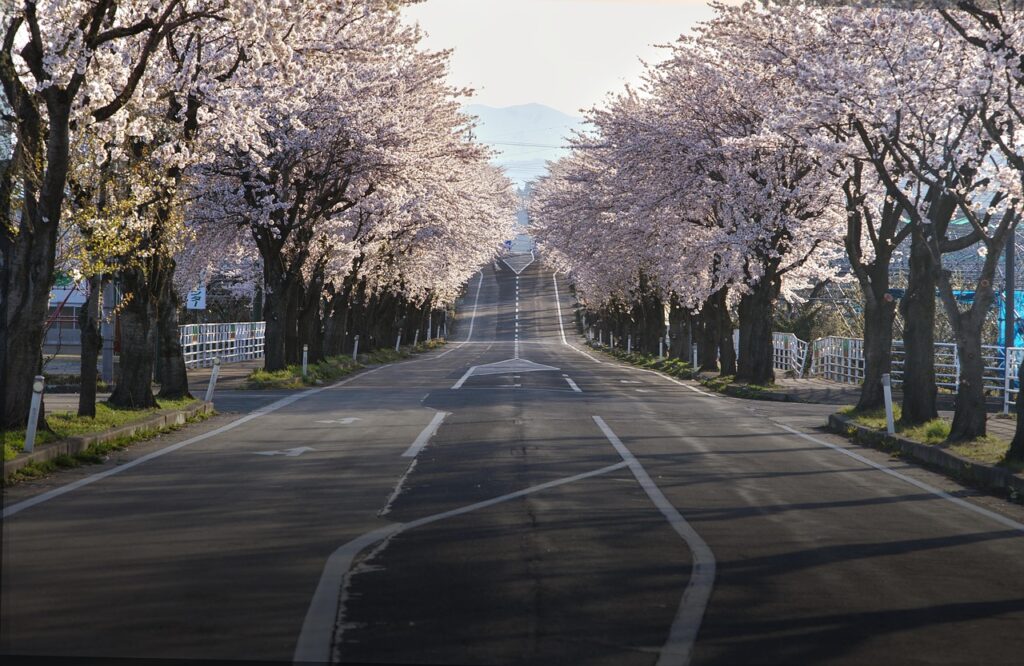
The most beautiful time to visit, and also the most popular. Accommodation prices jump significantly — sometimes double — and parks fill with both Japanese families and international tourists. If you’re lucky enough to time it right, it’s genuinely magical. But book accommodation 2–3 months in advance, expect higher prices, and accept the crowds.
Autumn Foliage (Mid-October–Late November)
Equally stunning — the red and gold maples across Kyoto and Nara are a proper rival to sakura season. Slightly less crowded than cherry blossom, still busy. Accommodation prices spike but not as severely. This is a strong pick if you have flexibility.
Summer (June–August)
Hot, humid, and sometimes rainy (especially June for rainy season). Accommodation is cheaper, and big cities like Tokyo empty out slightly during the Obon holiday in August. Not the most comfortable backpacking conditions, but there are summer festivals (matsuri) that are worth a visit if you catch one.
Avoid: Golden Week (Late April–Early May)
This is Japan’s biggest domestic holiday period. Trains are packed, accommodation prices double or triple, and popular sites are genuinely heaving. Unless you book months in advance and pay premium prices, avoid it.
Winter (December–February)
Cold but underrated. Kyoto and Nara in snow are stunning, crowd levels are low, and prices are at their yearly minimum outside Christmas–New Year. If you’re into skiing, Hokkaido (especially Niseko) in January–February is world-class.
FAQs
Is Japan too expensive for backpackers?
No — Japan on a budget is very achievable in 2026. At $65–100/day you’ll eat well, stay somewhere comfortable, and see everything you want to see. Under $55/day is possible but requires consistent effort. The weak yen makes this a better moment to visit than it’s been in years.
Do I need to speak Japanese to travel Japan?
No. Major cities have English signage at train stations, airports, and tourist sites. Most hotels and hostels have English-speaking staff. Menus often have pictures or English translations. Google Translate handles the rest. That said, learning five basic phrases (hello, thank you, excuse me, do you have English, and the number system) goes a long way in smaller towns and earns genuine warmth from locals.
Is it safe to travel solo in Japan?
One of the safest countries on the planet for solo travelers, including women traveling alone. Crime rates are extremely low, locals are helpful if you look lost, and even arriving late at night in an unfamiliar city feels unthreatening. The usual common-sense precautions apply, but Japan consistently ranks as one of the world’s safest solo travel destinations.
What is the cheapest way to get from Tokyo to Kyoto?
An overnight highway bus (Willer Express or JR Bus) from Shinjuku to Kyoto runs $30–45 and doubles as a night’s accommodation. It takes about 8 hours. If you prefer daytime travel, a shinkansen ticket (Hikari, not Nozomi) runs $90–95 and takes about 2 hours 40 minutes. The JR Pass only makes this economical if you’re doing multiple long-distance shinkansen trips.
Japan rewards people who just show up. The country runs smoothly, the food is outstanding at every price point, and the combination of ancient culture and modern chaos is unlike anywhere else. Stop building it up as an expensive or complicated destination — it’s neither. Buy the flights, load your IC card, and go.