Colombia is not the country the headlines from 20 years ago described. It’s changed — dramatically, genuinely, and in ways that matter to travelers. Today it’s one of the most diverse, affordable, and flat-out exciting countries in Latin America, drawing backpackers from every corner of the world who are looking for culture, nature, great food, and an experience that hits different from the usual Southeast Asia circuit. This backpacking Colombia guide covers where to go, how much it costs, how safe it really is, what to eat, how to get around, and everything else you need to know before you land.
Is Colombia Safe for Backpackers?
Yes — with common sense. That’s the honest answer, and it’s worth saying clearly before anything else.
Medellín, Bogotá, and Cartagena are visited by tens of thousands of solo backpackers every year without incident. The tourist infrastructure is well-developed, the locals are genuinely welcoming, and the areas you’ll spend most of your time in are safe during the day and manageable at night if you’re not being reckless.
That said, Colombia is not without risk, and pretending otherwise does you a disservice.
What to actually avoid:
- Certain neighborhoods — Every city has areas that are off-limits for tourists. In Bogotá, avoid El Bronx and parts of La Candelaria late at night. In Medellín, some comunas outside the tourist circuit are not for wandering. Ask at your hostel — they’ll give you a straight answer.
- Flashing valuables — Don’t walk around with your phone out, especially at night. Opportunistic phone snatching is common in most cities.
- Unofficial taxis — Never hail a cab off the street. Use Uber, InDriver, or ask your hostel to call a trusted taxi. Express kidnappings, while rare, have happened via unofficial cabs.
- Overconfidence at night — Bogotá’s nightlife is great, but getting very drunk and wandering unfamiliar streets at 3 AM is a bad idea in most cities in the world, not just Colombia.
Solo female backpackers do travel Colombia regularly and safely — more on that in the FAQs below.
Colombia Backpacking Budget (Daily Cost Breakdown)
Colombia is genuinely affordable — one of the best-value destinations in South America. Here’s what to expect:
| Category | Budget Range (USD/day) | Tips |
|---|---|---|
| Accommodation | $8–20 | Dorm beds in basic hostels from $8; good social hostels (especially Medellín) run $15–20 |
| Food | $6–12 | Street food and set lunches (menú del día) are your best friends |
| Transport | $3–8 | City transport is very cheap; intercity buses add up on longer routes |
| Activities | $5–15 | Many museums are free or under $2; Gold Museum is $1.25 (free Sundays); day trips cost more |
| Miscellaneous | $3–7 | SIM, laundry, snacks, the occasional beer |
| Total | $25–55 | $30–40/day is a realistic, comfortable budget |
Under $30/day is doable if you’re staying in dorms, eating set lunches, and skipping paid tours. $40–50/day gets you a better hostel, some nicer meals, and a day trip or two per week. Note that Cartagena runs about 20–30% more expensive than the rest of the country.
Best Places to Visit in Colombia for Backpackers
Medellín — The Comeback City
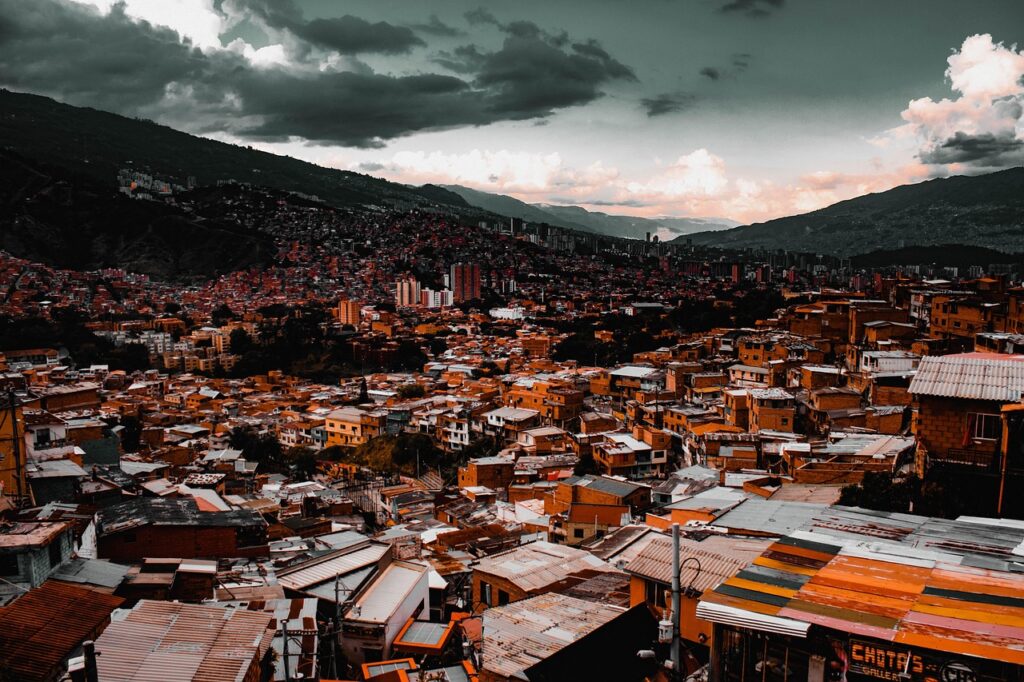
No city in the world has reinvented itself quite like Medellín. Once considered one of the most dangerous cities on earth, it’s now a UNESCO-recognized innovation hub with a booming food scene, excellent public transport, and one of the most interesting urban travel experiences in South America.
What to do:
- Ride the cable cars (Metrocable) — The city built cable car lines to connect hillside comunas to the metro system. Riding them gives you sweeping views of the city and a genuine look at how residents live. It’s part of the public transit system, so it costs almost nothing.
- Street art in Comuna 13 — This neighborhood was once a flashpoint of violence during the cartel era. Today it’s covered in massive murals and has become a genuine cultural landmark. The free outdoor escalators (installed to help residents navigate the steep hillside) are worth seeing too. Go during the day.
- El Poblado — This is the backpacker and expat hub. It’s safe, walkable, full of hostels, bars, and restaurants. It can feel a bit of a bubble, but it’s a good base, especially when you first arrive. Parque Lleras is the center of the nightlife scene.
- Laureles — If you want a more local feel, stay in Laureles. It’s residential, has great cafés, is very safe, and feels like actual Medellín rather than a tourist enclave.
- Pablo Escobar tours — These exist, and they’re popular. They typically include his old houses, the cemetery where he’s buried, and narco-era history. The ethical debate is real: some argue it glorifies a man responsible for thousands of deaths; others say understanding that history is important. If you go, choose a tour operator that’s led by former victims or community members rather than ones that treat it as a celebrity experience.
Approximate daily cost in Medellín: $30–40.
Don’t miss: The Medellín metro is excellent — clean, punctual, and a genuine source of city pride. Rides cost around 3,430–3,900 COP (~$0.82–0.93) per trip depending on your card type. Pick up a personalized Cívica card (free to register at select stations with your passport) for the cheaper rate. Use the metro constantly.
Cartagena — Colourful Coast
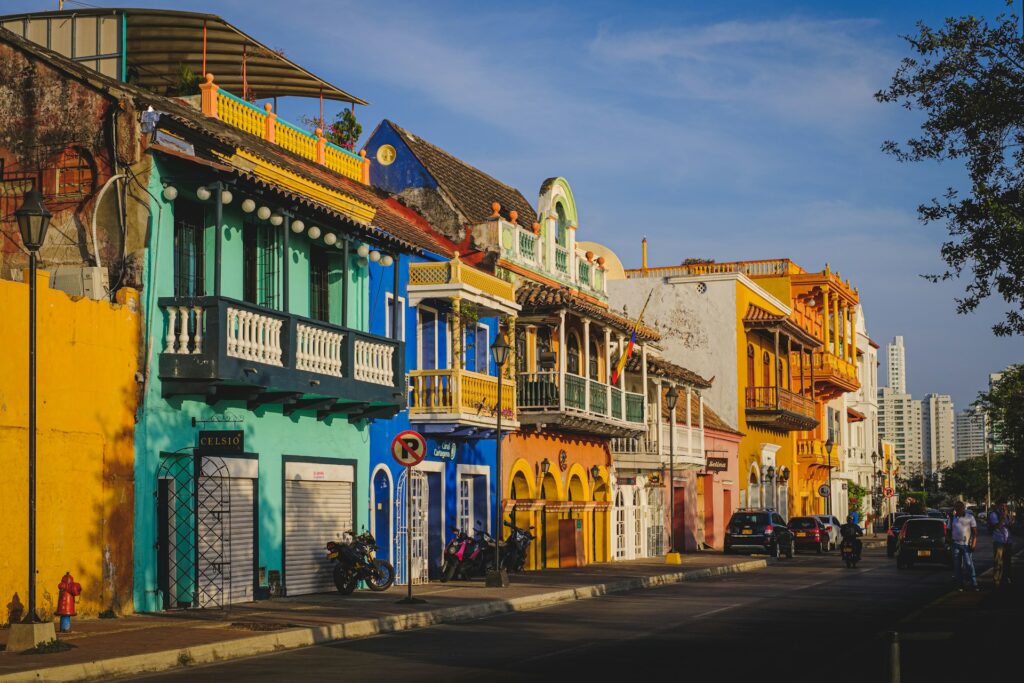
Cartagena is the postcard version of Colombia — a UNESCO-listed walled city on the Caribbean coast, with colorful colonial buildings, bougainvillea hanging off balconies, and horse-drawn carriages rolling through cobblestone streets. It’s beautiful and worth 2–3 days, but go in knowing it’s the most tourist-heavy and expensive city in the country.
What to do:
- Walk the old city walls — Free to walk, best at sunset, gives you views over the rooftops and the sea.
- Getsemaní neighborhood — This is where budget travelers stay and where the real energy of the city lives. It’s walkable from the walled city and has the best street art, the best cheap food, and a growing nightlife scene. Stay here rather than El Centro if you’re watching your budget.
- Rosario Islands day trip — A 45-minute boat ride from the city brings you to a string of Caribbean islands with clear water and coral reefs. Day trips run around $30–50 depending on the operator and what’s included. Worth doing at least once.
- Beach access — Playa Blanca is the most famous, though it’s gotten crowded. There are quieter beaches if you’re willing to explore a bit further.
Budget note: Budget accommodation in Cartagena starts around $12–15 for dorms. Food and activities skew 25–30% higher than Medellín or the Coffee Region.
Bogotá — Capital Worth a Day or Two
A lot of backpackers treat Bogotá as a transit stop — fly in, move on. Don’t make that mistake. The capital has more going on than it gets credit for, and two nights here is genuinely rewarding.
What to do:
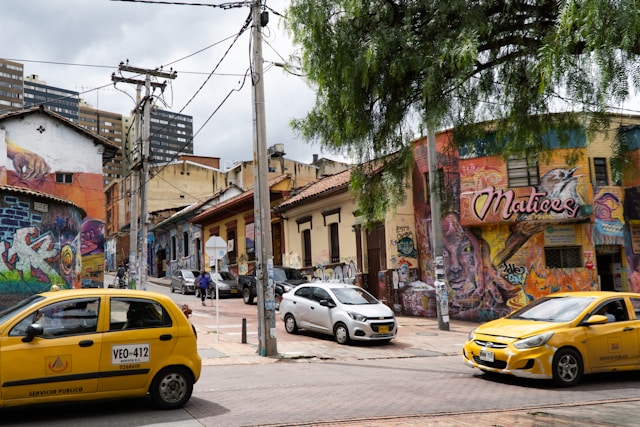
- La Candelaria — The historic old town. Densely packed with churches, plazas, and the kind of street life that makes you want to stop and look around every five minutes. Go during the day; it gets quieter and less tourist-friendly at night.
- Monserrate — A church perched on a mountain above the city at about 3,150 meters above sea level. You can hike up (about 1.5 hours), take the cable car, or the funicular. The view of Bogotá spread out below is extraordinary on a clear day.
- Museo del Oro (Gold Museum) — Possibly the best museum in Colombia. It holds the world’s largest collection of pre-Columbian gold artifacts and the interactive displays are excellent. Entry is 5,000 COP (~$1.25) for adults — and completely free on Sundays (though it gets busy). It’s a must-visit.
- Free Sunday cycle routes (Ciclovía) — Every Sunday, major roads across Bogotá are closed to cars and opened to cyclists and pedestrians. If you’re there on a Sunday, rent a bike and join in.
- Safe neighborhoods for backpackers — Chapinero and Usaquén are the places to base yourself. Both are walkable, have good hostel options, and solid restaurant and bar scenes.
Altitude heads-up: Bogotá sits at 2,600 meters above sea level. Some people feel the altitude for the first day or two — headaches, breathlessness, fatigue. Take it easy when you arrive, drink water, and don’t push hard activities on your first day.
Coffee Region (Eje Cafetero) — A Hidden Gem
If you could only pick one place in Colombia that most backpackers say surprised them the most, the Coffee Region would probably win. It’s the agricultural heartland of the country — rolling green hills covered in coffee plants, colorful colonial towns, and some of the best hiking in South America.
Salento is the main base and it’s excellent. It’s a small town that’s genuinely beautiful, with a main street lined in brightly painted houses, local restaurants serving trout from the nearby rivers, and a relaxed pace that makes it easy to stay longer than planned.
The Cocora Valley hike is the standout activity. The trail winds through misty cloud forest and opens into a valley filled with towering wax palms — Colombia’s national tree and the tallest palm species in the world, reaching up to 60 meters high. The hike takes about 4–5 hours and costs nothing beyond the small entry fee to the valley (around $1–2). It’s genuinely one of the most scenic hikes in South America.
Coffee farm tours are available throughout the region and typically cost $10–20. You’ll learn how coffee is grown, processed, and roasted, and you’ll drink a lot of excellent coffee. Worth it.
Daily costs here are low — think $25–35/day. Accommodation is cheap, food is cheap, and most activities are either free or very affordable.
Tayrona National Park
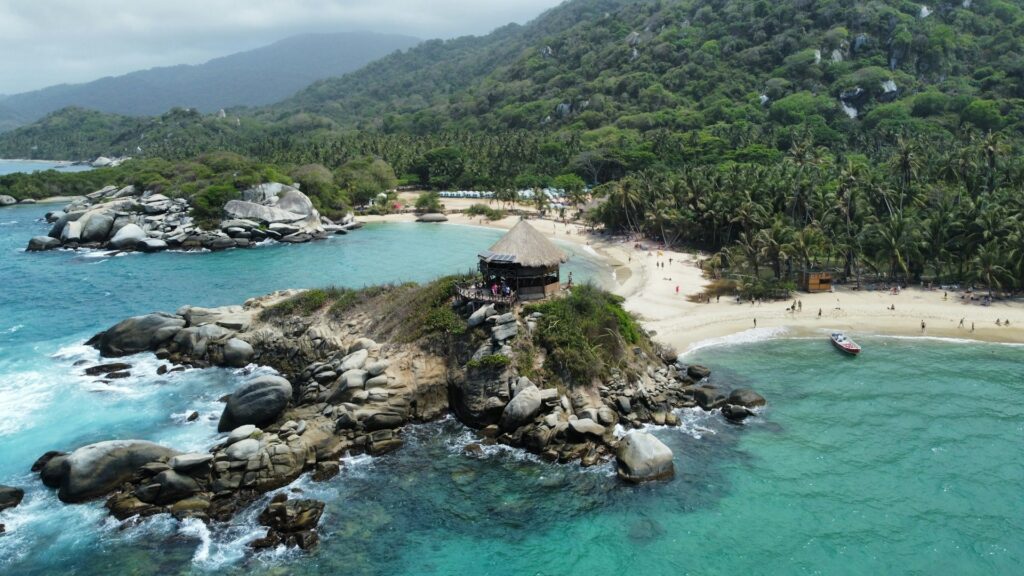
Tayrona is where Colombia’s jungle meets the Caribbean Sea, and it delivers exactly what that sounds like — dense rainforest, hiking trails, and turquoise beaches that feel like they haven’t fully been discovered yet (though they have been, so go early or late in the day).
Practical details:
- Entry fee: Around 81,000 COP (
$20 USD) in low season and 96,500 COP ($23 USD) in high season (Dec–Feb and public holidays) for foreign visitors. Important: the main entrance (Zaino) only allows entry between 7am and 12pm — don’t arrive late expecting to get in. Verify current prices before you go as they update regularly. - Getting there: From Santa Marta (about 45 minutes by bus, under $2). Santa Marta is the nearest city and a good base — it’s more laid-back and cheaper than Cartagena.
- How long to spend: 1–3 days. One day gives you the beaches; two or three days lets you hike to more remote areas and camp overnight.
- Accommodation inside the park: You can camp (bring or rent gear) or stay in eco-lodges (Ecohabs, which are pricier but genuinely beautiful). Book in advance, especially in high season (December–January and June–July).
- Swimming: Not all beaches are safe for swimming due to strong currents. Follow the signs — they’re there for a reason. Cabo San Juan is the most popular swimming beach inside the park.
Suggested Colombia Backpacking Route (2–3 Weeks)
This is the route that works for most first-timers and hits the main highlights without feeling rushed.
Bogotá → Salento → Medellín → Cartagena → Tayrona
Bogotá (2–3 nights) Fly in. Get your altitude legs, see the Gold Museum, explore La Candelaria, ride up to Monserrate. Take a night bus or early morning bus to Salento (around 8–9 hours, ~$15–20).
Salento / Coffee Region (3–4 nights) Hike the Cocora Valley. Do a coffee tour. Eat trout. Relax. Take a bus to Armenia (30 minutes) and then a bus or flight to Medellín.
Medellín (4–5 nights) Use this as your base for exploring the city. Do the cable car ride, visit Comuna 13, spend a night in El Poblado, explore Laureles. Day trips to Guatapé (a scenic lake town about 1.5 hours away, famous for the El Peñol rock — a massive granite monolith you can climb) are very popular and run about $15–25 for a tour, or less if you go independently.
Cartagena (2–3 nights) Fly from Medellín to Cartagena (flights often run $20–50 if booked in advance — cheaper than the long bus). Walk the walls, explore Getsemaní, do the Rosario Islands trip.
Tayrona / Santa Marta (2–3 nights) Bus from Cartagena to Santa Marta (around 4 hours, ~$10). Head into the park for a night or two, then fly home from Santa Marta or back to Bogotá.
Getting Around Colombia
Domestic flights are a genuine game changer. Colombia has several low-cost carriers (Avianca, Latam, Wingo, JetSmart) and internal flights are often only marginally more expensive than long bus rides — sometimes cheaper when you factor in saved accommodation costs. Search early and you can find flights between major cities for $20–60.
Intercity buses are safe and comfortable on major routes. Companies like Flota Magdalena and Copetran run modern coaches with AC and reclining seats. Long routes (Bogotá to Medellín, for example) take 8–9 hours but are perfectly manageable.
Within cities: Medellín’s metro system is excellent — clean, safe, and covers most of the city. Bogotá has the TransMilenio bus rapid transit system, which is functional but can be extremely crowded at peak hours. In Cartagena, you walk most places within the tourist areas.
Uber and InDriver are widely available in all major cities and are the recommended way to get around locally. Always safer than hailing street taxis.
Colombia Food Guide — What to Eat and What It Costs
Colombian food is hearty, filling, and extremely affordable. It’s not spicy by default (spice is added at the table), which surprises a lot of travelers who expect Latin American food to be fiery.
Dishes worth knowing:
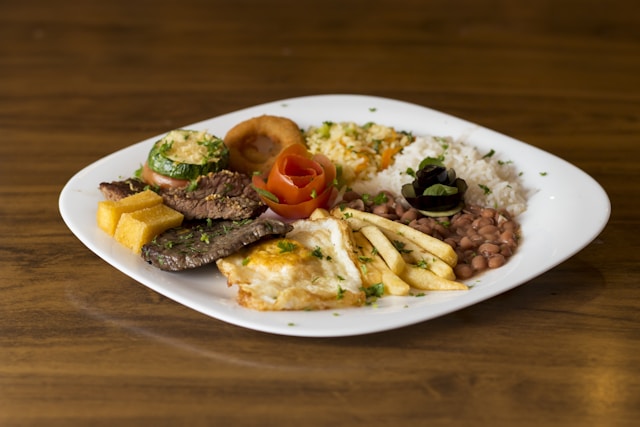
- Bandeja Paisa — The national dish of the Coffee Region. A plate piled with red beans, white rice, ground beef, chicharrón (fried pork belly), fried egg, sweet plantain, avocado, and an arepa. It’s a lot of food for very little money. One plate runs $4–7 and will keep you going all day.
- Arepas — Cornmeal patties that appear at virtually every meal. Eaten plain, stuffed with cheese, with eggs, or as a side. Street arepas cost $0.50–1.
- Empanadas — Fried pastry pockets filled with meat and potato or cheese. Common street food at $0.50–1 each.
- Sancocho — A hearty stew made with meat (usually chicken or beef), potato, corn, and plantain. It’s the kind of food that makes sense when you’re cold and at altitude. Order it in Bogotá.
- Fresh juices — Colombia has extraordinary tropical fruit. Order a jugo natural (fresh-blended juice) with just about any meal. Maracuyá (passionfruit), lulo, guanábana, and tomate de árbol are the ones to try. Costs $1–2.
Budget eating:
- Street food: $1–3 per item
- Set lunch (menú del día — soup, main, drink): $3–5
- Sit-down restaurant meal: $5–10
- Nice dinner: $12–20
The menú del día (set lunch of the day) is the best value meal in Colombia. Every local restaurant offers one. Two or three courses for $3–5, eaten between noon and 2 PM. Never skip it.
Practical Tips Before You Go
Visa Most nationalities (UK, EU, US, Canada, Australia, and many others) get a 90-day stamp on arrival with no visa required. You do not need to apply in advance. You’ll need a valid passport and immigration may ask for proof of onward travel. The maximum stay is 180 days per calendar year — you can apply for a 90-day extension through Migración Colombia before your initial stamp expires.
One thing many travelers miss: Colombia requires all international arrivals to complete the Check-Mig form (check-migración) before flying in. It’s free, takes five minutes, and must be done within 72 hours of your flight. Find it at the official Migración Colombia website. Airlines will sometimes ask for your confirmation at check-in, so do it before you leave home.
Currency The Colombian Peso (COP) is the currency. As of 2025–2026, the exchange rate has been volatile, so check current rates before you go. USD is accepted in some border areas and by some tour operators, but for everyday purchases you’ll want pesos. ATMs are widely available in all major cities. Use your bank card and avoid exchange offices unless you can verify they’re legitimate.
SIM Card Get a local SIM immediately at the airport or any phone shop. Claro and Tigo are the two main networks with the best coverage — Claro has the widest reach in rural areas, Tigo is strong in cities. A data plan for 30 days costs roughly $7–12 depending on data allowance, which is more than enough to run maps, Uber, and WhatsApp constantly. This is not optional — having mobile data in Colombia makes everything dramatically easier. You’ll need your passport to register the SIM.
Altitude Bogotá is at 2,600 meters. The Coffee Region towns and some others sit between 1,500 and 2,000 meters. If you’re flying from sea level, take it slow on arrival day. Hydrate, don’t drink alcohol immediately, and rest if you feel off. Altitude sickness (soroche) usually passes within 24 hours.
Vaccinations Yellow Fever vaccination is recommended (and sometimes required for entry into certain national parks and neighboring countries) if you’re traveling to jungle areas or regions below 2,300 meters altitude. Check with a travel health clinic before you go. Hepatitis A, typhoid, and routine vaccines are also advisable.
Colombia Safety Tips
These are specific and practical — not general travel platitudes.
Transport:
- Use Uber or InDriver exclusively for getting around cities. If you must take a regular taxi, ask your hostel to call one they trust.
- Never get into an unmarked cab or accept a ride from someone offering at the airport or bus terminal.
Nightlife:
- Bogotá in particular has a well-documented scam involving scopolamine (also called burundanga or devil’s breath) — a drug that can be slipped into drinks and causes victims to become compliant and lose memory. It’s rare but it happens. Don’t accept drinks from strangers in bars and clubs, and don’t leave your drink unattended. Go out with people you trust.
- Know where you’re going before you leave the hostel. Have it saved offline on Maps.me or Google Maps downloaded for offline use.
On the street:
- Don’t use your phone while walking, especially in busy urban areas. If you need to check your phone, step into a shop or a cafe.
- Carry a photocopy of your passport rather than the original when you’re out. Leave the original in the hostel safe.
- Keep a small amount of cash in your pocket and a larger amount hidden. If you’re ever robbed, handing over $20–30 is a much better outcome than a confrontation.
ATMs:
- Use ATMs inside banks or shopping malls during daylight hours. Avoid standalone street ATMs at night.
- Watch for skimming devices — use your hand to cover the keypad when entering your PIN.
Drugs:
- Colombia has a complicated relationship with cocaine, and as a tourist destination it’s actively marketed in some circles. Possession and use are technically decriminalized for personal amounts, but engaging in the drug trade exposes you to serious safety risks and corrupt police interactions. It’s not worth it.
FAQs
Is Colombia safe for solo female backpackers?
Yes, and plenty of women travel Colombia solo every year. That said, you’ll encounter machismo culture and unwanted attention in some contexts — especially in nightlife settings and on some bus routes. Practical steps that help: stay in social hostels where you can meet other travelers to explore with, be firm and direct in declining unwanted attention, and use the same transport and nightlife precautions everyone should follow. Connecting with female travel groups and forums (There’s a strong Facebook group community for female travelers in Colombia) is genuinely useful for up-to-date local advice before you arrive.
Do I need a visa for Colombia?
Most nationalities — including USA, UK, EU countries, Canada, Australia, and New Zealand — do not need a visa for stays up to 90 days. You get the stamp on arrival. You’ll need a valid passport (with at least 6 months remaining), and immigration may ask for proof of onward travel. The 180-day annual cap applies — you can extend once for another 90 days through Migración Colombia. Also complete the free Check-Mig form online before you fly. If your nationality isn’t on the visa-free list, check with the Colombian embassy before you travel.
What is the best city to base yourself in Colombia?
Medellín, for most backpackers. It has the best combination of things to do, affordable accommodation, great hostel scene, easy transport links to the rest of the country, and a climate that’s genuinely pleasant year-round (it’s called the City of Eternal Spring for a reason — temperatures hover around 22–28°C most of the year). Bogotá is the better base if you’re planning to visit the Coffee Region first, since it’s geographically closer.
Is Medellín safe for tourists now?
Yes. The transformation is real. El Poblado and Laureles are as safe as you’ll find in any major Latin American city. The areas around the metro stations and the main tourist corridors are actively patrolled. Like any city, there are neighborhoods you shouldn’t wander into without guidance — ask at your hostel for current advice. But the idea of Medellín as a dangerous city is significantly outdated for the areas that backpackers actually visit.
Colombia will surprise you — almost certainly in ways you didn’t expect. The landscapes are more dramatic, the cities more dynamic, the food better, and the people more welcoming than the country’s old reputation would suggest. It rewards travelers who show up with a bit of street sense, an open mind, and the willingness to move beyond the Instagram highlights. Do all three and you’ll leave wondering why it took you so long to get there.
Just go.