Vietnam is long, diverse, and genuinely one of the best places in the world to backpack. You start in chaotic, buzzing Hanoi in the north and end up on the beach paradise of Phu Quoc in the south — and in between there’s terraced rice fields, world-class bays, ancient towns, and street food that will become the benchmark you compare every other cuisine to for the rest of your life.
This guide covers the complete North-to-South route with real 2026 costs and the tips you actually need, not the recycled advice you’ll find on every other site. Grab a coffee (a proper Vietnamese one) and let’s get into it.
Vietnam Backpacking Budget (Daily Cost 2026)
This is the question everyone actually wants answered, so let’s do it first. Vietnam is still one of the cheapest countries in Southeast Asia to backpack, even with prices creeping up post-2023. Here’s what a realistic daily budget looks like in 2026.
| Category | Budget Range | Notes |
|---|---|---|
| Accommodation | $5–15/night | Hostel dorm bed, sometimes with breakfast and pool |
| Food | $6–10/day | Street food and local restaurants, three meals |
| Transport | $3–10/day | Buses, trains, and the occasional Grab |
| Activities | $5–15/day | Tours, entrance fees, motorbike rental |
| Misc | $2–6/day | Beer, snacks, SIM card top-ups, laundry |
| Total | $25–45/day | Comfortable budget backpacker range |
If you’re really watching every dong, you can get by on closer to $20–25/day by sticking to dorms, street food, and buses. If you want private rooms most nights and a beer or two every evening, budget closer to $45–55/day. Hostel dorm prices have stayed pretty stable over the last couple of years thanks to a wave of new hostel openings, but sit-down restaurant meals and cruise-style tours have crept up — so it pays to lean on street food and public transport to keep your daily average down. Either way, this is a very achievable country to backpack cheaply — you’ll eat well, sleep fine, and still see everything worth seeing without stressing over every purchase.
The Classic Vietnam Backpacking Route (North to South)
Most backpackers do Vietnam top to bottom (or bottom to top), and honestly it makes sense — the country is basically a long strip, and following it in one direction means you’re never backtracking. Here’s the classic route, roughly 3–4 weeks if you want to do it properly.
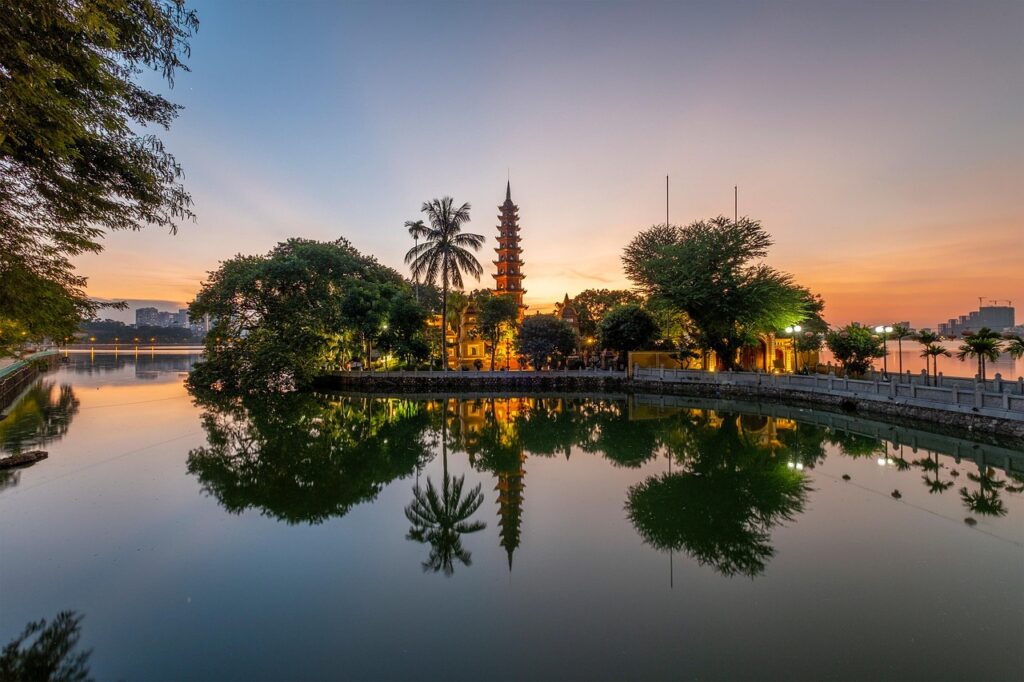
Hanoi (Days 1–3)
Hanoi is the perfect chaotic introduction to Vietnam. The Old Quarter is a maze of narrow streets, motorbikes coming from every direction, and street vendors balancing baskets on their shoulders. Give yourself a full day just to wander it without a plan.
Hoan Kiem Lake sits right in the middle of the action and is a nice spot to catch locals doing morning tai chi if you’re up early enough. From there, work your way through the French Quarter for a slower pace and some colonial architecture.
Food-wise, this is where you’ll have your first bun cha (grilled pork with noodles — trust it, it’s incredible), your first egg coffee, and probably your first proper bowl of pho. The Ho Chi Minh Mausoleum is also worth a visit if you’re interested in the history, though the queues can be long and there’s a strict dress code.
The hostel scene in the Old Quarter is excellent and one of the best in Southeast Asia — expect free beer hours, rooftop bars, and instant travel friends.
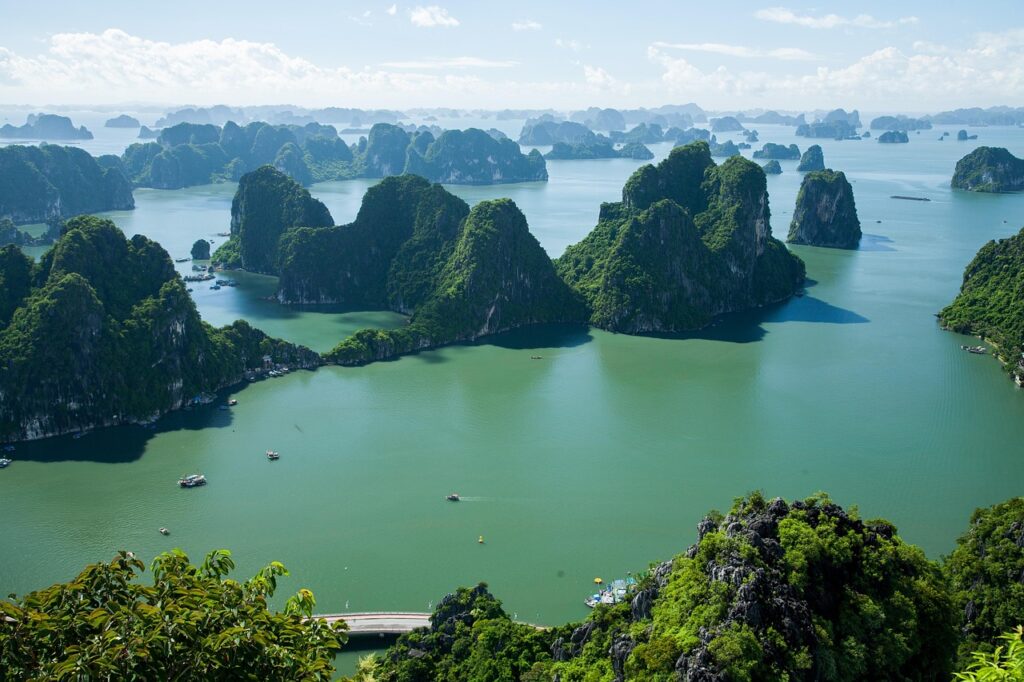
Ha Long Bay (Days 4–5)
An overnight cruise through Ha Long Bay is genuinely worth doing, even with the crowds. The limestone karsts rising out of emerald water are one of those sights that photos don’t really do justice.
The trick with Ha Long Bay is not booking the cheapest tour you can find. The rock-bottom boats (from around $100–130 for one night) tend to have overcrowded itineraries, rushed kayaking stops, and food that reflects the price. A mid-range cruise (roughly $130–200 for one night, including meals and activities) is the sweet spot — decent boat, good food, private balcony cabins on some boats, and a schedule that doesn’t feel like a conveyor belt. Cruise prices have risen noticeably over the past couple of years, partly due to new environmental compliance costs on older boats, so don’t be surprised if it’s pricier than older blog posts suggest.
If you’d rather skip the overnight cruise altogether, Cat Ba Island is the budget alternative. You can base yourself there for $7–15/night, rent a motorbike, and do day trips out onto Lan Ha Bay (same limestone karst scenery as Ha Long, fewer crowds, and generally cheaper) for a fraction of the cost of an overnight boat.

Ninh Binh (Day trip or overnight from Hanoi)
Ninh Binh gets overlooked by a lot of first-time backpackers rushing straight to Ha Long Bay, and that’s a shame. People call it “Ha Long Bay on land” — limestone karsts rising straight out of bright green rice paddies, with none of the crowds.
The classic activity here is a boat trip through Tam Coc or Trang An, where a local rower paddles you through caves carved into the rock. It’s slow, peaceful, and a proper contrast to Hanoi’s noise.
Rent a motorbike for a day if you’re comfortable riding one — the backroads around Ninh Binh, past Mua Cave and the surrounding farmland, are some of the most underrated scenery in the whole country.
Hue (Days 6–7)
Hue is cheap, historically rich, and a little quieter than the bigger stops on this route. The Imperial Citadel is the main draw — a huge walled complex that was once home to Vietnam’s emperors, and while parts of it were damaged during the war, enough remains to get a real sense of scale.
Rent a motorbike or hire a boat guide to visit the Royal Tombs scattered along the Perfume River outside the city — each one has its own character and they’re rarely crowded.
If you’re interested in the war history, a day trip to the DMZ (Demilitarized Zone) from Hue takes you through former battle sites, tunnels, and war memorials. It’s heavy but worth doing.
The food here is a genuine highlight too — central Vietnamese cuisine is spicier and more complex than what you’ll find in the north, and the banh mi in Hue is a completely different animal from what you tried in Hanoi.
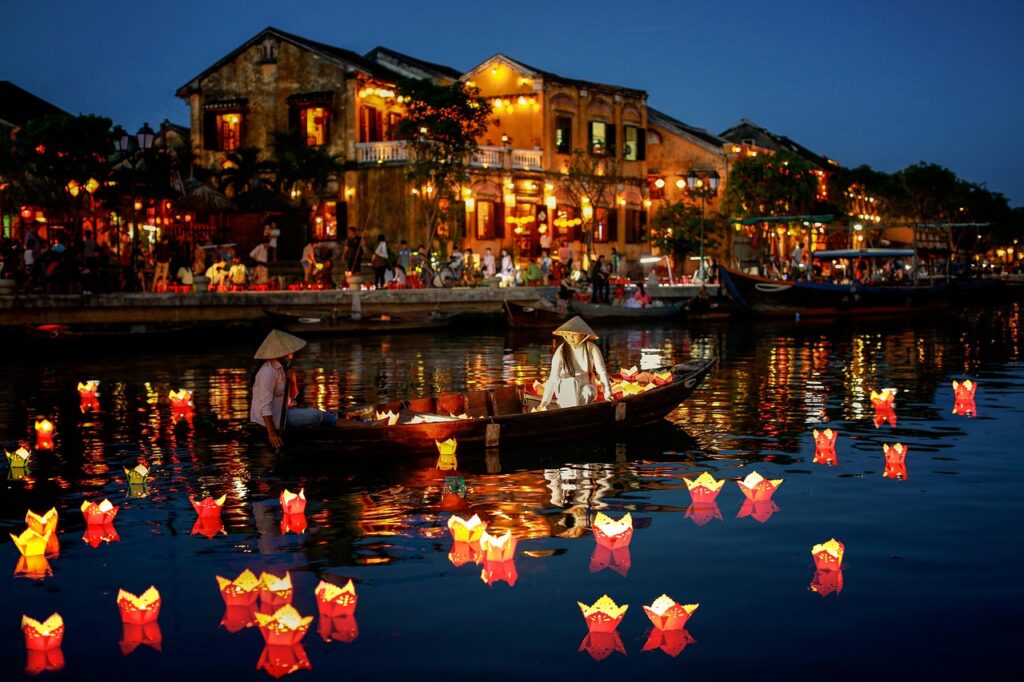
Hoi An (Days 8–10)
Hoi An is the lantern town, and it’s the stop most backpackers end up loving more than they expected. The Ancient Town (a UNESCO World Heritage site) is full of yellow-walled buildings, silk lanterns, and a river that glows at night when the town lights up.
This is also the place to get clothes tailor-made — Hoi An has hundreds of tailor shops that can turn around a custom suit or dress in 24–48 hours, often for less than you’d pay for something off the rack back home.
Beyond the town itself, An Bang Beach is a short bike ride away and a great spot to slow down for an afternoon. My Son Sanctuary, a set of Hindu temple ruins built by the ancient Champa kingdom, makes for a good half-day trip if you want some history mixed with your beach time.
Most people plan 2 nights in Hoi An and end up staying for 4. Give it at least 3 — it sneaks up on you.
Da Nang (Day trip base or stopover)
Da Nang sits between Hue and Hoi An, and a lot of backpackers use it as either a stopover or a base for exploring Hoi An if the accommodation there is booked out.
The Dragon Bridge breathes fire and water on weekend nights, which is a fun (if slightly ridiculous) spectacle. The Marble Mountains just outside the city are worth a few hours — a cluster of marble and limestone hills with caves, pagodas, and viewpoints built into them.
My Khe Beach is right in the city and one of the more underrated stretches of sand on this whole route, without the crowds you’ll find further south.
Nha Trang (Days 11–12)
Nha Trang is Vietnam’s big beach resort town, and it’s noticeably more touristy than anywhere else on this list. That’s not necessarily a bad thing after a week and a half of temples and history — sometimes you just want a beach and a decent cocktail.
Snorkeling and island-hopping tours are the main activity here, and there are plenty of budget operators running day trips out to the surrounding islands. It’s not the most authentic stop on the route, but it’s a solid place to rest, recharge, and do very little for a couple of days.

Mui Ne (optional detour)
Mui Ne doesn’t make every itinerary, but it’s worth the detour if you have the time. The main draw is the sand dunes — both red and white — which look genuinely out of place in Vietnam and are fun to explore at sunrise before the tour buses arrive.
It’s also one of the better spots in the country for kite surfing if that’s your thing, and the beach scene here is quieter and less built-up than Nha Trang. Two nights is enough to see the dunes, relax on the beach, and move on.
Ho Chi Minh City / Saigon (Days 13–14)
Saigon is a shock after the smaller towns — bigger, faster, and more intense than Hanoi in a different way. Ben Thanh Market is the obvious starting point for souvenir shopping and street food, though prices here are inflated for tourists so bargain hard.
The War Remnants Museum is one of the most confronting museums you’ll visit in Southeast Asia. Bring tissues — it doesn’t hold back on the photography and stories from the war.
The Cu Chi Tunnels day trip is a genuine must-do. You get to crawl through sections of the actual tunnel network used during the war, and the guides do a good job explaining how the tunnels functioned as an underground city.
For nightlife, Bui Vien Walking Street is Saigon’s answer to Khao San Road — loud, cheap, and full of backpackers. And don’t sleep on the coffee culture here; Saigon’s cafes are excellent, from old-school ca phe sua da spots to slicker third-wave coffee shops.
Mekong Delta (Day trip or overnight from Saigon)
The Mekong Delta is a different side of Vietnam entirely — flat, green, and crisscrossed with canals and floating markets. Boat rides through the narrow waterways take you past fruit farms, coconut candy workshops, and villages that barely see tourists once you’re off the main tourist boat routes.
You can technically do this as a day trip from Saigon, but an overnight trip with a homestay gives you a much better feel for delta life — waking up to the sound of boats on the water is worth the extra night.

Phu Quoc Island (End of trip or standalone)
Phu Quoc is the classic way to end a Vietnam trip. It’s got some genuinely beautiful beaches, decent snorkeling, and a slower pace than anywhere else on this route.
Prices have gone up here as tourism has grown — it’s no longer the hidden gem it was a decade ago — but it’s still noticeably more affordable than comparable islands in Thailand. Sao Beach and Long Beach are the standouts, and there are enough budget guesthouses around to keep costs reasonable even as the resorts multiply.
Getting Around Vietnam
Vietnam is set up well for backpackers who want to move fast and cheap.
The Open Bus ticket is the classic flexible option — you buy one ticket that covers the whole North–South route, hop on and off wherever you want, and it’s cheap. Sinh Tourist (The Sinh Tourist) is the original and most reliable operator.
Overnight trains are a great way to save a night of accommodation while covering long distances, especially Hanoi–Hue or Nha Trang–Saigon. Book through 12Go for an easy English-language booking process, and pay a little extra for a soft sleeper if you want an actual night’s sleep.
Motorbike rental is popular for shorter stretches or exploring a specific area (Ninh Binh, Hoi An, Hue). If you’re comfortable riding, it’s a great way to see the countryside at your own pace. If you’re not experienced, stick to buses and trains — Vietnamese traffic is not the place to learn.
Domestic flights with Vietjet are shockingly cheap if booked in advance, sometimes under $30, and worth using to skip a long overland stretch if you’re short on time. Bamboo Airways also flies domestically, though it’s a much smaller operation than it used to be and has been cutting routes and frequencies through 2026, so Vietjet is the more reliable go-to for most backpacker routes.
Vietnam Food Guide — What to Eat and What to Pay
One of the best things about backpacking Vietnam is that the food genuinely changes as you move through the country. Hanoi, Hue, and Saigon all have distinct food identities, and trying the regional differences is half the fun of the trip.
Northern food (Hanoi) tends to be more subtle and less spicy — think pho, bun cha, and cha ca. Central food (Hue, Hoi An) is spicier, more complex, and often more elaborate given Hue’s royal cooking history. Southern food (Saigon, the Delta) leans sweeter and uses more fresh herbs and tropical produce.
Must-eat dishes across the country:
- Pho – the classic noodle soup, different in every region
- Bun cha – grilled pork with noodles and herbs, Hanoi’s signature dish
- Banh mi – the baguette sandwich, varies significantly by region
- Cao lau – a Hoi An specialty noodle dish you genuinely can’t find authentically anywhere else
- Com tam – broken rice with grilled pork, a Saigon staple
- Banh xeo – crispy savory pancakes filled with pork and shrimp
- Egg coffee – Hanoi’s famous whipped egg and coffee combination
- Vietnamese iced coffee (ca phe sua da) – strong coffee with condensed milk over ice
Expect to pay $1–3 per street meal almost everywhere in the country. Sit-down restaurants aimed at tourists will run higher, but the best food in Vietnam is almost always the cheapest — a plastic stool on a street corner beats a menu with photos every time.
Vietnam Travel Tips for 2026
- Download Grab. It’s the go-to app for rides and food delivery across Vietnam, and it removes the haggling and overcharging that can happen with street taxis.
- Cash is king outside the big cities. Card payments are common in Hanoi, Hoi An, and Saigon, but smaller towns still run almost entirely on Vietnamese dong (VND).
- Bargain at markets, not restaurants. Haggling is expected at markets and with street vendors, but not at sit-down restaurants with printed menus.
- Motorbike safety matters. Helmets are mandatory, traffic is genuinely chaotic, and travel insurance often won’t cover you if you don’t hold the right license class for the bike you’re riding.
- Watch for overpriced tourist restaurants, especially near major attractions in Hanoi and Saigon. If a menu has photos and multiple languages right at a tourist hotspot, expect a markup.
- Dress modestly at religious sites — shoulders and knees covered for temples, pagodas, and the Ho Chi Minh Mausoleum.
- Check whether you actually need a visa. Travelers from the UK, most of the EU, Japan, South Korea, and a handful of other nationalities currently get 45 days visa-free (this exemption runs through 2028), and most ASEAN nationalities get 30 days or less. US, Canadian, and Australian passport holders are not on the exemption list and need an e-visa for any trip. The e-visa is now open to every nationality and gives you up to 90 days (single or multiple-entry), so apply through the official portal at evisa.gov.vn (avoid third-party sites) — it costs $25 for single-entry or $50 for multiple-entry, and approval usually takes about three business days, so apply at least a week before you fly. Make sure your passport is valid for 6+ months from your entry date, as this is now strictly enforced. If you’re flying into Ho Chi Minh City, Vietnam has also rolled out a mandatory Digital Arrival Card that needs to be completed online within 72 hours of arrival — check the current requirement for your specific airport before you travel.
- Watch ATM fees. Local ATM fees add up fast if you’re withdrawing small amounts often — withdraw larger sums less frequently to minimize charges. TPBank and VPBank are generally cited as having lower (sometimes zero) withdrawal fees for foreign cards compared to the bigger state banks.
- Get a local SIM at the airport. Viettel and Mobifone both offer cheap tourist SIMs with generous data, and having data from the moment you land makes Grab and navigation far easier.
- Pack for both extremes. If you’re doing the full North–South route, you’ll hit cooler weather in Hanoi/Sapa and full tropical heat in the south, sometimes within the same week.
Best Time to Visit Vietnam
Vietnam’s climate varies dramatically by region, which trips up a lot of first-time visitors trying to plan around “one” rainy season. There isn’t one — the north, center, and south all run on different weather patterns.
- November–April is the best window for the south and center. It’s dry season in Saigon, the Mekong Delta, Nha Trang, and Hoi An, with warm, mostly rain-free days.
- March–May is the best window for the whole country combined, since it hits the dry season for the south and center while the north hasn’t yet reached peak summer humidity.
- The rainy season shifts by region. The north (Hanoi, Ha Long Bay, Sapa) sees its wettest months from May to September, while the center (Hue, Hoi An, Da Nang) gets hit hardest from September to December with occasional typhoon risk. The south runs a more typical wet season from May to November, usually as short, heavy afternoon downpours rather than all-day rain.
If your route runs the classic North–South direction, starting in spring gives you the best shot at good weather almost the entire way down.
FAQs
Is Vietnam safe for solo backpackers?
Yes, Vietnam is generally considered one of the safer countries in Southeast Asia for solo travelers, including solo women. Petty theft (bag snatching, particularly from motorbikes) is the main risk in bigger cities like Hanoi and Saigon, so keep valuables secure and stay aware in crowded areas.
How much does it cost to backpack Vietnam for 2 weeks?
At the standard budget backpacker rate of $25–45/day, two weeks in Vietnam works out to roughly $350–630, not including your international flights or e-visa fee (if you need one). Add a bit more if you’re doing a Ha Long Bay overnight cruise (budget $100–200+ for that one night alone), the Cu Chi Tunnels tour, and a few other paid activities along the way.
Do I need a visa for Vietnam?
It depends on your passport. Travelers from the UK, most EU countries, Japan, South Korea, and a few other nationalities currently enjoy 45 days visa-free (through 2028), and most ASEAN nationalities get shorter visa-free stays. US, Canadian, and Australian citizens are not on the exemption list and need an e-visa for every trip. The good news is Vietnam’s e-visa is now open to every nationality on earth and covers stays of up to 90 days — apply online at the official government portal (evisa.gov.vn), pay the $25 (single-entry) or $50 (multiple-entry) fee, and you’ll typically get approval within about three business days. Just make sure your passport has at least 6 months of validity left, and if you’re flying into Ho Chi Minh City, fill out the mandatory Digital Arrival Card before you land. Visa rules do change, so double-check the current requirements for your nationality before booking flights.
Is it safe to rent a motorbike in Vietnam?
It can be, if you’re an experienced rider and you’re careful about which roads and cities you ride in. Traffic in Hanoi and Saigon is intense and not the place to learn. Quieter areas like Ninh Binh, Hoi An, and the countryside around Hue are far more forgiving for less experienced riders. Always wear a helmet, check the bike before you take it, and make sure your travel insurance actually covers motorbike use.