Kazakhstan was never on my “top 10 backpacking destinations” list, and honestly, that’s exactly why I went. Turns out the world’s ninth-largest country has canyons that make the Grand Canyon jealous, alpine lakes so blue they look fake, and a capital city that looks like someone built Dubai in the middle of the steppe. It’s also way cheaper and way less complicated than people assume.
This is the real, practical version of what I wish someone had told me before I landed in Almaty with a backpack and zero Russian vocabulary beyond “spasibo.” Real fees, real transport times, real costs. Let’s go.
Do You Need a Visa for Kazakhstan?
Good news first: Kazakhstan runs one of the most relaxed visa policies in Central Asia. If you’re carrying a US, UK, Canadian, Australian, or EU passport, you get in visa-free for up to 30 days per visit, capped at 90 days within any 180-day period. Roughly 50-56 nationalities get this deal, and it’s genuinely rare for this part of the world.
Here’s the part that’s actually changing right now: Kazakhstan is rolling out an Electronic Travel Authorization called QazETA for visa-free visitors. As of this writing (September 2026) it’s still in a voluntary pilot phase, but it’s set to become mandatory from November 1, 2026 — you’ll need to apply through the QazETA app at least 72 hours before you travel, and the authorization is valid for 180 days. A fee has been proposed but wasn’t finalized as of publication, so check the official QazETA app or site close to your travel date, since this is actively being phased in. If your country isn’t on the visa-free list at all, you’ll need a separate e-visa through Kazakhstan’s migration portal, which requires an invitation letter and is only processed for airport entries.
How Much Does Backpacking Kazakhstan Actually Cost?
This is where Kazakhstan quietly wins you over. A realistic budget-backpacker daily spend lands around $20-40/day if you’re staying in hostel dorms, eating at local canteens, and using buses or marshrutkas (shared minivans) instead of private taxis.
Here’s roughly where that money goes:
- Hostel dorm bed: $8-10/night in Almaty (cheaper if you stay slightly outside the city center)
- Street food meal: $2-5 (a cheap street-stall beshbarmak can be $2-3; a restaurant version runs $5-9)
- Local beer: around $2.50
- City transport: $0.20-1 per ride on buses/metro
- Intercity shared taxi: varies a lot by distance, covered below
One thing that surprised me: Almaty and Astana are not the same price tier. Almaty is the better value city overall (average traveler spend is around $50/day there), while Astana runs closer to $90/day across accommodation and dining — so budget roughly $40 more per day if you’re spending real time in the capital.
Also — bring cash. A lot of it, in tenge (KZT). National parks, shared taxis, and small-town guesthouses are cash-only, and at the current exchange rate you’re looking at roughly 450 KZT to $1 USD as of September 2026, though it does fluctuate.
Getting Around: Trains, Marshrutkas, and Shared Taxis
Kazakhstan is enormous — we’re talking the 9th biggest country on Earth — so don’t underestimate how long it takes to get anywhere. This isn’t a “hop on a two-hour bus” kind of country between major cities.
Almaty to Astana (about 971 km) is the classic long haul. Your options:
- Train: the cheapest “old Soviet” sleeper trains run around $18-25 and take 20-24 hours. The faster Talgo trains cut that to 14-16 hours for roughly $40-60. Honestly, the slow train is part of the experience — wide bunks, someone’s grandma sharing her snacks with you, the whole deal.
- Flight: about 1.5-2 hours, usually $55-100 if you book ahead.
- Bus: around $20-35 and takes 20+ hours. Only do this if you genuinely love bus seats more than train bunks.
Within regions, shared taxis and marshrutkas are your best friend. They leave from designated bus stations (Almaty’s Sayahat station is the one you’ll use most) once they fill up with passengers, and prices are dirt cheap compared to a private taxi. For city rides, download Yandex Go — it’s the regional Uber equivalent and takes the guesswork (and overcharging) out of getting around.
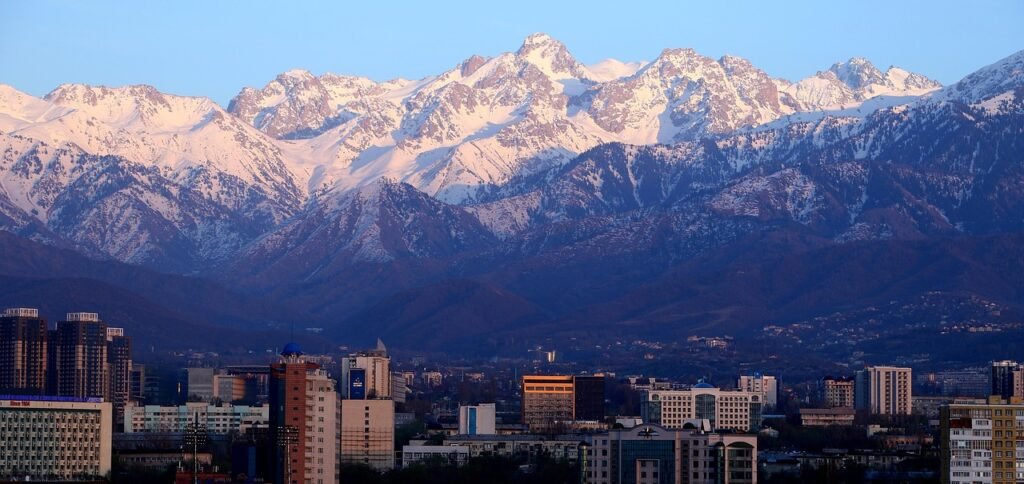
Almaty — Start Here, Everyone Does
Almaty is where basically every Kazakhstan trip begins, and it’s a genuinely likeable city. Tree-lined streets, mountains looming at the end of nearly every avenue, and a laid-back energy that doesn’t feel like a capital (because it isn’t one anymore — Astana took that job in 1997).
Don’t miss Panfilov Park and the wooden Ascension Cathedral, then ride the cable car up to Kok Tobe for a hazy view over the whole city. The Zelenyy Bazaar (Green Market) is worth a visit any time of year — go hungry and just start pointing at things. In winter, the Medeu outdoor skating rink up in the mountains hits different.
Base yourself at a hostel here for a few nights before day-tripping out to the canyons and lakes — most of them are easiest to reach from Almaty anyway.
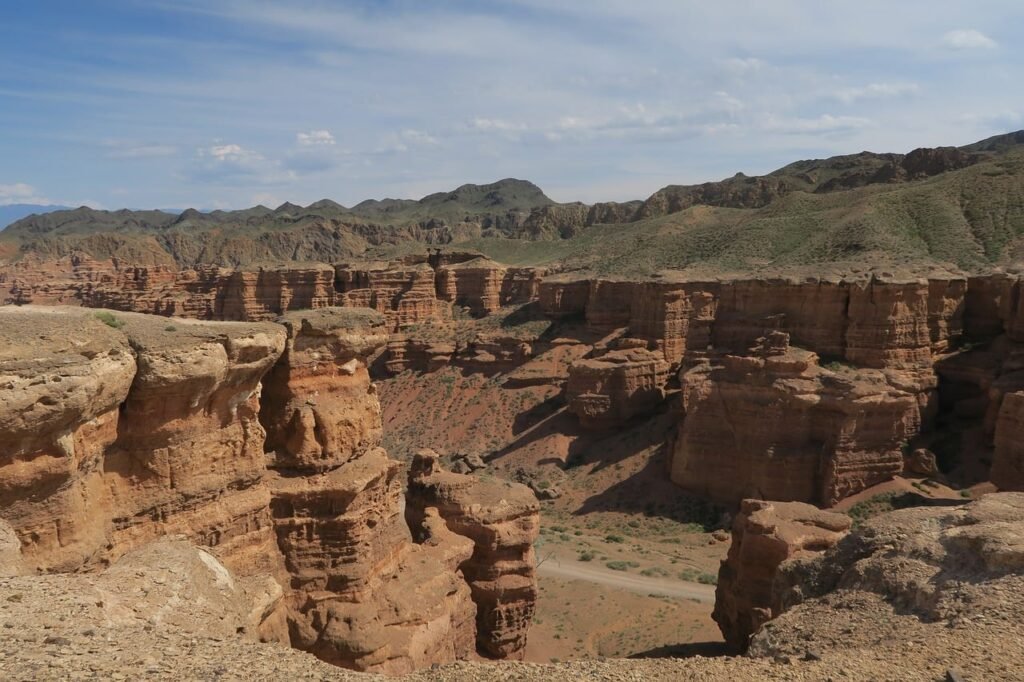
Charyn Canyon — The Grand Canyon’s Underrated Cousin
Charyn Canyon is about 200 km east of Almaty, roughly a 3-hour drive, and it’s a must if you’re anywhere near the region. The main hiking zone, called the Valley of Castles, is a red-and-yellow sandstone corridor that only opened about 2 km of its full 150 km length to tourists — and that’s plenty for one visit.
Entrance fees (per the current national park rate schedule): around 786 KZT per pedestrian (about $1.70), with higher fees for vehicles. There’s also a shuttle van (roughly 500-786 KZT one-way) that saves your knees from the walk back up, plus a camping fee of around 350 KZT per tent if you want to sleep under the stars.
Getting there without a car: head to Sayahat Bus Station in Almaty and find a shared taxi headed toward Kegen — expect to pay 2,000-3,000 KZT (about $4-7) per person. Organized day tours from Almaty run $30-70 and are worth it if you don’t want to deal with logistics. Bring your passport; the entrance kiosk checks it, since the canyon sits near a border zone.
Kolsai Lakes & Kaindy — The Sunken Forest Lake
If you only do one overnight trip outside Almaty, make it this one. The Kolsai Lakes and nearby Lake Kaindy are about 300 km from Almaty, roughly 3.5-4 hours via the gateway village of Saty.
Kaindy is the one you’ve probably seen in photos: dead spruce trunks rising straight out of an impossibly turquoise lake, submerged since a 1911 earthquake-triggered landslide dammed the valley. The water stays around 6°C even in July, so unless you’re doing an organized ice-diving trip (yes, that exists, and yes, it’s expensive at $40,000-70,000 KZT for a two-dive day), you’re here for photos, not swimming.
Entrance fees: Kolsai and Kaindy operate as separate parks, so you pay at both. Expect around 750-1,000 KZT per person at each, plus a small vehicle fee and roughly 350-750 KZT if you’re camping. Keep your receipt — you’ll need to show it on the way out.
Getting there: a shared taxi from Almaty to Saty runs around $10/person, then you’ll need a local driver or 4×4 for the final stretch to each lake — budget roughly 8,000-10,000 KZT for that leg if you’re not on a tour. A private driver covering both lakes in a two-day trip from Almaty typically runs 50,000-80,000 KZT total (including fuel), which is very reasonable if you split it with other travelers.
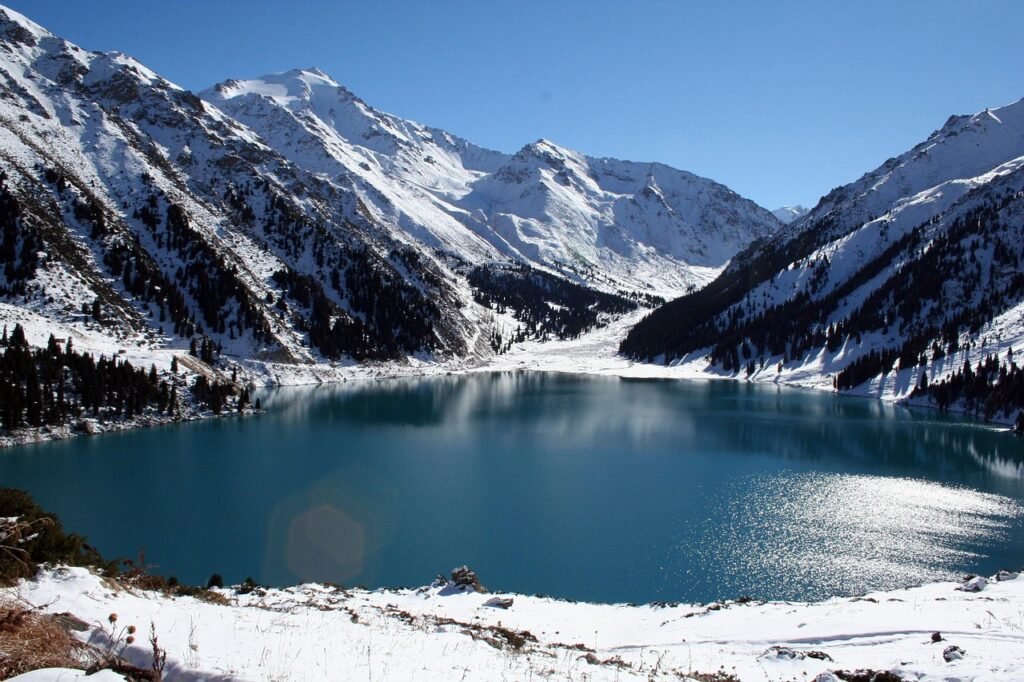
Big Almaty Lake — Easy Day Trip, Annoying Logistics
Big Almaty Lake sits about 30 km south of the city inside Ile-Alatau National Park, and it’s the closest “wow” nature moment to Almaty itself. The catch: it’s a border zone, so carry your passport, and vehicle access to the lake has been restricted in recent years (partly for fire prevention), so check the current access status before you go.
Budget route: take bus #28 from near First President’s Park (around 150 KZT), then either hike the remaining stretch to the checkpoint and lake, or grab a taxi/Yandex for the final leg (roughly 3,000-5,000 KZT). Entrance fee is small, generally in the 200-600 KZT range depending on the season and current fee structure. If you’re not up for a multi-hour uphill hike, an organized tour that has permission to drive further in is honestly the easier call.
Astana — Kazakhstan’s Sci-Fi Capital
Astana feels like a completely different country from Almaty. Where Almaty is green and mountain-framed, Astana is flat steppe with a skyline that looks like it was designed for a video game — because a lot of it basically was, purpose-built after the capital moved here in 1997.
The Baiterek Tower is the symbol of the city and worth the trip up — entrance runs about 2,000 KZT (~$4.50) for adults, and the observation deck gives you a 360-degree view over the Nurzhol Boulevard axis, including the presidential palace and the tent-shaped Khan Shatyr shopping center. Since the whole region is dead flat, this is genuinely the only place to get that kind of view.
Get here from Almaty by train (14-24 hours depending on which train you pick) or a quick 1.5-2 hour flight if you’d rather save the time and spend the money.
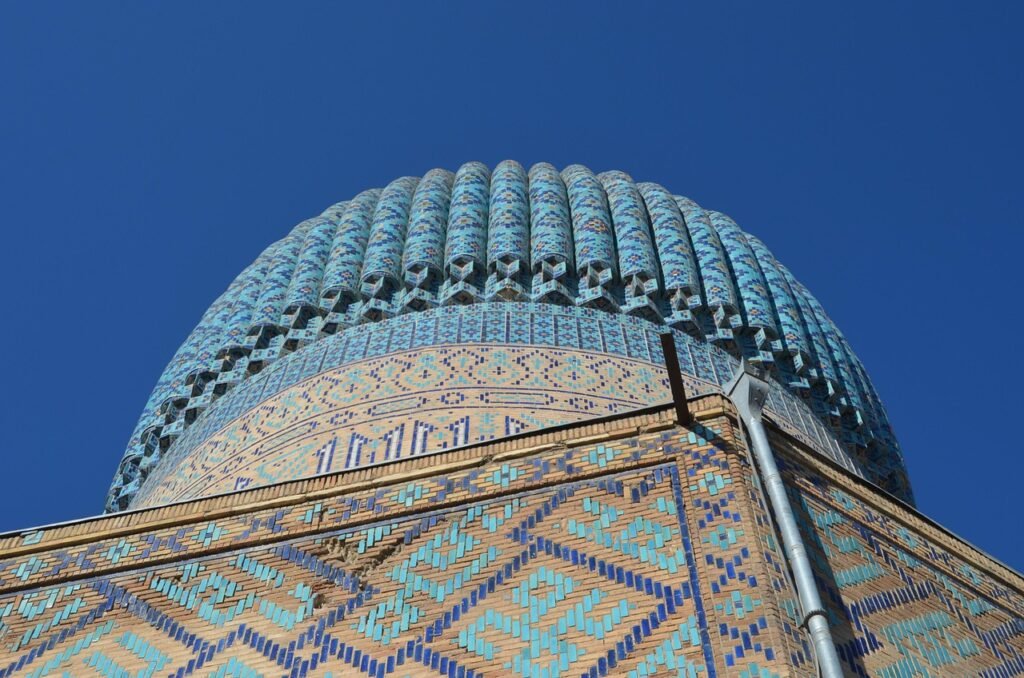
Turkistan & Shymkent — The Silk Road Side Quest
If you’ve got extra days and want a Silk Road detour, head south to Shymkent and then Turkistan. The Mausoleum of Khoja Ahmed Yasawi in Turkistan is a genuinely stunning 14th-century Timurid structure — think of it as a smaller, quieter cousin to the big Uzbek Silk Road sites.
Entrance to the mausoleum interior runs about 500 KZT (~$1) for foreigners; the surrounding grounds and historic complex are free to walk around. Daily marshrutkas connect Shymkent’s Samal Bus Station to Turkistan, taking about 2 hours for around 1,500 KZT. A full day trip from Shymkent, including transport and entrance fees, typically comes out to around 5,000 KZT total — one of the best value days in the whole country.
Where to Sleep
Hostels are widely available in Almaty and Astana, less so in smaller towns where guesthouses take over. A dorm bed generally runs $8-10/night in Almaty, with private rooms around $15-20. Almaty Backpackers is a well-known starting point if you want a social hostel with other travelers to team up with for canyon and lake trips (splitting a private taxi cuts costs fast).
In Saty, Kegen, or near the national parks, small family-run guesthouses fill the gap — usually simple, warm, and cheap, often with home-cooked meals included. Camping is an option at Charyn, Kolsai, and Kaindy for a small extra fee if you’re carrying gear.
Staying Connected: SIM Cards & Data
Grab a local SIM the moment you land — data is genuinely cheap here. Kcell, Beeline, and Tele2 all sell tourist packages, generally in the 5,000-8,000 KZT range (roughly $11-18) for 20-50 GB valid 30 days, with smaller/cheaper packs available too (Tele2’s basic plans start under $4). You’ll need your passport to register, which is standard practice, not a scam.
If you’d rather skip the counter altogether, eSIM options from providers like Airalo or eSIMfly start around $2-5 for smaller data packs and activate before you even land — handy if you land at an odd hour and don’t want to deal with an airport SIM kiosk. Also worth knowing: Kazakhstan has been handing arriving foreign visitors a free SIM with 1 GB of data valid for 24 hours right after passport control at some airports — a nice buffer while you sort out a proper plan.
Is Kazakhstan Safe for Backpackers?
Short answer: yes, genuinely. The U.S. State Department currently rates Kazakhstan Level 1 — Exercise Normal Precautions, the lowest risk tier, putting it on par with places like Japan or Iceland.
The real risks are boring and manageable: pickpocketing in crowded bazaars and train stations, and the occasional taxi driver trying to overcharge a clueless-looking tourist. Stick to Yandex Go instead of hailing random cabs and you’ll avoid 90% of that headache. Police can be reached at 102, ambulance at 103.
Solo female travelers generally report feeling safer than expected, though the usual common-sense rules apply — avoid empty streets late at night, and don’t flash valuables in crowded markets.
Kazakh Food You Actually Need to Try
Kazakh food is hearty, meat-and-dairy-forward, and built for surviving long stretches on the steppe. Here’s what to order:
Beshbarmak — the national dish, and a whole ritual in itself. Boiled horse, lamb, or beef served over wide flat noodles with onion broth. The name literally means “five fingers” because it’s traditionally eaten by hand. Expect to pay around 2,500-4,500 KZT ($5-9) and to eat it with actual strangers who suddenly become friends over the meal.
Kazy — horsemeat sausage, usually sliced and served alongside beshbarmak or as a cold appetizer. It’s a point of pride here, not a tourist gimmick, so approach with an open mind.
Baursak — little pillows of fried dough, mildly sweet, served with basically every meal and definitely with tea. Cheap, addictive, and a must at breakfast.
Kumys and shubat — fermented mare’s milk and fermented camel’s milk, respectively. Tangy, sour, an acquired taste, but worth trying once for the story alone. If you’re lucky you’ll get offered some at a roadside stall in the countryside.
Lagman and manti — hand-pulled noodle soup and steamed dumplings, both quick, filling, and easy on the wallet at $4-7 a plate.
Samsa — baked pastries stuffed with meat and onion, sold at every bazaar bakery. Great grab-and-go lunch between sightseeing stops.
My Rough 10-14 Day Backpacking Route
Here’s roughly how I’d map it out if you’ve got two weeks:
- Days 1-3: Almaty — settle in, explore the city, sort out your SIM card
- Day 4: Day trip to Charyn Canyon
- Days 5-6: Kolsai Lakes and Kaindy (overnight in Saty)
- Day 7: Big Almaty Lake, or a rest day back in the city
- Days 8-9: Overnight train to Astana, explore the capital
- Days 10-12: Fly or train down to Shymkent, day trip to Turkistan
- Days 13-14: Buffer days — weather delays are real, and you’ll probably want one more Charyn-style detour anyway
Packing & Practical Tips
- Carry cash everywhere outside major cities — card readers are unreliable at national park entrances
- Download offline maps (Maps.me or Google Maps offline) before heading into the mountains — signal disappears fast once you’re past the checkpoints
- Drink bottled water; locals boil tap water rather than drink it straight
- Pack layers no matter the season — the continental climate swings hard between day and night, and summer highs can flip to cold mountain evenings fast
- Keep your passport on you for border-zone areas like Charyn, Kolsai, and Big Almaty Lake — checks are routine, not a red flag
FAQs
Is Kazakhstan expensive to backpack?
Not really. Budget travelers can realistically get by on $20-40/day covering hostel dorms, local food, and public or shared transport. Astana runs more expensive than Almaty, so factor that in if you’re spending real time there.
How many days do you need in Kazakhstan?
Ten to fourteen days covers Almaty, the major day trips (Charyn Canyon, Kolsai Lakes, Kaindy, Big Almaty Lake), and a swing through Astana. Add extra days if you want to include Shymkent and Turkistan in the south.
Do I need a visa for Kazakhstan?
Most Western passport holders (US, UK, Canada, Australia, EU) enter visa-free for up to 30 days per visit, capped at 90 days within 180 days. On top of that, Kazakhstan’s QazETA electronic travel authorization is set to become mandatory for visa-free travelers from November 1, 2026, so check the QazETA app before you book flights if you’re traveling on or after that date.
Is Kazakhstan safe for solo female travelers?
Generally yes. It carries a Level 1 “Exercise Normal Precautions” rating from the U.S. State Department, and most solo female travelers report feeling safer than expected. Standard precautions around crowded areas and late-night travel still apply.
What’s the best time to visit Kazakhstan?
June through September is ideal for the mountain regions, canyons, and lakes — roads and hiking trails are accessible and the weather is stable. Winters get brutally cold, especially in Astana, though it’s a completely different (and quieter) experience if that’s your thing.
Can I drink the tap water in Kazakhstan?
Stick to bottled water. Locals typically boil tap water before drinking it, and bottled water is cheap enough that it’s not worth the risk of an upset stomach mid-trip.