Short answer: not the way you’re picturing it. No wandering into a hostel with a backpack, no winging it on local buses, no “let’s see where the day takes us.” There’s a legit workaround backpackers have been using for years, and it’s worth knowing before you write this country off. I did the research (fact-checked against Turkmenistan’s own government fee schedule, no less), so here’s the real deal for 2026.
You Can’t Roam Free, But You Can Get Close
Turkmenistan requires a visa for every single nationality on earth — there’s no visa-free entry, full stop. On a standard tourist visa, you also can’t just show up and explore. The only place you’re allowed to move around independently is the capital, Ashgabat. Everywhere else, you need a certified local guide with you, and every day of your itinerary is pre-arranged before you land.
So classic backpacking, where you roll into a town and figure it out? That’s off the table outside the capital. But there IS a loophole, and it’s basically Turkmenistan’s version of speed-backpacking. More on that below.
The Tourist Visa Route (Backpacking With Training Wheels)
This is the “normal” way in, and it’s a process. You need a Letter of Invitation (LOI) from a licensed Turkmen agency before you can even apply — the LOI can only be issued through registered travel agents inside Turkmenistan. Once approved, you typically get a visa on arrival, no embassy visit needed for most nationalities.
Here’s the catch: you genuinely cannot get a tourist visa without booking a full tour through an operator. A guide travels with you outside Ashgabat the entire time. Some operators will let you loose in the capital on your own within limits, but that’s it. Worth knowing too: even with a pre-arranged tour, applications sometimes get rejected without explanation, so build in a buffer before your trip.
Weirdly specific 2026 detail: you’ll still get hit with a mandatory PCR test at the border when you arrive, roughly 3-4 years after most of the world dropped this — Turkmenistan’s requirement was still confirmed as recently as mid-2026. It’s treated more as a formality (a nasal swab, results in ~15 minutes, no positive case ever reported) than an actual health check, but you do have to pay for it.
On the e-visa situation — proceed with caution. Turkmenistan signed a law back in April 2025 promising an electronic visa system that would kill the LOI requirement. Some outlets reported it “launching” for travelers from 50+ countries around April 2026. But as of this article’s fact-check (September 2026), even visa agencies actively selling e-visa applications describe the government system as still “settling” and recommend going through a licensed agency rather than relying on it directly. Translation: don’t assume you can skip the LOI. Check with an agency close to your travel dates, because this is genuinely a moving target.
The Transit Visa Hack (The Closest Thing to Real Backpacking)
Here’s the good part. If you’re overlanding through Central Asia anyway, the transit visa is your move. It doesn’t require booking a tour or getting LOI support from an agency, and no guide is required once you’re in.
You apply directly at select embassies (Tashkent, Almaty, Aktau, Dushanbe, Bishkek, and Yerevan have all issued them recently). The trade-off: you have to travel a fixed route from your declared entry point to your exit point without deviating, and re-entering from the same country you came from isn’t allowed. The classic route is Iran → Turkmenistan → Uzbekistan, passing right by the Darvaza crater along the way.
Don’t expect it to be easy. Turkmenistan’s official consular fee for a single-entry transit visa (up to 5 days) is $20, though real-world totals with processing and service fees tend to run higher — budget $35–70 to be safe. More importantly: rejection rates are genuinely high, and travelers have reported consistent transit visa denials since the country reopened in 2023, so treat approval as a maybe, not a given. If you get one, you’re usually looking at 3–5 days in-country, with 7 days being rare.
This is the actual backpacker move: self-guided, self-paced, cheap visa fee. It’s just short, and it’s a gamble whether you get approved at all.
What This Actually Costs
Rough numbers, all in USD:
- Tourist visa fee on arrival: $85–150 cash, depending on nationality, entry point, and visa length — land borders tend to run cheaper than the Ashgabat airport
- Extra entry fees: roughly $14 migration tax plus a ~$30–40 PCR test fee, both mandatory, both cash only
- Guided tourist tour package: $270–340 per day is typical for a private tour in 2026; budget group tours can bring that down to around $275/day (4-day trips from roughly $1,100–1,145 total)
- Transit visa fee: officially $20 for a single-entry 5-day visa, realistically $35–70 with processing fees
- Food: meals run about $5–10, beer or soft drinks around $1
- Single room supplement: typically $50 per night extra, or a flat $200 for the whole tour if you don’t want to share
There’s no backpacker-budget version of the tourist visa route. It’s a tour, priced like a tour — and priced higher than a lot of outdated blog posts suggest.
One more thing: all of this has to be paid in clean, undamaged, unfolded US dollar bills. Torn, old, or heavily creased notes get flat-out refused at the counter. Bring a proper stack of crisp cash, not whatever’s left over from your last trip.
Cash Is King, Cards Are Basically Decoration
Bring US dollars. Card acceptance is limited to major hotels and a handful of high-end state-run spots in Ashgabat — outside that, don’t count on paying by card at all. ATMs are scarce, mostly clustered in the capital, and don’t reliably work with foreign cards.
The manat is the only legal domestic currency, and the official exchange rate has long been pegged at around 3.5 manat to the dollar. In practice, guides can often exchange cash USD at a much more favorable unofficial rate — travelers have reported figures well above the official peg, though this fluctuates and isn’t something to plan around precisely. Basically: bring enough cash for your whole trip, because you can’t just “find an ATM” halfway through.
Getting Around
If you’re on a tourist visa, transport is arranged for you — private car, internal flights, sometimes a train leg between Ashgabat, Mary, and Dashoguz. You’re not booking your own tickets or hopping shared taxis solo, though guides can usually arrange overnight trains or domestic flights if you ask in advance.
If you’re on the transit visa, you’re on your own for logistics along your approved route — shared taxis and the rail network connect the main cities, though the going can be slow and the roads rough. Getting out to the Darvaza crater alone takes around four hours of driving on seriously degraded terrain, so budget your transit days accordingly.
Don’t Miss These Highlights
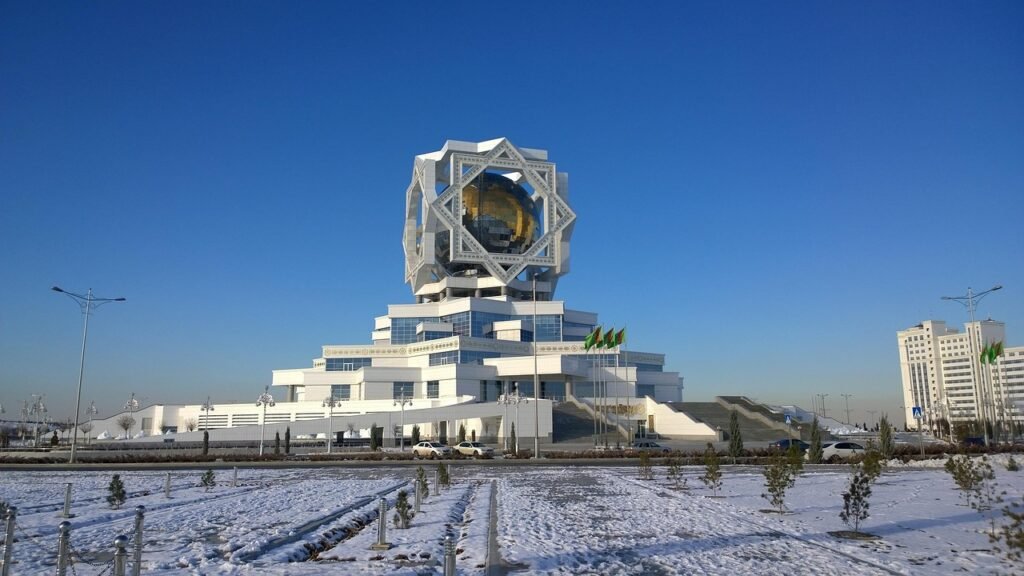
Ashgabat is a trip in itself — a genuinely surreal white marble capital that hits different from anywhere else in Central Asia. It’s also the one place you can walk around freely, so don’t waste that freedom.
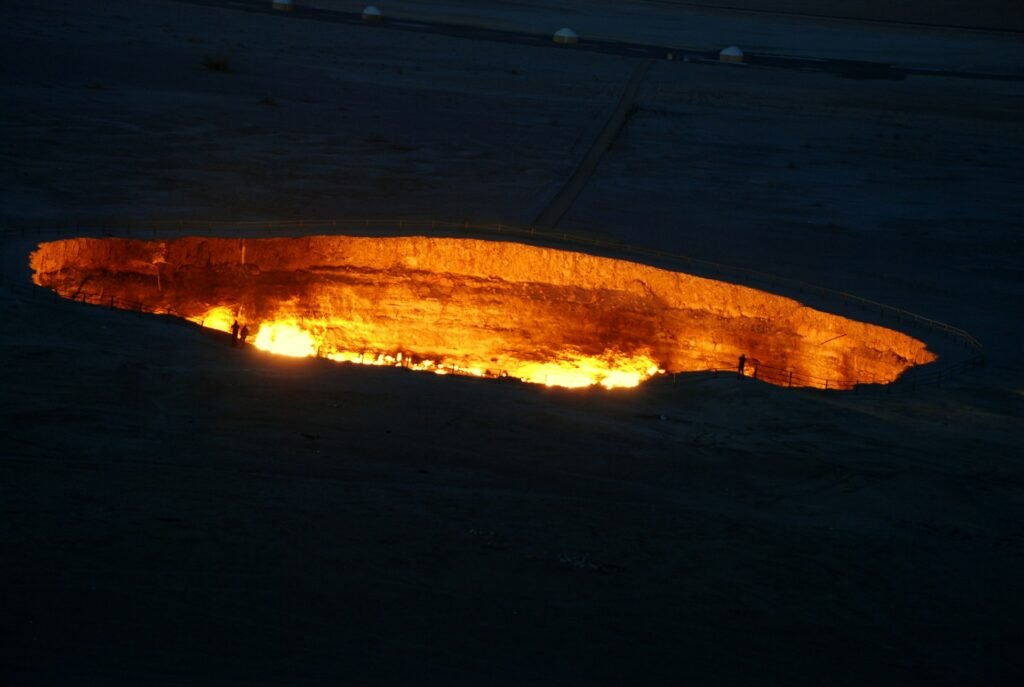
Darvaza Gas Crater (“Door to Hell”) is a must-see, but go in with the right expectations. The old photos of a roaring inferno visible for miles? Not anymore. Government-drilled wells have been siphoning off the methane since 2022, and fire activity had dropped more than 75% by 2025–2026, down to scattered small flames instead of one massive blaze. You’ll still see fire up close at the rim, but it’s a shadow of what it used to be — and there’s a formal plan to extinguish it entirely within the next decade. If you want to see any fire at all, this is genuinely a “go now” situation.
Konye-Urgench is a UNESCO-listed Silk Road city up near the Uzbek border, full of centuries-old minarets and mausoleums that most Central Asia travelers never see because Turkmenistan is such a pain to get into. Worth the detour if your route allows it.
Ancient Merv near the city of Mary is one of the oldest oasis cities on the Silk Road, with the Sultan Sanjar Mausoleum as the centerpiece. If you’re into ruins that feel properly ancient and not overrun with tourists, this is a must.
Kow-Ata underground lake, a warm sulfur lake inside a cave near Bakharden, is a common add-on to most itineraries and a genuinely weird, fun swim if you’ve got the time for it.
Local Turkmen Food You Need to Try
Turkmen food doesn’t lean on spice — it leans on fat, bread, and slow cooking, and it’s honestly underrated.
- Plov (Palaw): The Central Asian classic — rice cooked in a kazan with lamb, onion, carrot, and dried apricot. Everywhere, always good.
- Manty: Big steamed dumplings stuffed with lamb, onion, and a bit of fat, eaten with sour cream and dill. The Sunday family-meal dish, and worth seeking out fried if you see it on a menu.
- Shashlik: Skewered, open-fire grilled lamb, served with raw onion and flatbread. Classic street food, always hits different straight off the coals.
- Chorek: Flatbread baked in a clay tandyr oven — not just a side, it’s a genuine hospitality symbol here.
- Gutap: Fried or shallow-fried stuffed flatbread, usually meat, spinach, or lentil, dipped in yogurt. Great grab-and-go snack.
- Ichlekli: Sometimes called “Turkmen pizza” — baked flatbread stuffed with lamb and onion.
- Chorba: A slow-cooked lamb and vegetable soup, often with chickpeas.
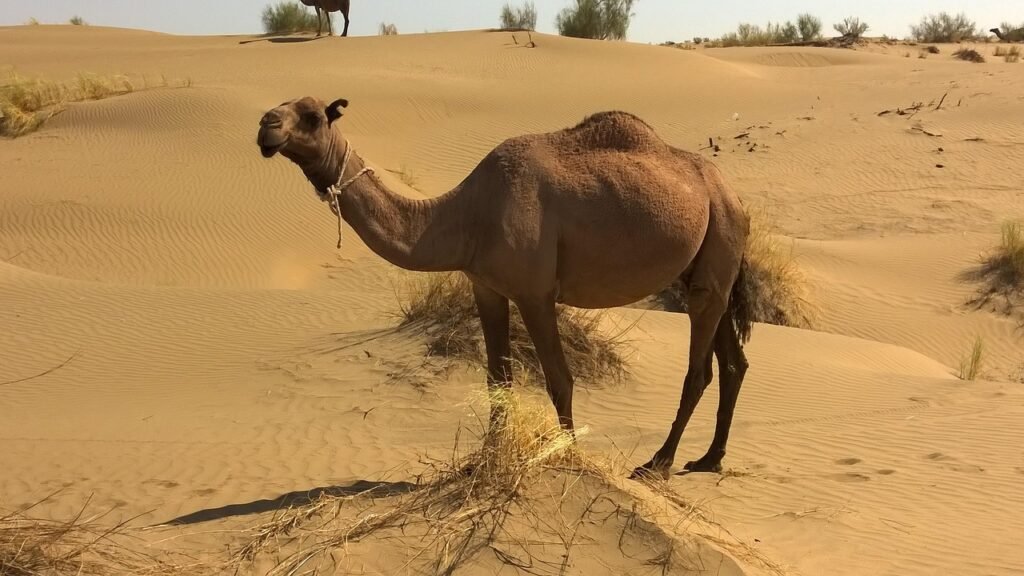
- Chal: Fermented camel milk. It’s an acquired taste, but if you’re lucky enough to get offered some at an oasis stop, try it — it’s a real slice of nomadic culture you won’t find back home.
Is Turkmenistan Actually Safe?
Yes, more than people expect. As of August 2026, the US State Department has it at Level 1 — “exercise normal precautions” — the lowest risk category they issue. Petty crime is genuinely rare, and there’s no official crime warning flagged for the country at all.
The catch isn’t crime, it’s surveillance and control. Expect ID checks and don’t expect much internet freedom — this is one of the most locked-down countries online in the world. General street photography is mostly fine and unremarkable, but steer clear of photographing military sites, government buildings, and airport/border security areas specifically — those remain restricted, as in most tightly-controlled countries. Keep opinions about the government to yourself and you’ll be fine.
Tips for Making the Transit Visa Route Work
- Apply for your transit visa well ahead of time (weeks, not days) and have a backup plan if it’s denied — rejection happens often for no stated reason
- Bring more cash than you think you need, in clean, new US bills — torn or worn notes get rejected
- Don’t plan a rigid itinerary on transit — border delays and desert roads eat time fast
- Photograph landscapes and monuments, not soldiers, checkpoints, or anything that looks remotely official
- If you’re doing the guided tourist route instead, ask upfront whether you get any unsupervised time in Ashgabat — some operators allow it, some don’t
- Double-check the current e-visa status with a licensed agency before you commit — the rules have been shifting through 2026
FAQs
Can you backpack Turkmenistan independently? Not in the traditional sense outside the capital. Tourist visas require a guide at all times outside Ashgabat. The transit visa is the only route that lets you move without one, but it’s short, route-locked, and frequently denied.
Do I need a visa for Turkmenistan? Yes, every nationality does — there’s no visa-free access currently, and an e-visa system exists on paper but isn’t fully reliable yet.
How much does a Turkmenistan trip cost? Budget roughly $270–340 a day on a guided tourist visa route, plus $85–150 for the visa itself and around $50 more in migration tax and PCR fees. The transit visa route is far cheaper (roughly $35–70 for the visa) but only lasts a few days if you’re approved at all.
Is the Darvaza gas crater still burning? Technically yes, but it’s a fraction of its old glory — flame activity has dropped over 75% since 2022 due to methane capture wells, and there are real plans to close it for good eventually.
Can I use my debit or credit card? Barely. Cards mostly work only in major Ashgabat hotels. Bring clean, undamaged cash USD for everything else.
Is Turkmenistan safe to visit? Yes — it currently sits at the lowest US travel advisory level, with low crime. The real challenge is bureaucracy and surveillance, not danger.
What’s the best time to visit? Spring (April–May) or fall (September–October) — the Karakum Desert gets brutally hot in summer and cold in winter.
Prices and visa rules current as of September 2026. Turkmenistan’s entry requirements change quickly and with little notice — always verify with a licensed Turkmen travel agency before booking.