Running out of money is the number one reason backpackers go home before they’re ready. You budget for six months, you have an amazing time, and by month four you’re doing math on napkins in a hostel kitchen. But the world has changed — figuring out how to work while traveling backpacking is more accessible now than it’s ever been. This isn’t a “passive income” fantasy or a course you need to buy. It’s a real, practical rundown of the options that actually work, what they pay, and what they cost you in return.
Option 1 — Remote Work (Take Your Job on the Road)
If your job lives on a laptop — marketing, project management, customer support, design, dev, ops — you might not need to quit anything. You just need to figure out how to keep doing it from somewhere else.
Who can actually do this
Anyone whose output is a deliverable, not a physical presence. If your manager cares about results and not desk time, you have a shot. Roles built around live meetings across every time zone are harder — you’ll be the one waking up at 4am for a call, not your teammates.
How to bring it up with your employer
Don’t ask “can I work remotely forever” out of nowhere. Start smaller: propose a 4-6 week trial from one location with a stable time zone overlap. Show up to that trial with a plan — internet backup, working hours in writing, a way to be reached. Companies say yes more easily to a defined pilot than an open-ended request. If your company already has remote employees, use that as your opening line.
Making it actually work on the road
- Time zones: pick destinations within 3-4 hours of your home time zone if your job needs live overlap. Southeast Asia works for Australian teams, Latin America works for US teams, Eastern Europe works for Western European teams.
- WiFi reliability: never trust a single connection for anything important. Have a mobile hotspot as backup, always.
- Communication discipline: over-communicate at first. Post your working hours in Slack, respond fast during your stated hours, and don’t let “I’m traveling” become an excuse people start to notice.
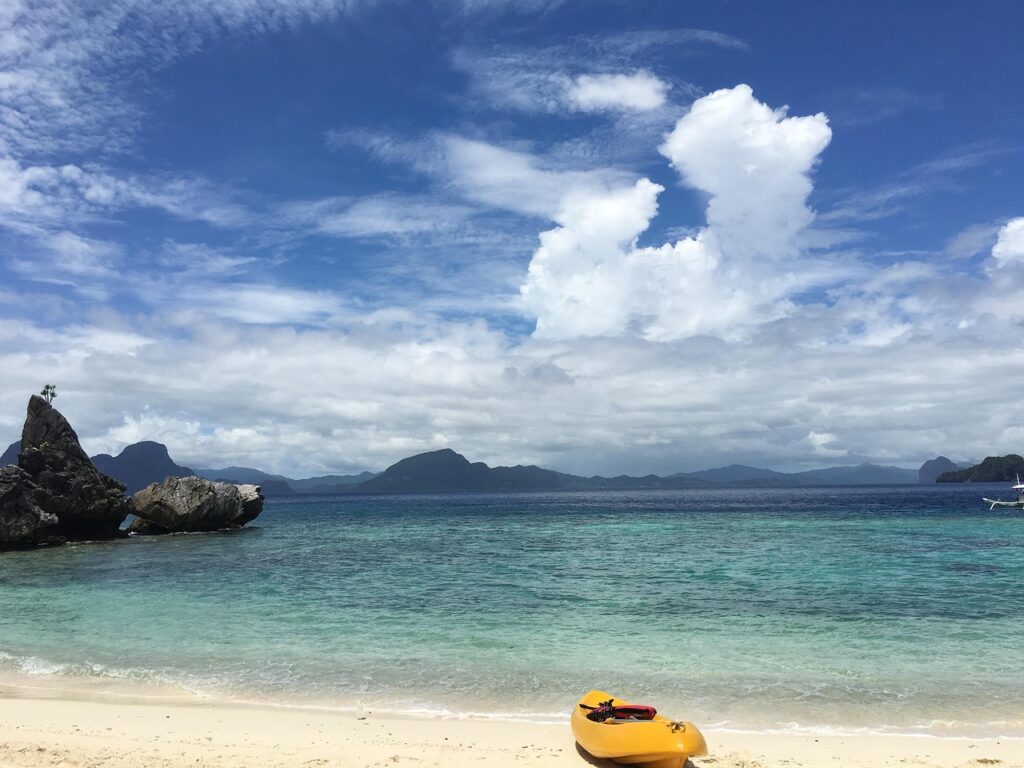
Best countries for remote workers (low cost + good internet)
Thailand — Chiang Mai and Bangkok both have strong fiber internet and a huge remote worker scene. Budget $800-1,200/month comfortably including a decent apartment.
Portugal — Lisbon and Porto have solid infrastructure. Most nomads just travel on a 90-day Schengen tourist stay to start. The D8 digital nomad visa exists for longer legal residency, but it requires proving around €3,680/month in income (the 2026 threshold) plus roughly €11,040 in savings — out of reach for most people just starting freelance work, worth knowing about once your income is more established. Cost of living runs $1,200-1,800/month in the cities, less outside them.
Mexico — Mexico City and Oaxaca have great cafes and co-working spaces, plus a 180-day tourist entry (FMM) for most passports — though the exact number of days is set by the immigration officer at the border, so don’t assume you’ll automatically get the full 180. Expect $900-1,500/month.
Georgia — genuinely underrated. Tbilisi offers visa-free stays up to a year for many nationalities and costs as little as $600-900/month, with fast city internet. One catch worth knowing: as of March 2026, Georgia generally requires a work permit for paid work performed in-country, so check current rules before assuming remote work there is a total legal gray zone.
Colombia — Medellín is the classic pick: great weather, strong co-working culture, and around $800-1,300/month.
Option 2 — Freelancing (Build Income as You Travel)
Freelancing means you’re not tied to one employer — you build income from multiple clients, which is more flexible but also less predictable, especially in month one.
Writing & Copywriting
Easiest skill to start monetizing with zero prior portfolio, since you can write sample pieces on spec. Platforms: Upwork, Contra, and cold outreach to small businesses who need blog content or email copy. Realistic early rates: $15-30/hour; experienced freelance writers charge $50-100+/hour.
Graphic Design
Fiverr and 99designs are the entry points, but repeat clients from direct outreach pay far better than marketplace gigs. A logo package might run $50-300 depending on your portfolio; ongoing brand work pays more consistently.
Web Development
Highest earning ceiling on this list. Even junior developers can land $25-50/hour contract work, and experienced devs regularly bill $75-150/hour. The catch: you need real skills before you start, not a weekend bootcamp certificate.
Social Media Management
If you’ve run accounts before — even for a friend’s small business — you already have a pitch. Small businesses pay $500-1,500/month per client for consistent posting and engagement. Land 2-3 clients and it’s a real income.
Virtual Assistance
The lowest barrier to entry on this list: calendar management, email inbox cleanup, basic admin. Rates start around $10-20/hour but it’s a fast way to get your first paying client while you build other skills.
Video Editing
Demand has exploded with the YouTube and short-form content boom. Learning Premiere Pro or DaVinci Resolve (free) to a competent level takes weeks, not years. Editors charge $20-50/hour or a flat $50-300 per video depending on length and complexity.
Option 3 — Working Holiday Visas
This is one of the most underused tools backpackers have, and most people never even look into it. A working holiday visa gives you legal permission to live and work in another country for up to a year or more — not freelance gray-area work, actual legal employment.
What it actually is
A reciprocal agreement between two countries that lets young travelers work legally to fund their trip, rather than just visit as a tourist. It’s built for gap-year and backpacker travel specifically — it’s not a skilled migration pathway.
Countries with working holiday visa programs
Australia is the most popular by far. The Subclass 417 (for passport holders from countries like the UK, Germany, Ireland, France, Canada, Japan, and South Korea) and Subclass 462 (for the US, and many others) both let you work legally for a year, with extensions possible if you complete regional work. Age limit is 18-30 for most passports, though it’s now 18-35 for ten nationalities — Canada, Cyprus, Denmark, Finland, France, Germany, Ireland, Italy, South Korea, and the UK — under updated bilateral deals. Farm and hospitality work commonly pays $25+/hour AUD once you account for Australia’s high minimum wage. Visa fees rose on July 1, 2026: budget AUD $840 for a first application, and AUD $1,000 if you’re applying for a second or third year.
New Zealand has one of the most accessible programs, open to 45+ nationalities, generally for ages 18-30 (up to 35 for a few countries).
Canada (International Experience Class) — up to age 35 for many passports, categories include working holiday, young professionals, and co-op placements.
UK — the Youth Mobility Scheme covers a couple dozen countries including Australia, Canada, and Japan, for up to two years.
Germany, Ireland, Japan, South Korea all run their own bilateral programs with varying lengths, typically 6-12 months.
Eligibility basics
- Usually 18-30, sometimes up to 35 depending on your passport and the country
- Proof of funds — Australia wants around AUD $5,000 in your account
- No dependent children accompanying you
- Clean criminal record and standard health requirements
- Apply from outside the country, generally
Types of work available
Hospitality (bar, restaurant, hotel work), farm and seasonal agricultural work, retail, and — in Australia specifically — regional/rural work that unlocks second and third-year visa extensions. It’s not glamorous work, but it’s legal, it pays real wages, and it funds months of further travel.
Option 4 — Teach English Abroad (TEFL/TESOL)
If you want stability over hustle, teaching English is the most structured option on this list. It comes with a legal work visa, often includes housing, and pays consistently every month — a different rhythm than freelancing or gig work.
Best countries to teach in
South Korea and Japan offer the highest pay and often cover flights and accommodation, but require a bachelor’s degree for the visa.
China pays well too, though visa requirements and demand shift often — check current rules before committing.
Thailand and Vietnam are more accessible with lower degree requirements in some programs, though pay is lower and mostly covers a comfortable local lifestyle rather than savings.
Getting TEFL certified cheaply
You don’t need to spend $1,000+ on certification. A 120-hour online TEFL/TESOL course from providers like Premier TEFL or i-to-i typically runs $150-300 and is accepted by most reputable language schools. Skip courses that promise guaranteed job placement for a huge markup — the certificate matters more than the provider’s brand.
Realistic salary ranges
- South Korea/Japan: $1,800-2,500/month, often with free or subsidized housing
- China: $1,500-2,500/month depending on city and school type
- Thailand/Vietnam: $900-1,500/month, enough to live well locally but not much beyond

Option 5 — Workaway, Worldpackers, and HelpX (Work for Accommodation)
This one isn’t a job — you won’t build savings from it. But it’s one of the most effective ways to make a travel budget stretch for months instead of weeks.
How it works
You trade skills — gardening, hostel reception, social media, cooking, basic construction, childcare — for free accommodation and usually meals, typically 20-25 hours a week. Platforms like Workaway, Worldpackers, and HelpX connect you with hosts around the world; membership costs around $40-50/year.
Who it’s best for
Slow travelers who want to cut costs and actually connect with a place instead of skimming through it. It’s not for anyone trying to earn money to fund the next leg — it’s for anyone trying to make the money they already have last three times as long. A lot of backpackers use it as a bridge between paid gigs, or just because staying in one hostel for two months and hosting-swapping work feels more real than another 3-day city stop.
Option 6 — Travel Blogging / Content Creation (The Honest Truth)
Every backpacker has thought about this one. Here’s the honest version: it can absolutely become a real income, but it takes 1-2 years of consistent, unglamorous work before it earns meaningfully — and most people underestimate that timeline by a lot.
Don’t quit your job for this
Start a blog, YouTube channel, or Instagram now, on the side, while you’re doing one of the other options on this list for actual income. Post consistently. Learn SEO or short-form content strategy. Build an audience slowly.
How monetization actually happens
Once you have traffic or followers, income comes from a mix: display ads (need real traffic, think tens of thousands of monthly readers), affiliate links (hotel bookings, gear, tours), brand partnerships (need an engaged audience, not just followers), and digital products like guides or templates once you understand your audience’s problems.
The part nobody puts in the headline
Most travel bloggers and creators earn very little — often nothing — in year one. The ones who make it aren’t the ones who got lucky with a viral post; they’re the ones who kept showing up for two years after everyone else quit. Treat it as a long-term side project, not a funding source for your current trip.
Setting Up to Work While Traveling (Practical Setup)
Tech you need
A lightweight laptop (13-14 inch, good battery life), a power bank (20,000mAh minimum for long travel days), and a portable WiFi hotspot or a local SIM with a solid data plan. If your work is client-facing or requires video calls, decent noise-canceling headphones are worth the extra weight.
Best countries for WiFi reliability
Thailand, Vietnam, Portugal, Georgia, and most of Eastern Europe consistently test well for city fiber speeds. Co-working spaces almost always outperform home WiFi in developing destinations — worth the $5-15/day if you have a deadline.
Co-working spaces vs. cafes vs. hostels
- Co-working spaces: best for deadline days, calls, and consistent fast WiFi. Costs $5-20/day or $80-150/month depending on the city.
- Cafes: fine for casual work blocks, but WiFi and power outlet access vary wildly — always have a backup plan.
- Hostels: convenient and free, but common areas get loud and WiFi is often shared across dozens of guests. Fine for email, risky for a video call.
Banking
Use Wise or Revolut for international transfers and currency conversion — both charge far less than traditional banks on exchange rates and let you hold multiple currencies in one account. Get a debit card from one of these before you leave; ATM fees on a regular home bank card add up fast over months of travel.
Taxes for Location-Independent Workers
Nobody wants to read this section, but skipping it is how people end up with real problems. You still owe tax somewhere — working from a laptop in Bali doesn’t make your income invisible to your home country’s tax authority.
The key point: tax residency rules vary enormously by country, how long you stay, and where your income is sourced from. Some countries only tax you once you exceed 183 days in a year; others have different thresholds entirely, and your home country may still expect a return regardless of where you were sitting. If you’re earning meaningful income while traveling, it’s worth a single paid consultation with an accountant who understands cross-border or expat tax situations before you assume anything. It’s a boring hour and it can save you a very unpleasant year later.
FAQs
How do I get a remote job? Start with your current employer if you have one — negotiating remote work with a company that already knows you is easier than landing a fully remote role cold. If you’re job-hunting, filter for “remote” on LinkedIn and We Work Remotely, and be upfront in interviews about your time zone flexibility.
Can I work while on a tourist visa? Generally no, not legally — most tourist visas explicitly prohibit local employment. Remote work for a company based outside the country you’re visiting sits in a legal gray area in most places (rarely enforced, but not officially sanctioned), whereas working locally for pay on a tourist visa is a clear violation almost everywhere. Working holiday visas exist specifically to make local work legal — use them if you plan to work in-country.
How much money do I need to start traveling and working? Budget at least 2-3 months of living expenses as a buffer before you expect income to become reliable, whichever path you choose. For working holiday visas specifically, Australia currently wants around AUD $5,000 proof of funds just to apply.
Is being a digital nomad as good as it looks on Instagram? Parts of it, yes. The photos are real. What’s missing is the version where your WiFi cuts out mid-call, you’re doing a full workday in a hostel common room because the co-working space budget didn’t work out this month, and half your “adventure” is actually spent staring at a laptop screen. It’s a genuinely good lifestyle if you go in with realistic expectations — it’s a rough one if you go in expecting a permanent vacation.
The laptop lifestyle is real, but it takes actual work to sustain — nobody stumbles into it. Pick one path from this guide that fits your skills and timeline, commit to it for a few months before judging whether it’s working, and keep moving.
u