Vietnam is an amazing backpacking route: compact enough to travel North to South in a few weeks, yet wildly diverse — from limestone islands and caves to imperial citadels, lantern-lit towns, beaches and bustling cities. Let’s jump right into a practical guide with amazing destinations and tips for backpackers.
Hanoi
Start point for many backpackers. Hanoi’s Old Quarter, tree-lined lakes and colonial architecture make it a great place to acclimatize, sample street food, and arrange onward travel north or south. Typical backpacker activities include wandering the Old Quarter on foot or by cycling, visiting Hoàn Kiếm Lake and Ngọc Sơn Temple, trying pho and egg coffee, and browsing night markets. Hanoi is the national capital of Vietnam.
Stay in or near the Old Quarter for easy access to buses, trains and night markets; use local motorbike taxis or ride-hailing apps for short trips.
Places of Interest in Hanoi
- Hoan Kiem Lake – A calm lake with a temple on a small island in the middle. The temple can be reached via a wooden bridge.
- Hanoi Train Street – A narrow street which has a train track in the middle and shops on the either side. Touristic place. Visit here only if you want to have a closer encounter with the train that passes by.
- Imperial Citadel of Thang Long – A complex with buildings, sculptures and tower. Buildings within the complex were built in the 11th century.
- Ho Chi Minh’s Mausoleum – Place where the body of Ho Chi Minh – The founding father of Vietnam is kept.
- Tran Quoc Pagoda – An ancient buddhist temple near a lake.
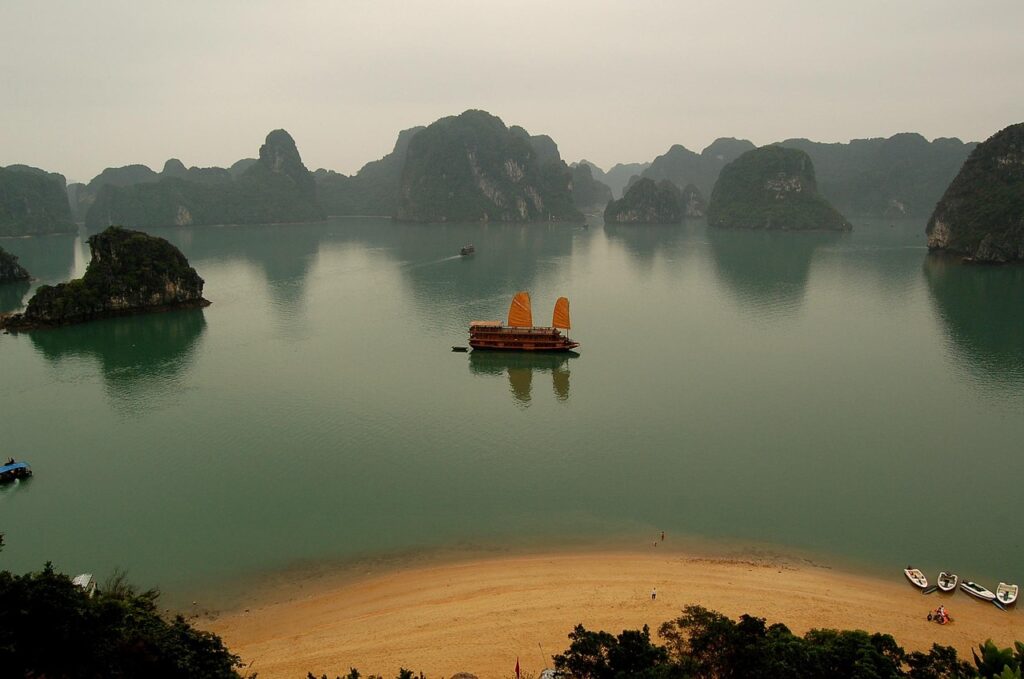
Ha Long Bay
Ha Long Bay’s karst seascape — thousands of limestone islets rising from emerald water — is one of Vietnam’s signature landscapes and a UNESCO World Heritage site. Many backpackers take an overnight boat or day cruise to explore caves, kayak, and enjoy views across the bay.
Book well-reviewed operators for safety and environmental responsibility; quieter alternatives nearby may offer a more relaxed experience.
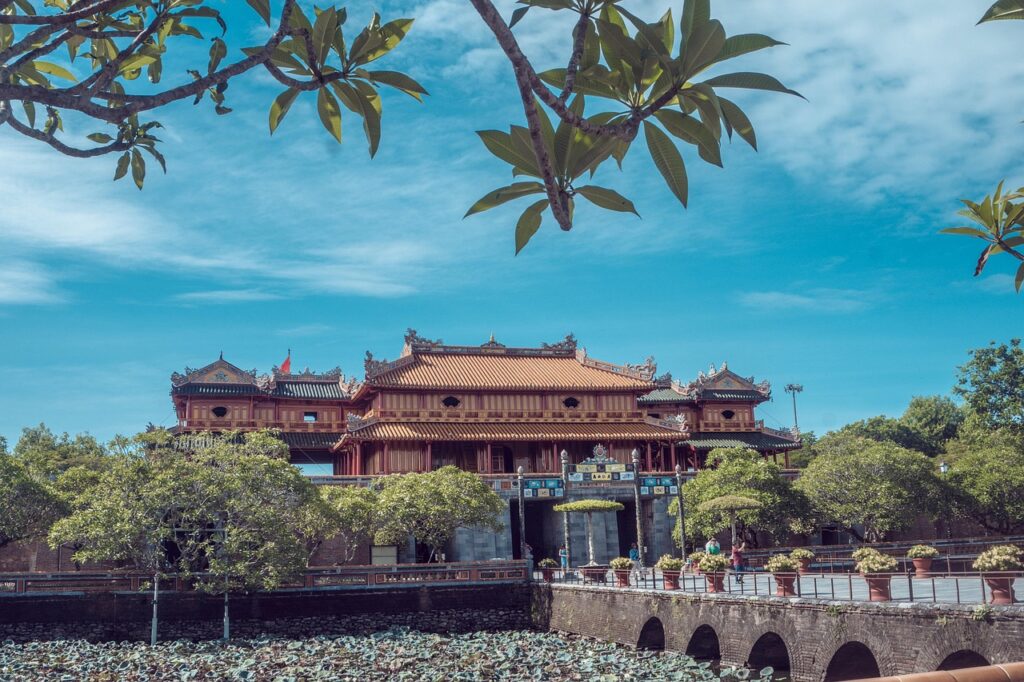
Hue
Hue was Vietnam’s imperial capital under the Nguyễn dynasty, and its historic monuments — including the Imperial City and royal tombs — remain one of the country’s most important cultural sites. Expect citadel walls, royal architecture, riverside scenery, and a slower pace compared to larger cities.
Renting a bicycle or motorbike makes it easier to explore tomb complexes and pagodas located outside the city center.
Places of Interest
- Hue Imperial city – UNESCO heritage site complex with several buildings that are preserved from old times. Served as a formal capital during 19th century.
- Luong Dinh Pavilion – A riverside pavilion in Huế where Nguyen-era royals once relaxed, its timbered roof and open terraces still catch the Perfume River breeze.
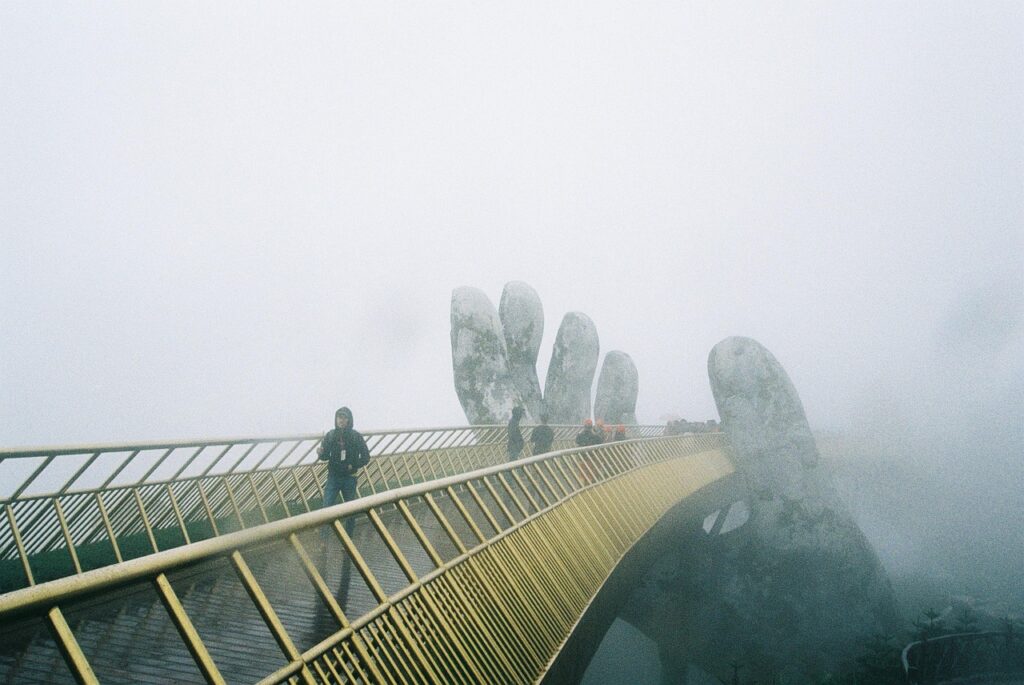
Da Nang
Da Nang is a coastal city known for wide beaches, a modern skyline, and strong transport connections. It serves as a convenient base between Hue and Hoi An and is often used by backpackers as a stopover along the central coast.
Use Da Nang as a relaxation stop or transport hub before continuing south.
Places of interest
- Ba Na Hills – A misty mountaintop resort consists of French–style mini town and the famous giant hand holding sky bridge. A place that feels like a cool escape above the coast, complete with gardens and nice viewpoints.
- The marble mountains – Five sculpted limestone-and-marble peaks studded with caves, pagodas and stairways that reward visitors with quiet shrines and amazing views.
- Dragon Bridge – A bridge spanning the Hàn River that comes alive at night as LED lights and weekend flame-and-water shows turn the dragon into the city’s most theatrical landmark.
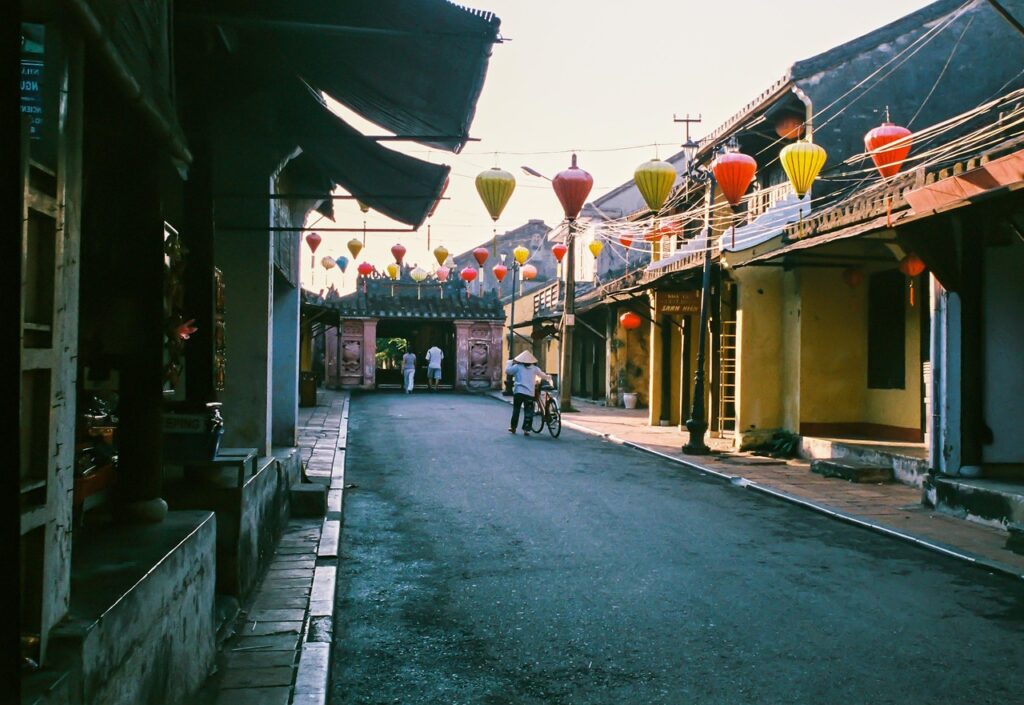
Hoi An
Hoi An’s Ancient Town is famous for its preserved merchant houses, narrow streets, lantern displays, and the Japanese Covered Bridge. The town’s architecture reflects centuries of trading history and creates one of Vietnam’s most atmospheric destinations. Evenings are especially memorable when lanterns illuminate the streets and river.
Places of interest near to Hoi An
- My Son – Large area with red-brick Cham temples and towers where centuries-old Hindu monuments rise from jungle clearings, offering a powerful window into Vietnam’s ancient Champa culture.
Paradise Cave
Paradise Cave is a large dry cave known for impressive stalactites and stalagmites and long wooden walkways that allow visitors to explore deep into the cavern. It is located within the Phong Nha–Kẻ Bàng region and is easily visited as a day trip.
Bring comfortable walking shoes and a light jacket, as cave temperatures can feel cooler than outside.
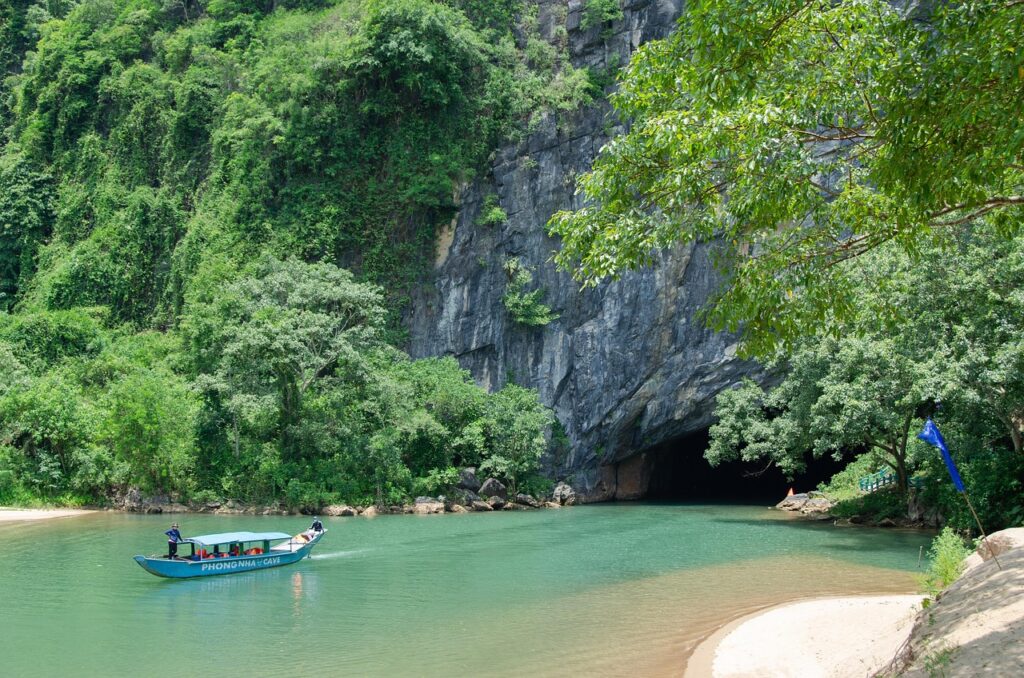
Phong Nha Cave
Phong Nha Cave and the surrounding karst landscape form one of the world’s most remarkable cave regions, featuring underground rivers and extensive limestone formations. Activities range from relaxed boat tours to guided adventure caving experiences.
If you are planning to book a tour => Book tours with licensed operators and follow safety guidance, especially for adventure cave excursions.
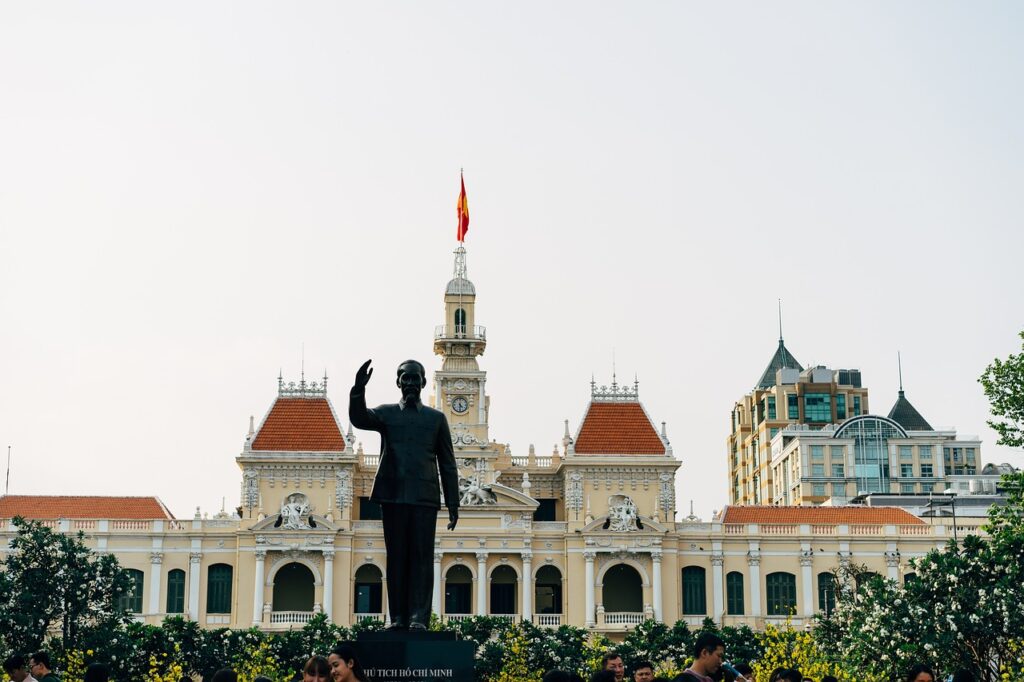
Ho Chi Minh City
Ho Chi Minh City (formerly Saigon) is Vietnam’s largest and most energetic metropolis. The city blends historic landmarks, busy markets, cafés, and modern urban life, making it a fitting final stop for a north-to-south backpacking journey.
Practical tip: Explore central districts on foot, visit local markets, and stay aware of traffic when crossing streets.
Places of interest
- Cu Chi tunnels – An extensive underground network used during the Vietnam War, now preserved so visitors can crouch through reconstructed passages and imagine the lives lived beneath the jungle floor.
- Statue of Ho Chi Minh
- Independence palace – A striking mid-20th-century building at the heart of Ho Chi Minh city whose preserved rooms and war-era artifacts tell the story of Vietnam’s modern history.
- Norte Dame Catherdal – A red-brick, 19th-century cathedral in Ho Chi Minh City.
Suggested north → south backpacking rhythm
- 3–4 days: Hanoi
- 2–3 days: Ha Long Bay
- Travel to central Vietnam
- 1–2 days: Hue
- 1–3 days: Da Nang
- 2–3 days: Hoi An
- 2–3 days: Phong Nha area (Paradise Cave & Phong Nha Cave)
- 3–4 days: Ho Chi Minh City
Adjust the pace according to your travel style and interests.
Essentials
- Check current visa requirements before travel. Official E-Visa website = > https://evisa.gov.vn
- Carry insect repellent and medicines.
- Cash is widely used, though ATMs are common in cities.
- Vietnam has extensive train, bus, and flight connections for long-distance travel.
- Dress respectfully at temples and cultural sites – Cover shoulder and knees.
How to get around in Vietnam
For long distance travel, buses tend to be cheaper than trains(and ofcourse cheaper than flights). Vietnam spans a huge area from North to South, take a flight if you want to travel quickly from North to South, North to Central parts and vice-versa.
For long trips, you can book buses and trains from 12go.asia
To compare and find cheaper flights, use skyscanner
For short travels, use public buses and trains. Google maps does a good job with the details of buses and trains. You can use Grab if you want a taxi.