Laos is one of those places that does not rush to impress you. It pulls you in slowly, with mountain roads, river towns, temple mornings, and a pace that feels almost stubbornly its own. The country leans into that laidback charm in a way that suits backpackers well: there is plenty of nature, plenty of culture, and enough travel friction to make the journey feel like part of the adventure rather than a chore.
Best places to visit and attractions
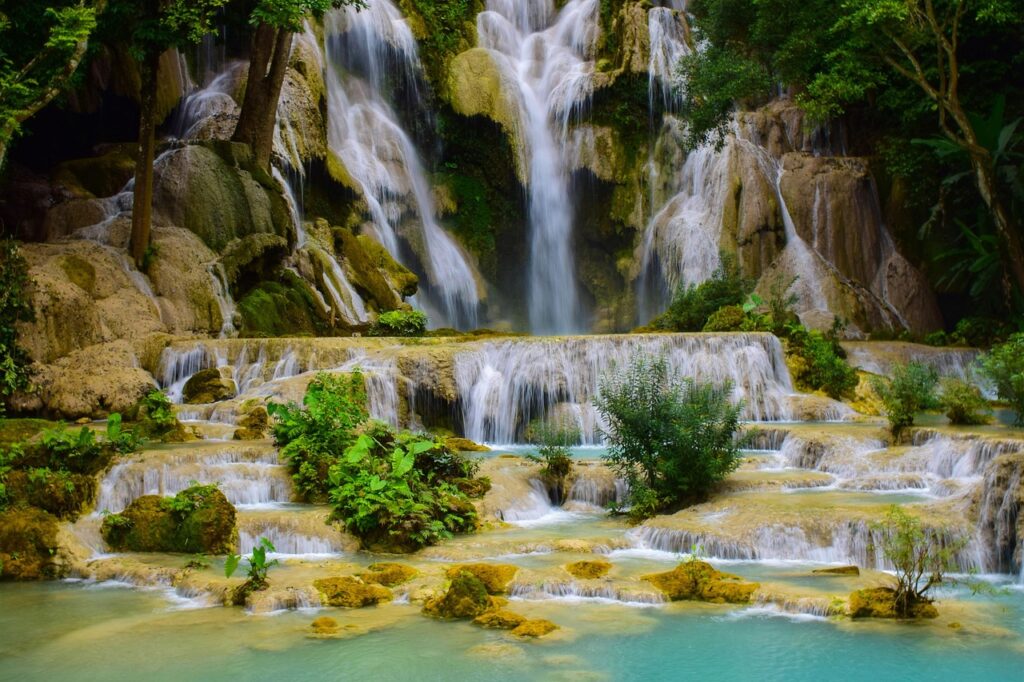
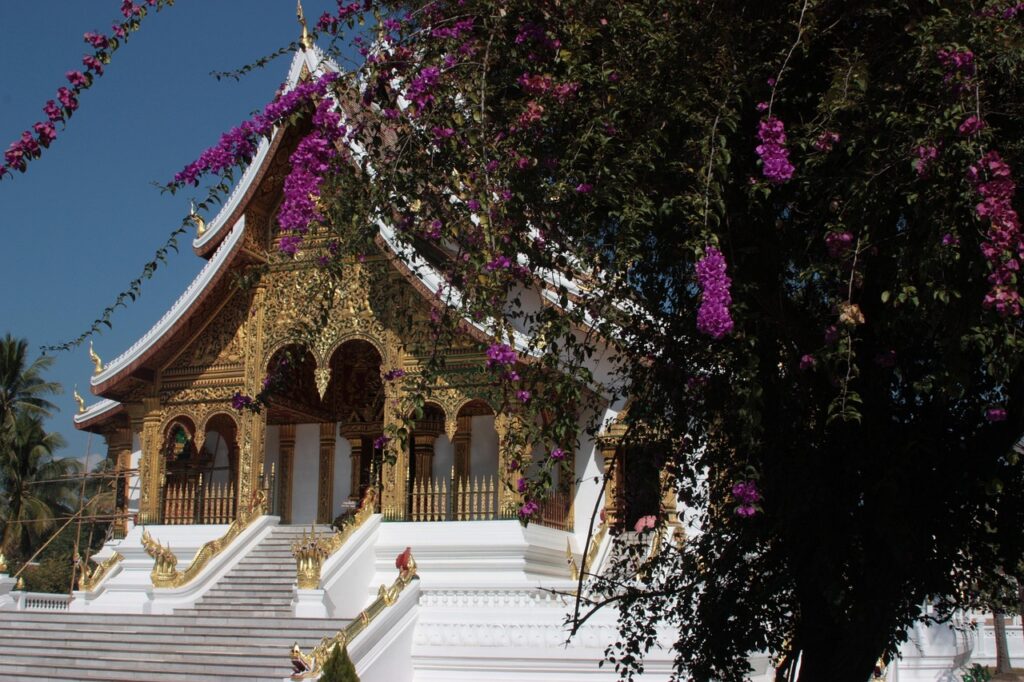
If this is your first Laos trip, Luang Prabang is the place that usually wins people over first. It is a UNESCO World Heritage town with strong cultural and architectural value, a long spiritual history, and a very walkable old-town feel. The highlights are the kind you do not forget quickly: Wat Xieng Thong, Mount Phousi, the Royal Palace, nearby Kuang Si Waterfall, and the morning alms ceremony, which is a sacred ritual that visitors should observe respectfully.
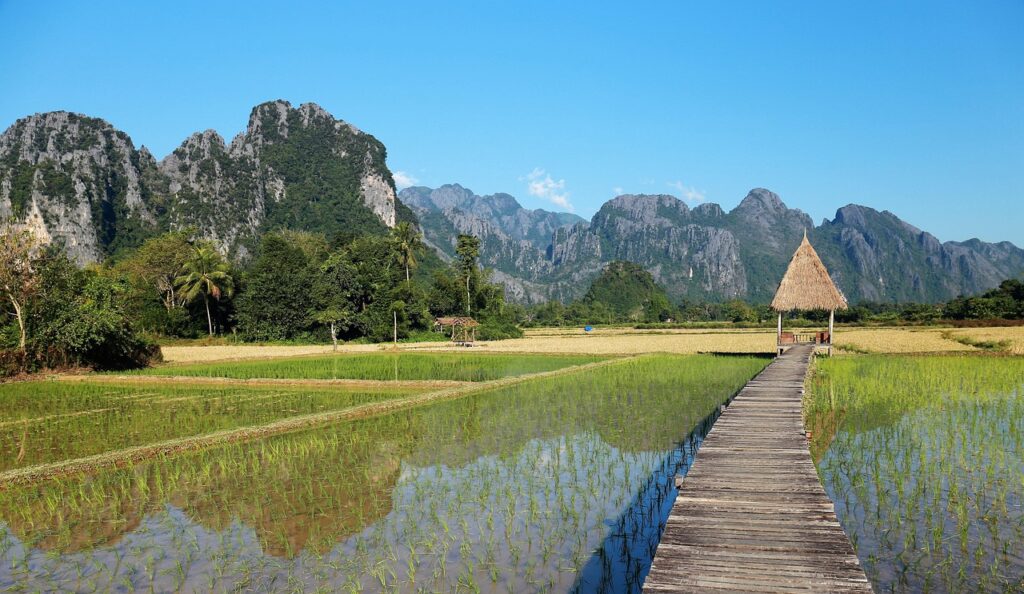
Vang Vieng has a completely different energy. It sits on the Nam Song River, surrounded by limestone mountains, and it is still known for kayaking, tubing, cave exploration, rock climbing, and hot-air balloon rides. If your version of backpacking includes a little adrenaline with your scenery, this is the stop that keeps your camera busy and your day slightly more chaotic. Vientiane, by contrast, feels softer and more urban, with city life centered along the Mekong and a growing public transport system.
In the south, Pakse is a smart base for reaching Wat Phu, the Bolaven Plateau, and the 4,000 Islands area. The official tourism pages describe Pakse as a charming southern city with ancient temples and natural sights, while Champasak Province is known for Wat Phou, Don Khong, Si Phan Don, and Khone Phapheng Falls. If your idea of travel is more riverbanks and waterfalls than city noise, the south deserves real time.
How to get to Laos
The easiest entry points are the main international airports and land crossings. Official Lao eVisa pages list designated entry ports including Wattay International Airport in Vientiane, Luang Prabang International Airport, Pakse International Airport, the Lao-Thai Friendship Bridges I, II and IV, Boten International Checkpoint, and Boten and Khamsavath railway stations. The tourism office also lists air and land crossings with Thailand, Vietnam, Cambodia, China, and Myanmar.
For a backpacker, that means Laos is often entered as part of a wider Southeast Asia route rather than as a standalone fly-in-fly-out country. Overland travel still matters here, and the country’s connected border network makes it easy to combine Laos with Thailand, Vietnam, Cambodia, or China.
How to get around in Laos
Getting around Laos is much easier than it used to be, but it still rewards patience. The Laos-China Railway has transformed the country’s north-south travel story, with official tourism sources describing Laos as shifting from “landlocked” to “land-linked.” Tourism Laos also notes that the Vientiane to Luang Prabang train can take around two hours, compared with a much longer drive. In Vientiane, buses now run on designated stops and routes, and the city has been adding better tracking and bus services.
In cities, LOCA is the most practical option for a simple taxi-style ride. The tourism office describes it as the leading ride-hailing app in Laos and notes its electric taxi and motorcycle options. That makes city hops less stressful, especially if you are arriving late or carrying a backpack that somehow weighs more every day.
Must try food
Laos food is built around sticky rice, and the local meal style is wonderfully straightforward: larb, tam mak hung, herb-heavy salads, bamboo soup, and plenty of fresh greens. The official tourism pages also describe Lao cuisine as more bitter, sour, and spicy than Thai food, with regional touches that include jungle food in some areas, plus pho, spring rolls, fried dough snacks, baguettes, omelets, pâté, croissants, and coffee from the French era. In Luang Prabang, look out for aor lam, jaew bong, and khai pan.
The honest backpacker answer is simple: eat the local food whenever you see a busy stall. Laos is one of those countries where the best meal is often the one that costs very little, comes with sticky rice, and is eaten on a low plastic stool while life moves past you.
Where to stay
For atmosphere, stay in Luang Prabang town. For action, base yourself in Vang Vieng. For a practical city stop, Vientiane works well. For the south, Pakse is the most useful base, while Don Det and Don Khon in Si Phan Don are the place to slow everything down. Vang Vieng is especially flexible for budget travelers because the official tourism page notes accommodation ranging from budget hostels to luxury resorts.
My own rule of thumb is to stay where your days will feel easiest: near the old town in Luang Prabang, near the river in Vang Vieng, in a central spot in Vientiane, and close to the ferry or village center in the 4,000 Islands. That way you spend less time chasing transport and more time actually traveling.
Weather around the year / best time to visit
Laos has a mild tropical climate, but the cool season can still feel chilly in some places, and the Mekong Valley can swing broadly in temperature. Official tourism pages describe temperatures ranging from 10°C to 40°C in the Mekong Valley, with hot and humid conditions from April to September and a drier period that is especially good for hiking, cycling, caves, tubing, kayaking, and slow boat trips.
For most travelers, the sweet spot is the drier part of the year, especially from late autumn into the cooler months. April is hot, but it also brings Lao New Year, which is one of the country’s biggest and most joyful festivals and takes place before the rainy season begins. The rainy months, meanwhile, make waterfalls fuller and the landscape greener, so there is no truly bad time if you travel with the season in mind.
Vang Vieng, Laos Weather Averages
Luang Prabang, Laos Weather Averages
Visa details
Laos has an official eVisa system. The official eVisa site says eligible travelers can apply online in three steps: fill in the application, pay the fee, and download the eVisa approval letter. The approval letter is the key document, the eVisa fee is non-refundable, and processing is usually about three working days after submission and payment if the application meets requirements. The eVisa can be used only through designated entry points listed on the official site.
The Department of Immigration of Lao PDR also maintains official visa information. Because entry rules can change by nationality and border point, the safest move is to check the official visa pages before you travel.
E-visa website : laoevisa.gov.la
Essential information
Laos is one of those countries where things are simple — until they’re not. Day-to-day travel is easy enough in the main towns, but once you move around a bit, you’ll notice that not everything runs on a fixed system. That’s part of the experience here.
Cash is still king. In bigger places like Vientiane and Luang Prabang, you’ll find ATMs and some places accept cards, but don’t rely on it too much. Smaller towns and local spots are almost entirely cash-based, so it’s always worth keeping enough on you before heading out.
Internet is generally decent in cities, but it can get patchy once you’re in more rural areas or islands. If you’re working remotely or need stable connection, plan your stops around bigger towns.
Getting around is improving, especially with the train connecting major destinations, but Laos still moves at its own pace. Buses can be slow, roads can be rough, and schedules are more of a guideline than a rule. It’s not inefficient — just not rushed.
Border crossings are where things can feel a little less predictable. The main entry points are usually smooth, but smaller land borders sometimes come with small unofficial fees or unclear charges. It’s rarely a big issue, just a bit frustrating if you’re not expecting it. Carry small USD notes, have a passport photo ready, and know the official visa fee — it makes things much easier. If you’re using an eVisa, the process is generally more straightforward at designated checkpoints.
Language isn’t a major barrier in tourist areas, but once you’re off the usual route, English becomes less common. A few basic words or just a bit of patience goes a long way here.
Backpacking in Laos — what it is really like
Backpacking in Laos is about long views from a bus window, a slow breakfast, a river crossing, a temple stop that lasts longer than planned, and the feeling that the country is gently asking you to calm down. The new railway has made the big legs easier, but Laos still feels like a place where the journey matters just as much as the destination.
That is why Laos works so well for travelers who like a mix of nature, culture, and low-pressure days. You can do the classic loop, but the real memory is usually the rhythm: a quiet morning in Luang Prabang, a wild afternoon in Vang Vieng, a slower sunset in Vientiane, and a south where the Mekong seems to take over the schedule.
RealBackpackers Rating System
Overall backpacker score: 7.8/10
Food: 8/10
Good and local, but not a regional standout.
Accommodation: 7.8/10
Solid in main areas, inconsistent elsewhere.
Transport: 6.5/10
Still the biggest drawback — slow and not always smooth.
People & Culture: 9/10
Authentic, calm, and not overly commercialized.
Scenery: 8.5/10
Beautiful, but not top-tier global level.
Affordability: 8.5/10
Budget-friendly overall. You can travel Laos cheaply, but transport inefficiencies can cost a bit more.