China is not the kind of place you casually “do” in one trip. It is too large, too varied, and too layered for that. The better way to travel here is to choose a route that gives you a real mix of history, city life, food, and scenery without turning the whole trip into a transport marathon.
For a first amazing trip, this one works well:
Beijing → Chengdu → Jiuzhaigou Valley → Zhangjiajie → Shanghai
It starts with old China, moves into food and pandas, then turns into full scenery mode before ending in one of the most modern cities in the country.
Suggested Route
Beijing → Chengdu → Jiuzhaigou Valley → Zhangjiajie → Shanghai
Keep the route simple. Beijing gives you the big historical start. Chengdu is where the trip slows down a bit. Jiuzhaigou and Zhangjiajie are the scenic middle of the journey. Shanghai is the clean, modern finish.
That is the kind of route that feels balanced instead of rushed.
Best Places to Visit and Attractions
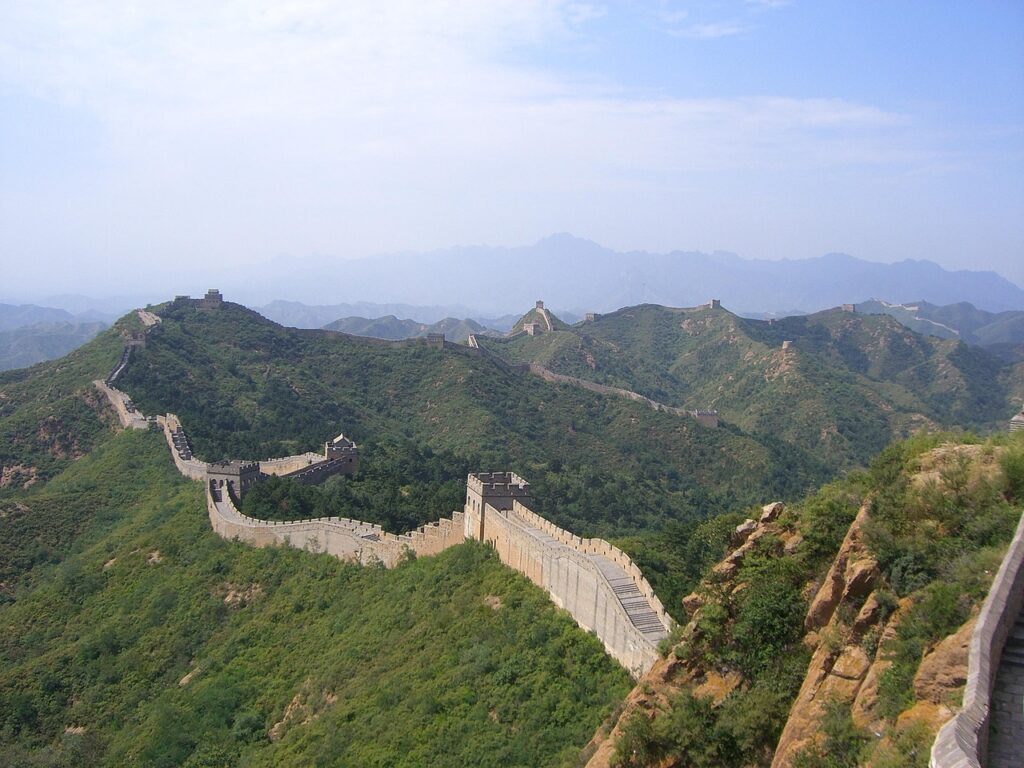
Beijing: The Great Wall and the Forbidden City
Beijing is where China really starts to feel large and serious. The Great Wall is one of those places that somehow still lives up to the reputation. It is a vast defensive system built over centuries, and standing on it feels less like checking off a landmark and more like stepping into a piece of living history. UNESCO recognizes it as a massive and important cultural site.
The Forbidden City, officially the Palace Museum, is just as essential. It was the imperial palace of the Ming and Qing dynasties, and it gives you a proper feel for how much history is packed into Beijing. It is also one of those places where timing matters, because the museum is closed on Mondays except for statutory holidays.

Chengdu: Pandas, tea, and a slower rhythm
Chengdu is where you finally stop rushing. The Chengdu Research Base of Giant Panda Breeding is one of the city’s biggest highlights, and the official base describes it as a place for conservation, research, breeding, education, and tourism focused on giant pandas and red pandas. It is not just a cute stop — it is one of the most memorable wildlife experiences on the route.
But Chengdu is not only about pandas. It is also about the way the city feels. It is easy to linger here. The pace is gentler, the food is good, and the whole place makes sense as a break between the heavy sightseeing days.
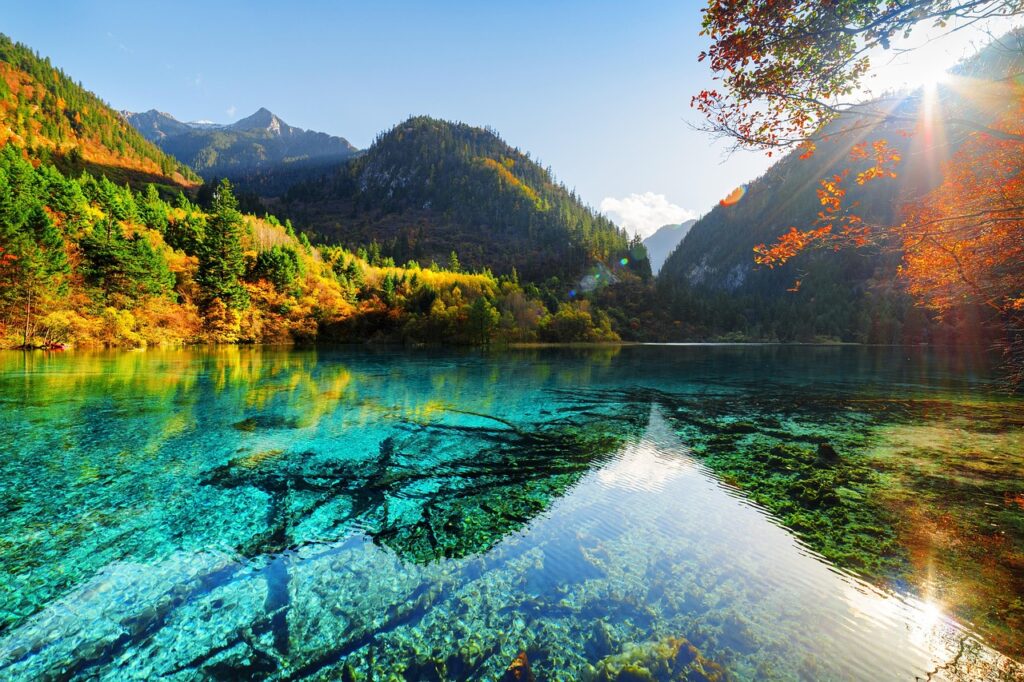
Jiuzhaigou Valley: the part of the trip that feels unreal
Jiuzhaigou is where the scenery starts doing most of the talking. UNESCO describes it as a 72,000-hectare valley in Sichuan with forest ecosystems, waterfalls, karst landforms, and endangered species including the giant panda and the Sichuan takin. That gives you the official version, but the real feeling is even better: bright water, clean air, and a landscape that keeps making you stop.
This is not a place to rush through. Jiuzhaigou works best when you give it time and let the setting sink in properly.
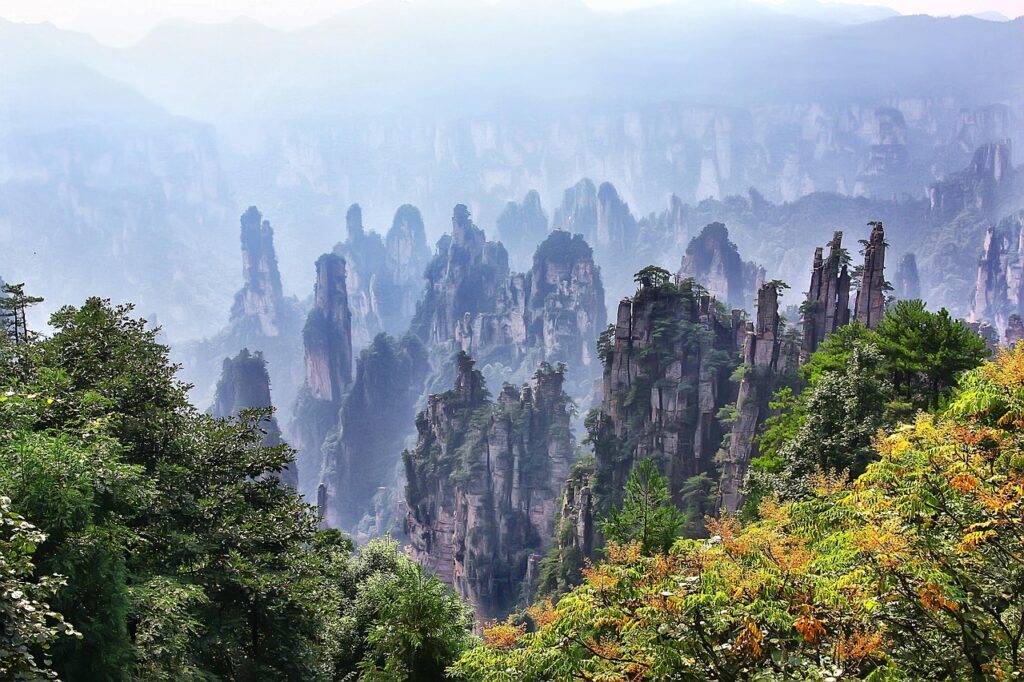
Zhangjiajie: dramatic in the best possible way
Zhangjiajie is where the trip goes fully cinematic. The wider Wulingyuan scenic area is UNESCO-listed and is known for more than 3,000 sandstone pillars and peaks, along with ravines, caves, waterfalls, and natural bridges. It is the kind of landscape that does not look quite real even when you are standing inside it.
If you want one stop on this trip that feels the most unusual and memorable, this is probably it. It is dramatic, striking, and exactly the sort of place that makes a China itinerary feel special.
Shanghai: a modern ending
Shanghai is the right place to finish because it changes the mood completely. After the history, pandas, lakes, and mountains, Shanghai feels fast, polished, and modern. It is not trying to compete with the earlier stops. It is just the clean final note at the end of the trip.
How to Get to China
For most travelers, the easiest way in is by flying into a major city like Beijing or Shanghai. Beijing works especially well for this route because it lets you begin with the Great Wall and the Forbidden City without adding extra transport stress.
How to Get Around in China
China is easiest when you use a mix of transport. High-speed trains are ideal for some routes, domestic flights save time on longer jumps, and metro systems make city travel much easier than trying to rely on taxis for everything.
For this route, do not try to force everything overland just because it sounds adventurous. China is too big for that to always be the smart move.
Must Try Food
Food in China is not one thing—it changes completely depending on where you are, and that is part of what makes this trip interesting.
In Beijing, expect heavier, northern-style food. Think roasted meats, dumplings, noodles, and dishes that feel filling rather than delicate. Peking duck is the obvious one, but even simple street food like jianbing (savory crepes) is worth trying.
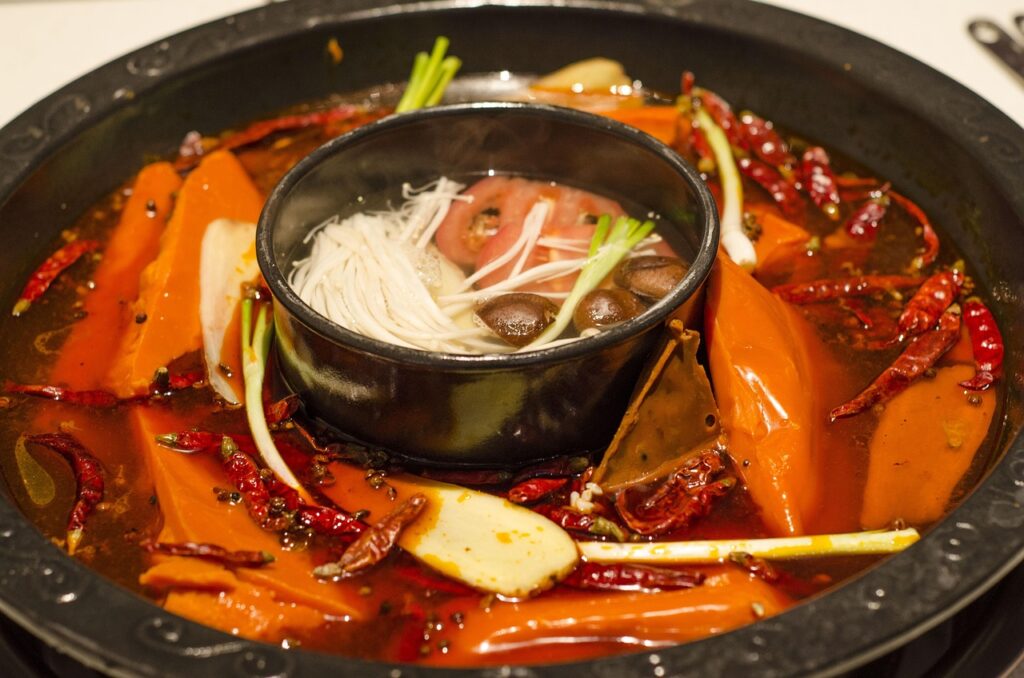
Chengdu is where food becomes an experience. This is the heart of Sichuan cuisine—spicy, oily, numbing, and addictive. Hotpot is the main event here, but even small local restaurants serve dishes that feel bold and intense. If you are not used to spice, this is where you find your limit.
Around Jiuzhaigou and Zhangjiajie, food becomes more regional and practical. You are not here for fine dining—you are here to eat well enough and get back out exploring. Expect simple rice and noodle dishes, local vegetables, and straightforward meals.
By the time you reach Shanghai, the food scene shifts again. It feels more refined and varied, with everything from traditional dishes to modern restaurants. It is a good place to slow down and enjoy a proper sit-down meal before the trip ends.
The trick is not to overthink it. Eat where the locals are eating.
Where to Stay
In Beijing and Shanghai, stay somewhere near a metro line. It makes the city feel much easier.
In Chengdu, go for a central area so you can enjoy the city without wasting time moving around. For Jiuzhaigou and Zhangjiajie, staying near the scenic area is usually worth it because those are the kind of places where early starts matter.
For backpackers, location usually matters more than the room itself.
Best Time to Visit
China is huge, so there is no single “perfect” season—but for this specific route, timing makes a big difference.
Spring (March–May) is a solid choice. Temperatures are comfortable in most cities, and it is a good time for walking-heavy days in places like Beijing and Shanghai. Scenery in Jiuzhaigou also starts coming alive after winter.
Autumn (September–November) is usually the best overall window. The weather is stable, skies are clearer, and the mix of city travel and mountain scenery feels balanced. If you want one safe recommendation, this is it.
Summer (June–August) is the busiest and hottest period. Cities like Beijing and Shanghai can feel humid and crowded, while popular scenic areas get packed. It is still doable, but it takes more patience.
Winter (December–February) is quieter and colder, especially in the north. Beijing can be freezing, but you get fewer crowds. Jiuzhaigou and Zhangjiajie can look completely different in winter, which can be either a highlight or a limitation depending on your expectations.
If you want the most comfortable and balanced version of this itinerary, go in autumn.
Visa Details
China travel rewards a bit of preparation. China is not a last-minute destination when it comes to paperwork. Most travelers will need to arrange a visa in advance, and the process usually involves submitting an application form, passport, travel plans, and accommodation details.
Processing times and requirements can vary depending on your nationality, so the safest approach is:
- Apply early
- Have a rough itinerary ready
- Keep hotel bookings and return tickets prepared
Some cities offer short visa-free transit options for certain nationalities, but those are limited and come with strict conditions. For a trip like this, a standard tourist visa is usually the simplest route.
Official Website for China Visa : consular.mfa.gov.cn/VISA/
Essential Things to Know Before You Go
1. Payments are mostly digital
China runs heavily on mobile payments. Apps like Alipay and WeChat are widely used. Cash is still accepted, but it is no longer the norm in many places.
2. Language can be a barrier
English is not widely spoken outside major tourist areas. Having your hotel address saved in Chinese and using translation apps makes a big difference.
3. Transport is efficient but structured
Train stations, metros, and airports are well organized, but they follow strict systems. Give yourself extra time, especially for security checks and boarding procedures.
4. Internet access is restricted
Some international apps and websites may not work. It is worth researching this before your trip and preparing accordingly.
Backpacking in China – What It Is Really Like
Backpacking in China feels more structured than in many other Asian countries. That is not a bad thing. It just means you travel here a little more deliberately.
You are not usually wandering from one place to the next with no plan. You are building a route, using transport properly, and letting each stop have its own job in the trip. That makes the journey feel more intentional. Only difficult part is talking with most of the locals usually needs the help from your translator app.
Once you settle into that rhythm, China becomes a very rewarding country to travel through.
RealBackpackers Rating System
Food: 9.5/10
Accommodation: 8/10
Transport: 9/10
People and culture: 8.5/10
Scenery: 9/10
Affordability: 7.5/10
China scores very high for variety and scenery. It is not the cheapest country in Asia, but it gives a lot back if you travel it with a good route and a good heart 😉
China is the kind of trip that works best when you let the route do the heavy lifting. Beijing gives you the history. Chengdu gives you the pause. Jiuzhaigou and Zhangjiajie give you the scenery that stays in your head. Shanghai gives you the modern finish. Put together, it feels balanced, memorable, and very much worth the effort.