Thailand is where most people’s backpacking story begins — and for good reason. It has everything: ancient temples, turquoise beaches, mountain treks, unbeatable street food, and one of the most welcoming hostel cultures in the world. In 2026, a few things have changed — including a new tourist entry fee that every backpacker needs to know about before landing. But the soul of Thailand travel? Still completely intact. This guide covers the full backpacking Thailand route from north to south, real day-by-day costs, the best islands, how to get around on a budget, and the practical tips that separate smooth trips from stressful ones.
Why Thailand is Still the Best Backpacker Destination in 2026
Yes, Khao San Road gets crowded. Yes, Maya Bay has an entry fee now. Yes, Koh Phi Phi can feel like a floating spring break on a bad weekend.
And yet — Thailand keeps delivering. The food alone is enough reason to come. The infrastructure for budget travel is better here than almost anywhere on earth. Hostels are excellent quality for the price, overnight trains actually run on time, and you can eat a proper meal for $2 and feel great about it.
The “too touristy” critique misses the point. Thailand is popular because it’s genuinely, consistently brilliant at making travel enjoyable. The temples are world-class. The nature is spectacular. The people are warm. And if you go slightly off the main trail — Nan province, Koh Lanta in shoulder season, a cooking class in a local village — you’ll find Thailand keeps giving.
Don’t let travel snobs talk you out of it.
Thailand Backpacking Budget (Daily Cost 2026)
A comfortable budget backpacker — staying in dorms, eating street food, doing activities — will spend between $35–55/day depending on location. Bangkok and Chiang Mai are cheaper than the islands. Islands vary wildly.
| Category | Budget Range (USD) | Notes |
|---|---|---|
| Accommodation (hostel dorm) | $5–12/night | Higher on islands, lower in cities |
| Food (street food, local spots) | $3–8/day | Eating Thai = cheap. Tourist menus = double |
| Local transport | $1–5/day | Songthaews, Grab, local buses |
| Long-distance transport | $5–20 (per leg) | Overnight trains save a night’s accommodation |
| Activities | $5–25/day | Temples cheap; diving expensive |
| Miscellaneous | $3–7/day | SIM card, laundry, the odd beer |
| Daily total | $35–55/day | Islands push it to $45–65 |
New in 2026: Thailand has introduced a 300-baht (~$9) tourist entry fee for air arrivals. It’s a one-time charge per entry — built into your airline ticket or collected at the airport — not a daily tax. It covers basic travel insurance and goes toward tourism infrastructure. As of May 2026, the government is also considering raising the fee above 300 baht, so double-check the current amount before you fly. Either way, budget it in and move on.
The Classic Thailand Backpacking Route (North to South)
Most backpackers do Thailand north to south: fly into Bangkok, head north to Chiang Mai, then work their way down to the islands before flying home from Phuket or Koh Samui. It works beautifully, and there’s a reason everyone does it.
Here’s how to run it well.
Bangkok (Days 1–3)
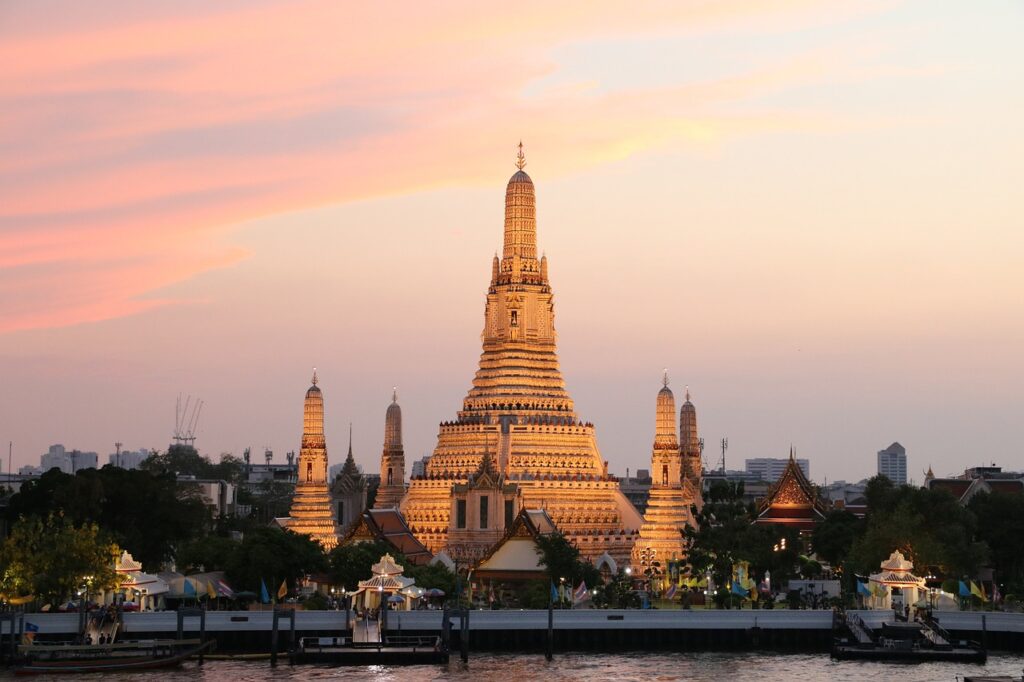
Bangkok hits different the first time. It’s loud, chaotic, full of gold-spired temples sitting next to 7-Elevens and rooftop bars — and somehow it all works.
Getting from the airport: Take the Airport Rail Link (ARL) from Suvarnabhumi Airport to Phaya Thai station. It costs around 45 baht (~$1.30) and takes 30 minutes. Do not take a metered taxi from the arrivals hall unless you’re in a group with luggage — you’ll get roped into “the airport is far, meter is off” conversation. If you need a taxi, use Grab (Thailand’s Uber equivalent). Book from inside the terminal or outside in the designated Grab zone.
What to do:
- Grand Palace & Wat Phra Kaew — The most-visited sight in Thailand for a reason. Get there early (8:30am, the actual opening time) to beat the crowds. Entry is 500 baht (~$15) and covers the Grand Palace, Wat Phra Kaew, and the Queen Sirikit Museum of Textiles. The palace only accepts cash at the ticket booth, so have baht ready. Dress modestly: shoulders and knees covered. Sarongs are available at the entrance if you forget.
- Wat Pho — Walking distance from the Grand Palace. Home to the enormous reclining Buddha. Worth the 300 baht (~$9) entry. Don’t skip it.
- Chatuchak Weekend Market — One of the world’s largest weekend markets. Happens Saturday and Sunday. Good for cheap clothes, street food, and people-watching. Take the BTS to Mo Chit station.
- Khao San Road — You’re going to love it or hate it, probably both within the same evening. It’s a backpacker circus: cheap Chang beer, bad tattoo parlors, pad thai for tourists. Go once, stay for two drinks, then find somewhere better. Phra Arthit Road nearby is calmer and more local.
Where to stay in Bangkok: NapPark Hostel (near Khao San, great social scene), Bodega Bangkok (rooftop, good vibe), or LUBD Bangkok Silom (if you want to be closer to the BTS grid). Budget: $8–14/night for a decent dorm.
Cheap eats in Bangkok: Head to Yaowarat (Chinatown) after dark — the street food is incredible and cheap. Or just walk any soi (side street) around Silom, Ekkamai, or Ari neighbourhood. Boat noodles near Wat Pho area, mango sticky rice from any market cart.
Ayutthaya (Day Trip from Bangkok — Don’t Skip This)
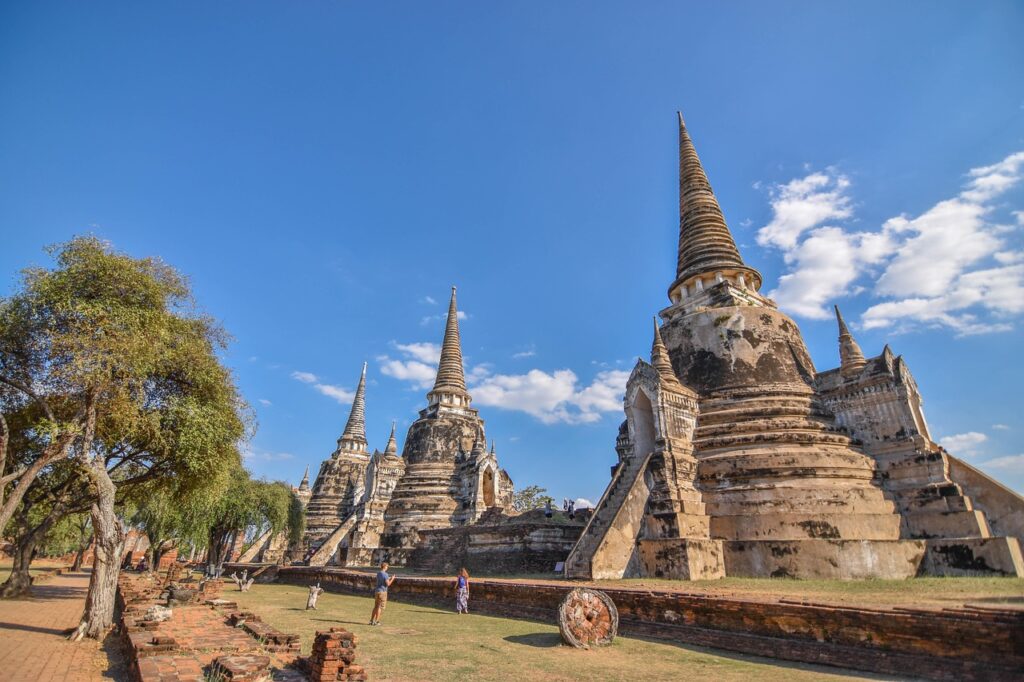
Only 1.5 hours from Bangkok by train (starting from ~20 baht), Ayutthaya is Thailand’s ancient capital — a UNESCO site full of crumbling temple ruins, headless Buddha statues half-swallowed by tree roots, and an atmosphere nothing like the modern city.
Rent a bicycle from near the train station (~40 baht/day) and spend the day cycling between the main wats: Wat Mahathat, Wat Ratchaburana, Wat Chai Watthanaram. You can do it as a long day trip from Bangkok or stay overnight in a cheap guesthouse.
Entry to each temple runs roughly 50 baht (~$1.50). Easily one of the best-value days in Thailand.
Kanchanaburi (Day Trip or Overnight — Alternative Route)
If you have an extra day or two around Bangkok, Kanchanaburi is worth considering. It’s about 2.5 hours by bus from Bangkok’s Southern Bus Terminal.
The main draw is the Bridge over the River Kwai and the Death Railway — the WWII-era railway built by Allied prisoners of war under brutal Japanese occupation. The JEATH War Museum and the Thailand-Burma Railway Centre both do a serious job of telling this history properly. Sobering stuff. Worth it.
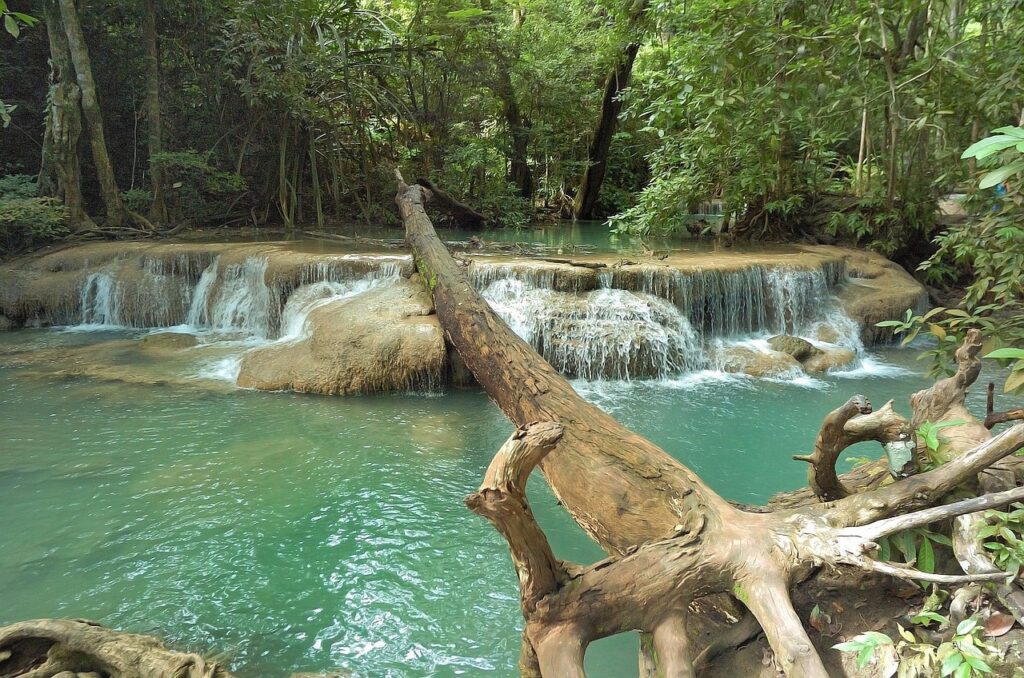
Do not miss a visit to amazing Erawan Waterfalls that is near to Kanchanaburi. Buses are available from Kanchanaburi bus terminal to Erawan falls.
On the Tiger Temple: it was permanently closed in 2016 after authorities found significant evidence of wildlife trafficking and mistreatment of tigers. Do not look for alternatives marketed as “tiger encounters” — they tend to operate under the same model. Wildlife sanctuaries that don’t allow contact are the ethical choice.
Kanchanaburi itself is a mellow river town. Good spot to slow down for a night if you’re not in a rush.
Chiang Mai (Days 4–6)
If Bangkok is Thailand’s heartbeat, Chiang Mai is its soul. It’s a proper city — coffee shops, independent restaurants, a creative scene — wrapped around a walkable old town full of ancient temples.
Getting there from Bangkok: The overnight train from Hua Lamphong or Bang Sue Grand Station is the classic move. Book a 2nd class sleeper berth for around $15–20. You save a night’s accommodation and wake up in Chiang Mai. Book through 12go.asia or directly via the State Railway of Thailand website. Flying is faster (~1 hour, $25–50 on AirAsia) but you lose the experience.
What to do:
- Doi Suthep — The gold temple overlooking the city from the mountain. Take a songthaew (shared red truck, ~50 baht) from the old city. Go early morning before the tour buses arrive. The view over Chiang Mai from the terrace is excellent.
- Sunday Night Market — The Walking Street on Wualai Road transforms every Sunday into a market of food, handmade goods, and live music. Cheaper and more local-feeling than the Saturday Night Market.
- Thai Cooking Class — Chiang Mai is the best place in Thailand to do one. A half-day class including a market visit runs about $20–30. Look at Thai Farm Cooking School or Baan Thai Cooking School.
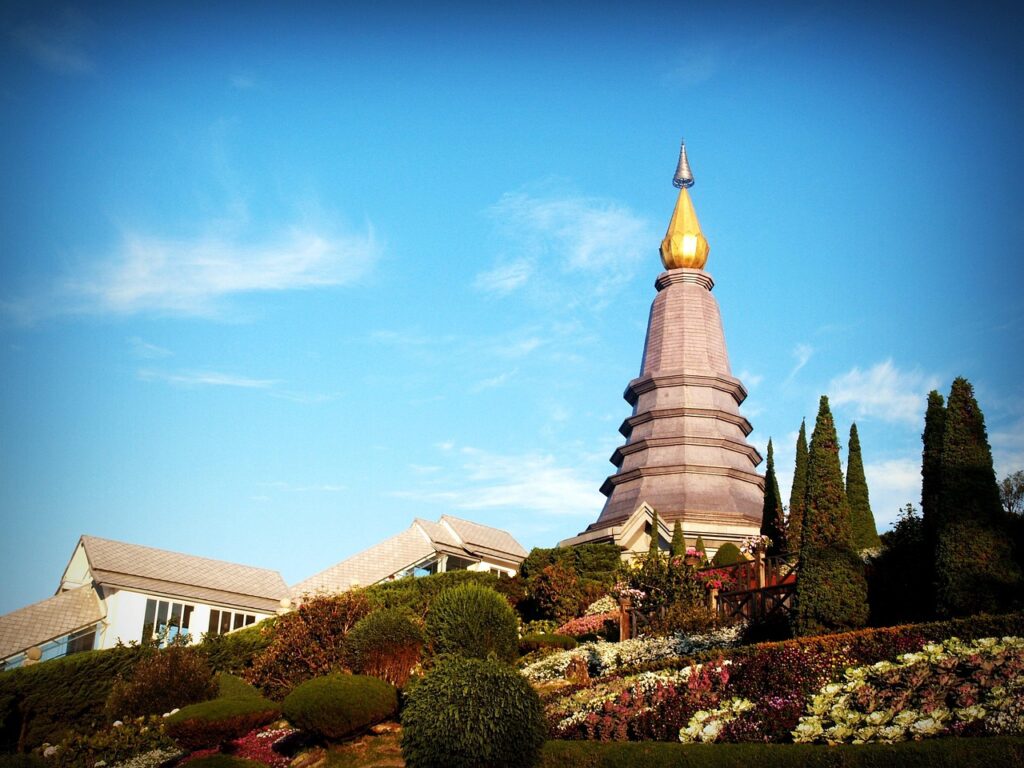
- Doi Inthanon National Park — Thailand’s highest peak, about 90km from Chiang Mai. Waterfalls, twin royal pagodas, hill tribe villages. A full-day tour from the city runs $25–35.
Trekking: Multi-day treks from Chiang Mai — elephant sanctuaries, hill tribe village stays, waterfall hikes — are popular and range from $30–80/day depending on what’s included. Vet operators carefully. A reputable elephant experience means watching elephants bathe and roam freely, not riding them. Elephant Nature Park is the gold standard for ethical elephant encounters.
Hostel scene: Chiang Mai has genuinely great hostels. Stamps Backpackers (social, central), Yesterday Hotel (good vibe), and Deejai Backpackers are well-reviewed. Budget: $7–12/dorm.
Pai (Optional 2-Day Detour from Chiang Mai)
Pai is a small mountain town about 135km north of Chiang Mai — 3 hours by bus on a winding road with 762 curves (not an exaggeration, it’s actually written on signs).
It’s a hippie town with hot springs, waterfalls, bamboo bridges, and enough reggae bars to last a lifetime. If that’s your vibe, you’ll love it. Rent a scooter ($5–8/day) and explore the surrounding hills — Pai Canyon at sunset, Tha Pai Hot Springs, the Chinese Village lookout.
If you get motion sick easily, take the anti-nausea meds before that bus ride. And if you’re on a tight schedule, honestly skip it — Pai rewards the people who slow down for a few days, not those who blast through in 24 hours.
Chiang Rai (For Those Going Deeper North)
Chiang Rai is 3 hours from Chiang Mai by bus and makes a good standalone overnight stop, especially if you’re heading toward the Myanmar or Laos border.
The main attractions are genuinely worth the trip:
- Wat Rong Khun (White Temple) — One of the most visually striking temples in Southeast Asia. Entirely white with mirrored mosaic tiles. Entry is 200 baht (~$6) — it doubled from 100 baht on January 1, 2026, and now includes access to the Cave of Art gallery inside. Thai nationals still enter free. Arrive early or late to avoid the peak crowd chaos.
- Baan Dam (Black House) — A dark, eccentric counterpart to the White Temple. Collection of black lacquered buildings full of animal bones, traditional carvings, and unusual art.
- Wat Rong Suea Ten (Blue Temple) — Intense electric blue exterior. Less crowded than the White Temple. Free entry.
- Golden Triangle — The point where Thailand, Laos, and Myanmar meet at the Mekong River. Historic for opium trade, now pretty touristy. Interesting to see. Easy half-day trip from Chiang Rai.
The Islands — Choosing Gulf vs. Andaman costline
This is the question that stumps most first-timers. Thailand has two coastlines — the Gulf of Thailand on the east and the Andaman Sea on the west — and each behaves differently weather-wise. More on that in the Best Time section. For now, the breakdown:
Gulf of Thailand Islands
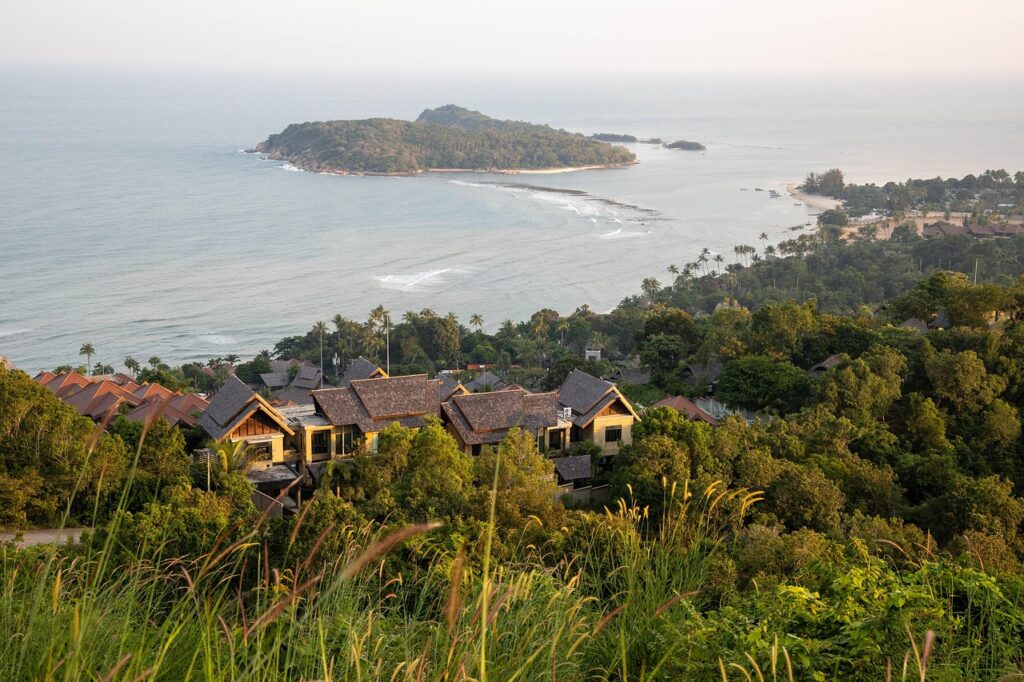
Koh Samui: The most developed of the bunch. Proper restaurants, beach clubs, a busy airport. Great if you want comfort. Not the best backpacker scene. Pricier.
Koh Phangan: The Full Moon Party (see FAQs) made this island famous. Haad Rin Beach turns into a massive beach party every full moon night. But there’s more to it — the north and west of the island are calm, beautiful, and easy. Budget accommodation is plentiful. Ferry from Koh Samui takes 30–40 minutes.
Koh Tao: The diving island. Cheapest place to get PADI certified in the world — an Open Water course runs roughly 9,900–12,000 baht (~$290–$355) all-in depending on the dive centre, significantly less than most countries. The island itself is small and manageable. If you’re not diving, it’s less compelling than its neighbours.
Andaman Coast Islands
Phuket: Big, developed, and worth being honest about — large parts of Patong Beach in particular are built purely for tourism. But Phuket has more to offer than its reputation: excellent day trips to Phang Nga Bay, a genuine old town, and good transport links for reaching other Andaman islands.
Koh Lanta: Quieter, more relaxed, beautiful long beaches. The backpacker scene is smaller but the vibe is great. Best in high season (November–April). About 3 hours from Krabi by ferry.
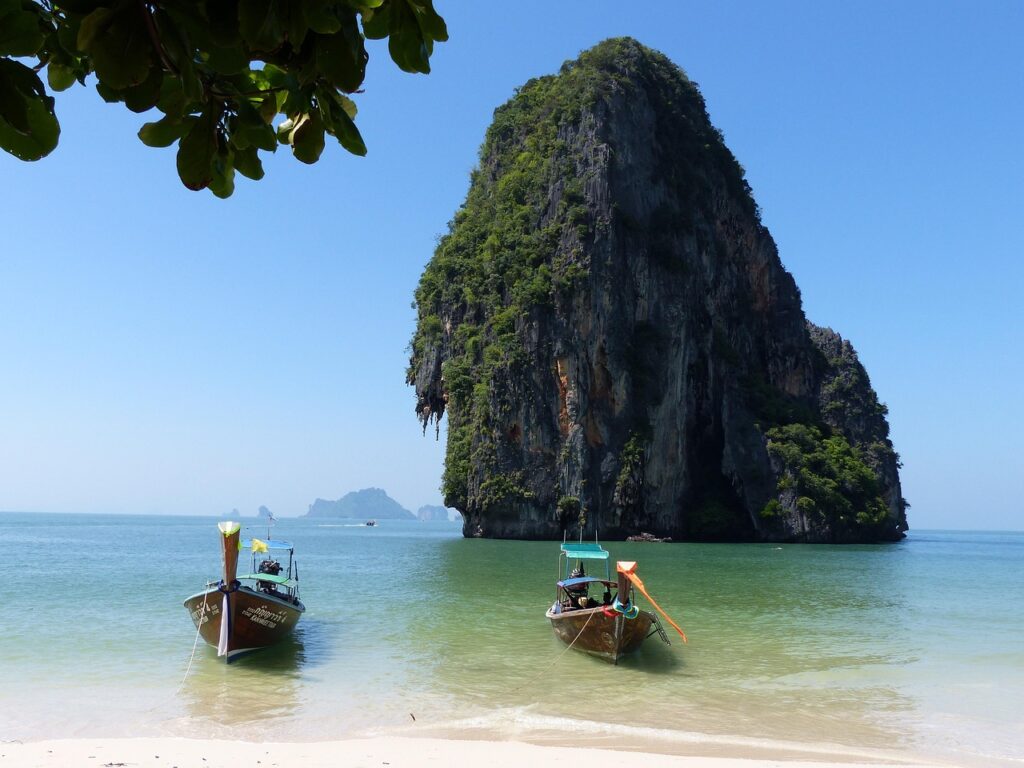
Krabi & Railay Beach: Krabi Town is a useful base. Railay Beach — only accessible by longtail boat because it’s cut off from the mainland by limestone cliffs — is genuinely jaw-dropping. White sand, turquoise water, vertical karst scenery. Worth the crowd. Longtail boat from Ao Nang takes about 15 minutes and costs around 100 baht.
Koh Lipe: Remote and expensive to reach (multiple ferries from Pak Bara or Koh Lanta, or flights to Hat Yai), but the payoff is real. Turquoise water, white sand, coral reef accessible by snorkel right off the beach. Worth it if you’ve got the time and budget.
Getting Around Thailand on a Budget
Thailand’s transport network is genuinely one of the best in Southeast Asia for backpackers.
Overnight trains: The best way to travel long distances. Book through 12go.asia or the State Railway of Thailand website. 2nd class sleeper berths are comfortable enough — curtained bunk, clean sheets, AC. Bangkok to Chiang Mai overnight is roughly $15–20. Bangkok to Surat Thani (gateway to Koh Samui and Koh Phangan) runs similarly. Seat61.com has excellent detail on Thailand train routes if you want to go deep.
Minivans: Faster than trains for some routes, cheaper than flying. Common for Chiang Mai to Pai, Pai to Chiang Rai, and short cross-country hops. Find them at your hostel or any travel agent. Usually $4–10.
Budget domestic flights: AirAsia, Bangkok Airways, and Nok Air connect the major cities. Bangkok to Chiang Mai, Bangkok to Phuket, or Chiang Mai to Bangkok — all available for $20–50 if you book ahead. Check Google Flights or go directly to the airline’s app.
Grab: The essential app. Works in Bangkok, Chiang Mai, Phuket, Pattaya, Koh Samui. Far more reliable than haggling with tuk-tuk drivers. Download before you land.
Songthaews: Shared red pickup trucks in Chiang Mai and shared trucks on various islands. Flag one down, tell the driver where you’re going, and pay a flat local rate (usually 20–50 baht depending on distance). How locals get around.
Ferries between islands: Multiple companies run these — check Lomprayah, Seatran, and Raja Ferry for schedules. Buy tickets through your accommodation or 12go.asia. Night ferries exist but comfort varies wildly.
Scooter rental: Common on islands and in Chiang Mai. Around $5–10/day. Wear a helmet, go slow, be cautious — scooter accidents are one of the main ways backpackers end up in Thai hospitals. If you’ve never ridden one before, the busy roads of Thailand are not the ideal place to learn.
Thailand Street Food Guide — What to Eat and What to Pay
Eating well in Thailand on a budget is genuinely one of life’s great pleasures. The key rule: eat where Thais eat.
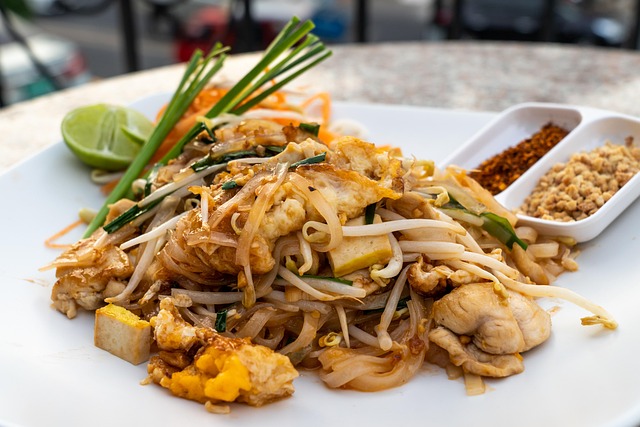
Pad Thai — Stir-fried rice noodles with egg, bean sprouts, tofu or shrimp, tamarind-based sauce. Everywhere. A plate at a street cart or market: 50–70 baht (~$1.50–2). Tourist restaurants charge 150+ baht for the same thing.
Khao Man Gai — Poached chicken over rice cooked in chicken broth, served with ginger-chili sauce and a cup of clear soup. Hugely popular breakfast and lunch. Around 40–60 baht (~$1.20–1.80).
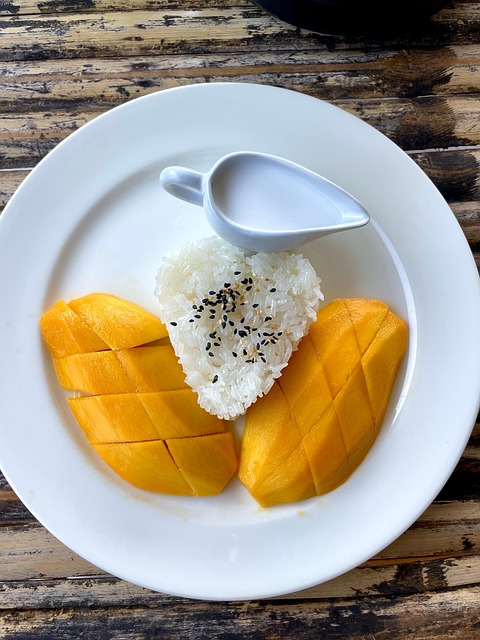
Mango Sticky Rice — Glutinous rice with fresh mango and warm coconut cream. Best from April to June when mangoes are in season. Market stalls: 60–100 baht.
Green Curry (Gaeng Keow Wan) — Proper green curry from a local shop is nothing like the toned-down tourist version. Spicy, aromatic, served over jasmine rice. 60–80 baht at a local restaurant.
Boat Noodles (Kuay Teow Rua) — Rich, dark pork or beef broth with noodles, herbs, and sometimes a dash of blood. Small portions, big flavour. Usually 20–40 baht a bowl — eat three.
Som Tam (Papaya Salad) — Green papaya shredded and pounded with lime, chili, fish sauce, and tomatoes. Order it “mai pet” (not spicy) unless you actually want the heat. Everywhere in markets. 40–60 baht.
Tom Yum Goong — The spicy-sour prawn soup. A Thai classic. Get it from a local restaurant, not a hotel breakfast buffet.
Practical food tips:
- 7-Eleven is not a joke in Thailand. The egg salad sandwiches, onigiri, and hot food shelves are solid for 20–40 baht when nothing else is open.
- Night markets and morning markets are always cheaper than sit-down restaurants.
- Ask your hostel where locals eat. They’ll know.
- Avoid any restaurant with photos of every dish on an English-only laminated menu near a major tourist attraction. Usually double the price, half the quality.
Thailand Travel Tips for 2026
1. The 2026 Tourist Entry Fee
Thailand’s new 300-baht (~$9) entry fee applies to air arrivals. It’s a one-time charge per entry, covers basic travel insurance, and is either baked into your ticket or collected at the airport. The government has also discussed potentially raising the fee above 300 baht, so double-check the latest before you fly. Either way, it’s minimal — just budget for it.
2. Complete Your TDAC Before You Fly
The Thailand Digital Arrival Card (TDAC) replaced the old paper TM6 form. It’s mandatory for all foreign nationals and must be completed within 72 hours before arrival. It’s free. Do it at tdac.immigration.go.th. Don’t skip this — immigration lines for people without it are not fun.
3. Respect Temple Dress Code
Shoulders and knees covered. Always. Bring a light scarf or sarong — it takes up no space in your bag and saves you from having to borrow one at the entrance. Shoes off inside. Speak quietly. Temples are active places of worship, not just photo opportunities.
4. Never Touch Anyone’s Head
In Thai culture, the head is the most sacred part of the body. Even affectionately ruffling a child’s hair is considered disrespectful. Similarly, don’t point your feet at people or at sacred objects — feet are considered spiritually low.
5. The Smile Is Your Most Important Tool
Thailand is called the “Land of Smiles” for a reason. A genuine smile — not a demand, not an argument, just a smile — will get you further in difficult situations than almost anything else. Stay calm, stay friendly. Losing your temper in Thailand gets you nowhere fast.
6. Scam Awareness
The classic ones are worth knowing:
- Tuk-tuk temple tour scam — A tuk-tuk driver offers to take you to temples for free or very cheap, then steers you to gem shops or tailors where he earns a commission. Say no thanks.
- Gem scam — Involves being told you can buy gems cheaply in Thailand and resell them at a profit at home. You cannot. The gems are worthless. Don’t engage.
- Overfriendly stranger at a major sight — Anyone who approaches you unprompted near the Grand Palace, claims it’s closed, and offers to take you somewhere else is running a scam.
General rule: if it sounds too good to be true, it is.
7. Get a SIM Card at the Airport
AIS, DTAC, and True Move all have counters at Suvarnabhumi. A 30-day tourist SIM with solid data (15–30GB) runs about 299–499 baht (~$9–15). Don’t mess around with trying to find a SIM in the city. Just get it on arrival.
8. eSIM vs. Physical SIM
If you’d rather not swap cards, eSIMs from Airalo or Nomad work fine in Thailand and can be set up before you land. AIS also offers an eSIM for tourists. Slightly more expensive per GB than a physical SIM, but convenient.
9. Use Grab, Not Meter Taxis
In Bangkok, Grab is consistently more reliable and fairly priced. Meter taxis can be fine, but the “meter is broken” conversation and airport-to-city negotiation is a headache you don’t need.
10. Dress for the Heat, Pack for the Temples
Light, breathable clothes. A thin long-sleeve layer for temples and colder buses/trains. Good sandals for walking and easy removal. Sunscreen — Thailand’s UV index is brutal. A reusable water bottle (water refill stations are common in hostels and 7-Elevens have cheap bottles).
11. Don’t Drink Tap Water
Stick to bottled or filtered water everywhere outside your hostel. Most decent hostels have filtered water dispensers. Tap water in Thailand is not safe to drink.
12. Download Offline Maps Before You Go
Google Maps with offline areas for Bangkok, Chiang Mai, and wherever you’re island-hopping. Saves data and works when you’re in a songthaew trying to figure out if you’re going the right direction.
Best Time to Visit Thailand
November–February: Best Time Overall
Cool and dry across most of the country. Temperatures are manageable (25–32°C), crowds are at their highest in December and January, and this is when everything looks its best. If you can only go once, go now.
March–May: Hot Season
Temperatures regularly exceed 40°C in the north. Humidity builds. Songkran (Thai New Year water festival) falls in mid-April and is an absolute spectacle — the entire country drenches each other with water. Bangkok’s streets turn into a nationwide water fight. Well worth being in Thailand for, but book accommodation months in advance.
June–October: Rainy Season
Here’s the thing about rainy season: it doesn’t mean rain all day. It usually means big afternoon downpours, then sun. The trade-off is cheaper accommodation, thinner crowds, and lush green scenery.
But the two coastlines behave differently:
- Gulf Coast (Koh Phangan, Koh Tao, Koh Samui): Best avoided June–October as this is their wet season. Ferries can be cancelled, diving visibility drops.
- Andaman Coast (Phuket, Krabi, Koh Lanta): This is their wet season — May through October. Some islands effectively close. Not ideal for beaches.
The trick: during the wet months, focus on inland destinations — Chiang Mai, Pai, Chiang Rai, Bangkok — and save the islands for when you can hit them in dry season.
Thailand Visa Info for 2026
60-Day Visa Exemption
Citizens of around 93 countries — including most of Western Europe, the US, UK, Australia, Canada, and many others — currently receive a 60-day visa exemption on arrival. This was extended from 30 days in 2024 and has carried through into 2026.
However: the Thai cabinet has approved reverting to a 30-day exemption, and the policy is under active review as of May 2026. No confirmed implementation date has been set, so the 60-day exemption still applies right now — but check the Thai Ministry of Foreign Affairs website before you book.
The 60-day stay can be extended by 30 days at any immigration office inside Thailand (~1,900 baht fee), giving you up to 90 days total.
Extensions and Visa Runs
In 2026, Thailand has significantly tightened enforcement around “perpetual tourists” doing back-to-back visa runs to stay indefinitely. Immigration officers can now refuse entry to travelers with a clear pattern of repeatedly cycling in and out on visa exemptions. If you’re planning a long stay, look into a proper visa category.
Visa on Arrival
Travelers from around 31 countries not on the exemption list can apply for a Visa on Arrival at designated checkpoints. This allows up to 15 days and costs 2,000 baht (~$58).
Thailand Digital Arrival Card (TDAC)
Mandatory for all foreign nationals. Complete it online at tdac.immigration.go.th within 72 hours before arrival. It’s free. It replaced the old paper TM6 form. Some airlines and immigration counters will check for it.
Destination Thailand Visa (DTV)
If you’re working remotely or plan to stay long-term, the DTV (Destination Thailand Visa) offers stays of up to 180 days per entry, valid for 5 years. It’s worth researching if you’re considering Thailand as a longer base.
Thailand Elite Visa
For those who want long-term legal stay without dealing with immigration constantly, the Thailand Elite Visa (now rebranded as Thailand Privilege Card) offers 5–20 year multiple-entry privileges in exchange for a significant upfront fee. Beyond most backpacker budgets, but worth knowing exists.
FAQs
Is Thailand safe for solo travelers?
Yes — consistently one of the safest countries in Southeast Asia for solo travelers, including solo female travelers. Standard common-sense precautions apply: don’t leave drinks unattended on party islands, use Grab after dark rather than random taxis, keep valuables secured. Violent crime against tourists is rare.
How much money do I need for 2 weeks in Thailand?
A comfortable backpacker budget for 2 weeks is roughly $500–750 all-in, excluding flights. That covers decent hostels, all meals, activities, inter-city transport, and a couple of days on an island. If you’re more budget-conscious, $400 for 2 weeks is doable — you’d be eating street food daily and taking overnight trains instead of flying.
Is the Full Moon Party worth it?
Honestly? Yes, once. Haad Rin beach on Koh Phangan transforms into a massive beach party with 10,000–30,000 people, fire shows, buckets of Thai whiskey, and music stages running until sunrise. It’s chaotic and not for everyone — but as a travel experience it’s unlike anything else. Wear old clothes (you will not save them from neon body paint and mud), keep your belongings minimal, and watch your drink.
What is the best island in Thailand for backpackers?
Koh Phangan for social backpacker scene and budget accommodation. Koh Tao if you want to dive. Koh Lanta if you want beauty without the noise. Railay Beach (technically mainland Krabi, accessed by boat) for pure scenery. There’s no universal answer — it depends on what kind of trip you want.
Do I need vaccinations for Thailand?
Hepatitis A, Typhoid, and Tetanus are standard recommendations. Some travelers also get Hepatitis B and Rabies (especially if they plan to spend time in rural areas or around animals). Malaria isn’t generally a concern in tourist areas but is present in remote forested border regions. Check the latest advice from your country’s travel health service or a travel clinic at least 4–6 weeks before departure.
Final Thoughts
Thailand has been doing this longer than any other backpacker destination, and it shows. The infrastructure works, the food is extraordinary, and the combination of cities, mountains, and beaches means you could spend three months here and still not feel done with it.