Myanmar is the kind of country that gets under your skin. Temple plains glowing at sunrise, tea shops where a stranger pours you a second cup before you’ve asked, and a golden pagoda that looks like it has its own power supply.
It is also a country in the middle of a civil conflict, and that has to come before the temples. So this guide starts with the uncomfortable stuff, then gets to the good part.
Should You Go?
Most Western governments say no. The US rates Myanmar Level 4: Do Not Travel, Canada updated its own advisory on 24 September 2026. The Indian embassy in Yangon, in an advisory dated 3 October 2026, takes a softer line: travel to mainland cities such as Yangon, Mandalay, Bagan and Inle can go ahead with caution, while border areas carry significant risks.
Here is the practical picture. Almost every backpacker goes to the same four places, often called the “tourist kite”: Yangon, Bagan, Mandalay and Inle Lake. Those places have been calmer than the rest of the country. Calmer is not safe, though. Security incidents can happen in cities, authorities can introduce curfews or restrictions with no warning, and you’ll pass military checkpoints on the roads.
If you decide to go:
- Stick to the kite. Border regions and conflict zones (Rakhine, Chin, Kachin, Sagaing and others) are off the table.
- Get proper insurance. Many standard policies don’t cover countries under a “do not travel” advisory, so read the exclusions, and look for medical evacuation cover.
- Expect outages. Power and internet cuts are routine, even in big cities.
- Check your government’s advisory the week you book, and again before you fly.
This is your call to make, and it’s a bigger one than picking a country in Thailand or Vietnam. If any of the above makes you uneasy, that’s a perfectly good reason to wait.
Visa: Sort It Before You Fly
Most Western passport holders need a tourist e-visa, and there’s no visa on arrival for most of them.
- Fee: US$50 through the official government portal (evisa.moip.gov.mm)
- Stay: up to 28 days, single entry
- Validity: you must enter within 90 days of approval
- Extensions: not available on the tourist e-visa
- Passport: at least six months of validity
Processing normally takes a few working days, but allow a week or more to be safe. Third-party sites add service fees on top of the government price, so use the official portal if you can.
Rules worth knowing:
- No drones. They are banned, and both the military and armed groups use drones, so flying one can have serious consequences. Leave yours at home.
- No private rentals. Tourists are expected to stay in licensed accommodation.
- Skip photos of soldiers, checkpoints and government buildings. Pagodas, monks and markets are fine (ask first for portraits).
Best Time to Go
November to February is the sweet spot: dry, cooler, and the light over Bagan is hard to beat. March to May gets brutally hot in the central plains. The monsoon runs from roughly May to October, which means flooding and slower roads in places. Cyclone season can also bring storms around May and again around November, so keep an eye on the forecast.
Money: Bring Cash, Bring It Crisp
Forget your cards. Myanmar runs on cash.
- Bring clean, unmarked US$100 notes (and some smaller ones). Torn, inked or old-looking bills get rejected.
- There are two exchange rates: a weak official rate (banks, airport counters) and a noticeably better street/market rate. Change at licensed money changers or through your hotel, not with random street offers.
- ATMs are unreliable and usually give you the official rate. Treat them as a last resort.
- Change enough kyat in Yangon to cover Bagan and Inle, where rates tend to be worse.
Because the exchange rate swings so much, I’ve given fees in kyat first, with rough US$ equivalents. Recheck the conversion on the day.
Budget ballpark: recent guides put backpacker travel at roughly US$25–40 a day for a dorm or guesthouse bed, street food and buses. Domestic flights, balloons and guided treks come on top.
Getting Around
Domestic flights are how most visitors link Yangon, Mandalay, Bagan (Nyaung U) and Heho (the airport for Inle Lake). Operators include Air KBZ, Myanmar National Airlines and others, and flights run about 1 to 1.5 hours. Recent estimates put fares at roughly US$80–145 per leg, and flights can be cancelled or rescheduled at short notice. They are the budget killer of any Myanmar trip.
Overnight VIP buses are the backpacker classic. Yangon to Bagan takes about 9–10 hours, usually leaving in the evening from Aung Mingalar bus terminal and arriving in the early hours. Fares run roughly 18,000–30,000 kyat, which works out to about US$6–10 at street rates, and more if you book online or through an agent (some operators quote up to about US$20). The bus saves you a night of accommodation and has reclining seats and a rest stop, but you’ll pass several checkpoints, so keep your passport handy.
A short note on overland entry: crossings with Thailand and India have been reported as possible in the past, but access shifts constantly and several border zones are exactly where you shouldn’t be. Most travelers fly in through Yangon or Mandalay. If you’re planning anything overland, get fresh, local confirmation first.
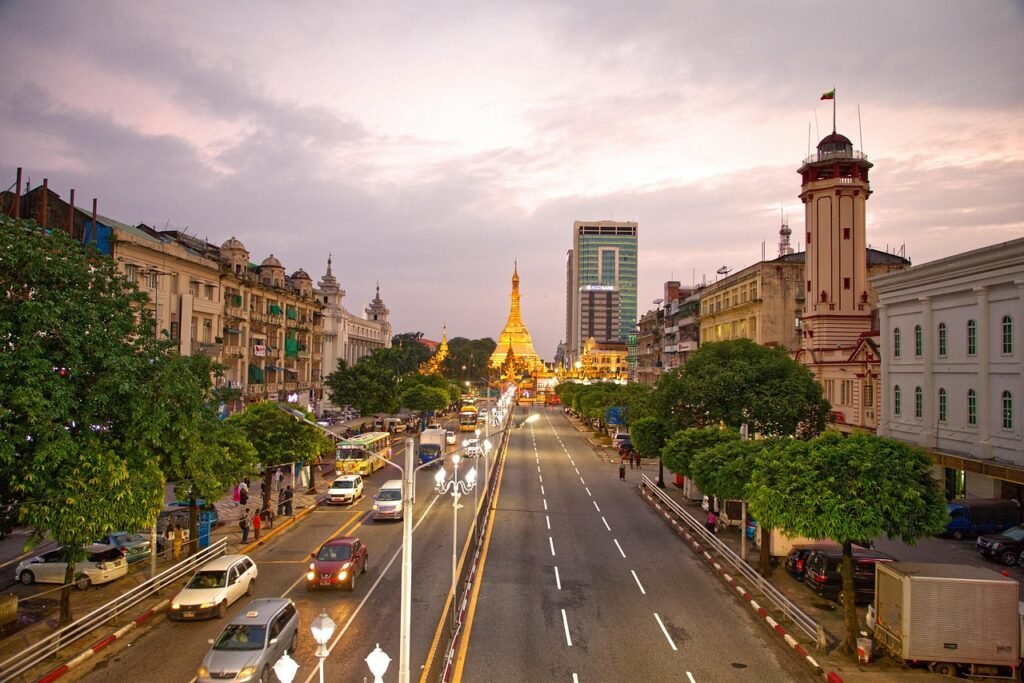
Yangon
Yangon is a lot to take in, and I mean that kindly. Crumbling colonial buildings, street stalls everywhere, and a bowl of mohinga (fish noodle soup) that you’ll start craving by day three.
Shwedagon Pagoda is a must. The gold stupa stands about 99 m tall and is visible across the city. Go late afternoon and stay for sunset, when the whole platform glows and locals circle the pagoda barefoot. It’s open roughly 4:00 am to 10:00 pm. Foreigners pay an entrance fee, reported at around 10,000–20,000 kyat (roughly US$5–8), so confirm the price at the ticket booth. Cover your shoulders and knees, and expect to leave your shoes at the entrance.
The Yangon Circular Railway is the cheapest city tour you’ll ever take. The loop takes about three hours and costs next to nothing, and you get a window seat on markets, back streets and suburbs. Schedules change, so check at the station.
For dinner, hit 19th Street in Chinatown for grilled skewers and cold beer. It’s loud, smoky and fun.
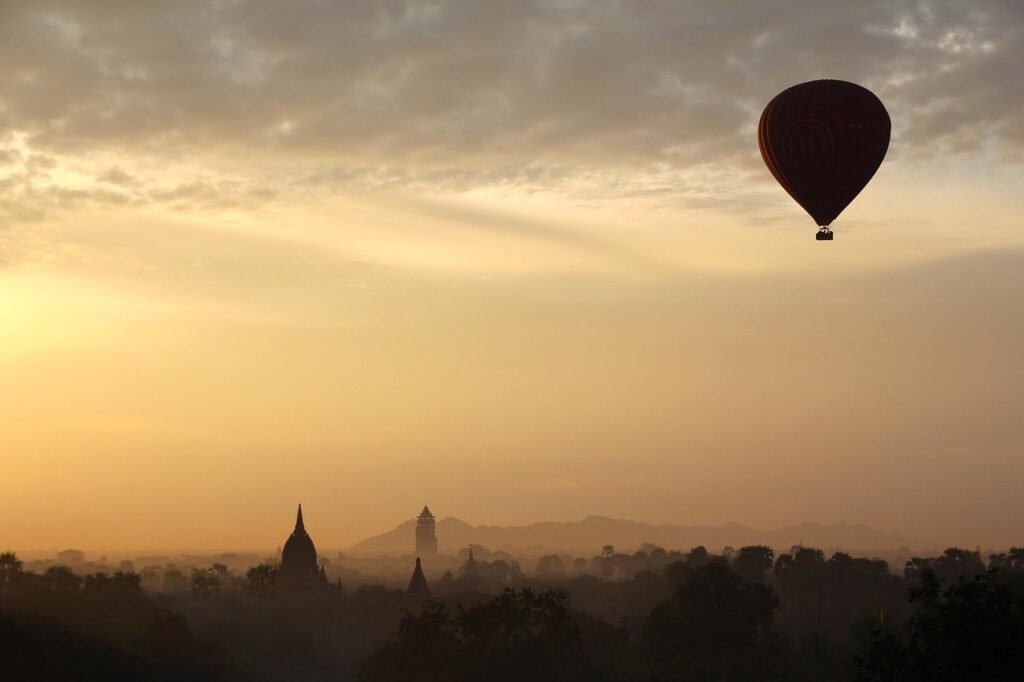
Bagan
More than 2,000 brick temples stand across a dusty plain beside the Irrawaddy. Your first sunrise here hits different.
The zone pass is mandatory. Reported prices are 25,000–30,000 kyat (roughly US$15–20), and sources disagree on whether it’s valid for three or five days, so ask when you buy it. You pay at a checkpoint or airport counter. Carry the exact amount in kyat, because overcharging has been reported. Keep the ticket on you, since staff may check it at major temples.
Rent an e-bike. It’s the standard way to explore, at roughly US$8–12 a day through your guesthouse. Check the battery and brakes before you hand over cash. Don’t miss Ananda, Thatbyinnyu and Shwezigon, but the real fun is following a sandy track to a small temple with nobody around. Some temples restrict climbing, so follow the signs.
Hot-air balloons are back for the season. Balloons Over Bagan resumed flights on 15 October 2026, and STT Balloon plans to start in the first week of November. The season normally runs until early April. Prices vary by operator and package, with recent figures from about US$230 up to US$400+ per person, and peak weeks (late December to early January) cost more. It’s a splurge, so book ahead, and if you are lucky with the wind, it’s one of the great sunrises in Asia. Flights get cancelled in bad weather, so keep a spare day.
About the earthquake: a magnitude 7.7 quake struck near Mandalay on 28 March 2025 and badly damaged religious buildings across the country. Official reports said Bagan’s pagodas and stupas came through largely unaffected, though some sites may still be closed for repairs. Don’t be surprised by a roped-off temple.
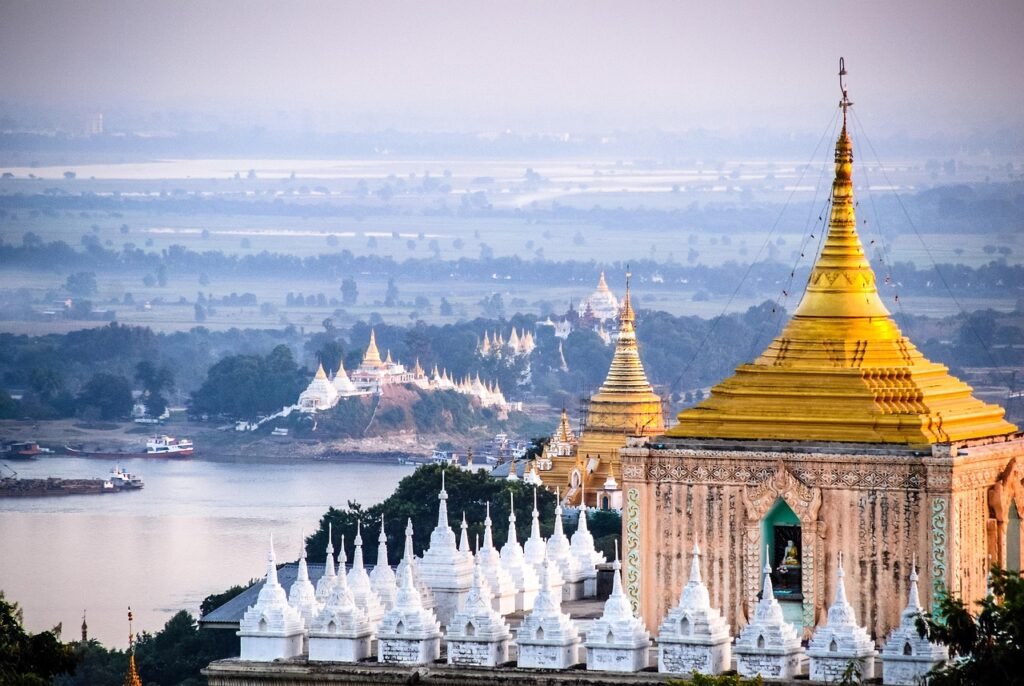
Mandalay
Mandalay was hit hardest by the quake, and you’ll see it in places. It is still worth a visit for the sunset climb up Mandalay Hill, the gold-leaf workshops, and street life that feels far less polished than anywhere else on the route. A separate Mandalay-area zone fee applies (reported at roughly 10,000–15,000 kyat). Ask locally which monuments and bridges are open, since repairs are ongoing, and skip day trips into the wider region unless your hotel confirms the roads are fine.
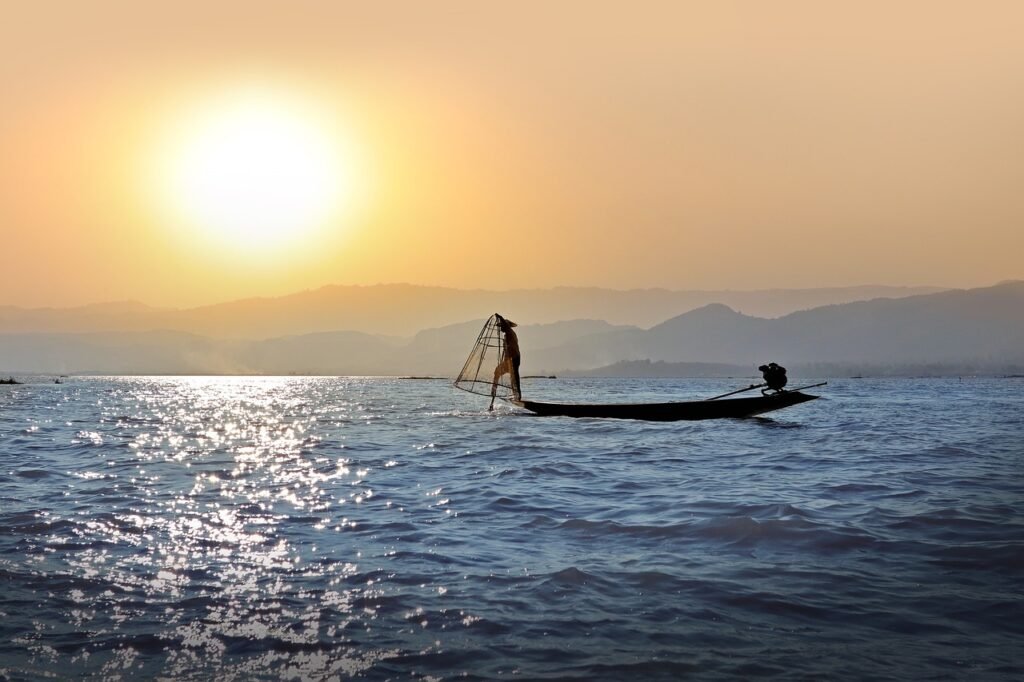
Inle Lake
After Bagan’s heat, Inle is a deep breath. The lake sits at about 889 m, and the nearest airport is Heho, around 35 km away. Base yourself in Nyaungshwe, where most guesthouses and restaurants are.
- Zone fee: charged at the entry checkpoint, reported between roughly 15,000 and 25,000 kyat (about US$7–12). Confirm on arrival.
- Full-day boat tour: about 25,000–40,000 kyat per boat (up to five people), roughly US$12–20 if you split it. It covers the leg-rowing fishermen, floating gardens, stilted villages and the Phaung Daw Oo Pagoda. Start early, when the light is soft and the lake is calm.
The Kalaw to Inle trek is worth a visit if you have the legs for it. It’s normally three days and two nights through hill villages, farmland and pine forest, with homestays along the way. Depending on the route, it’s roughly 50–65 km. Prices vary a lot between operators in Kalaw, so shop around, and check what’s included (the Inle zone fee often isn’t).
A 10-Day Route
- Days 1–2: Yangon (Shwedagon at sunset, circular train, 19th Street)
- Days 3–5: Bagan (temples by e-bike, sunrise, balloon if the budget allows)
- Days 6–7: Mandalay (hill at sunset, gold-leaf workshops, markets)
- Days 8–10: Inle Lake (boat day, or the Kalaw trek if you have time), then fly out via Heho or Yangon
Packing and Etiquette
- Light, modest clothing that covers shoulders and knees, plus slip-on shoes for all the temple shoe removal
- A power bank, headlamp and a local SIM (coverage and internet can be patchy)
- Crisp US dollars, small kyat notes for tea, tips and snacks
- A dust mask for e-bike days, and a light jacket for chilly Inle mornings
- Patience, because flights get shuffled, power cuts happen and buses run late
Keep political chat out of public places. Plenty of locals will talk openly in private, but you don’t know who’s listening in a busy tea shop. Let them lead.
Why It Still Matters
The people are why this country sticks with you. A monk invites you to practice English over tea. A trishaw driver waves off a tip because “you are our guest.” Spend your money in locally owned guesthouses and restaurants, and do a little homework on who owns what before you book. It matters more here than almost anywhere else.
FAQs
Is Myanmar safe for backpackers in 2026? Governments including the US, Australia and Canada advise against travel. The main tourist circuit of Yangon, Bagan, Mandalay and Inle Lake has been calmer than the rest of the country, but conditions can change suddenly, and border and conflict regions are dangerous. Check your government’s advisory and get insurance that covers it.
Do I need a visa for Myanmar? Most Western travelers do. The tourist e-visa costs US$50, allows 28 days, is single entry, and must be used within 90 days of approval. It can’t be extended.
How much does it cost to backpack Myanmar? Recent guides suggest roughly US$25–40 a day on a backpacker budget, before domestic flights (about US$80–145 per leg), balloons (about US$230–400+) and treks.
Can I use credit cards or ATMs? Don’t count on either. Bring clean US dollars and change them at licensed counters or hotels.
What is the best time to visit? November to February is dry and cooler. March to May is very hot, and the monsoon runs roughly May to October.
Are the Bagan balloons running? Yes. The 2026 season began on 15 October with Balloons Over Bagan, and STT Balloon is due to start in early November. Flights depend on weather.
How much is the Bagan zone fee? Reported prices are 25,000–30,000 kyat (roughly US$15–20), valid for three to five days depending on the source. Pay at the official counter and carry exact change.
Is Bagan damaged from the 2025 earthquake? The quake was centered closer to Mandalay, which was hit hardest. Official reports said Bagan’s pagodas were largely unaffected, but some sites may be closed for repairs.
Can I take a drone? No. Drones are prohibited, and bringing one is a serious risk.
Can I travel overland from Thailand or India? Some crossings have been reported as possible, but access changes often and border areas are risky. Most travelers fly in via Yangon or Mandalay. Get fresh local confirmation before planning anything overland.