The Budget Reality
The aurora is free. Flights, winter accommodation, and tours are what drain your wallet. Most top destinations are in high-cost countries, so the goal is to cut those three costs without cutting your chances.
The Sun’s solar maximum most likely happened in October 2024, so 2026 sits in the declining phase. That doesn’t kill your chances. Historically, the strongest solar events often come during the declining phase. Expect fewer big displays than in 2024, but good nights still happen.
The season runs from roughly September to early April in the far north. Shoulder months like late September and March are cheaper than December and often just as active.
Cheapest to Priciest at a Glance
- Cheapest: Rovaniemi, Saariselkä, Inari, Abisko, and free spots in Scotland, Northern Ireland, and Ireland
- Mid-range: Tromsø, if you stick to a big-bus tour or go DIY
- Priciest: Iceland
- Southern Hemisphere: Tasmania and New Zealand (Aurora Australis)
1. Rovaniemi, Finland: Easiest Entry Point to Lapland
Rovaniemi has an airport, a train station, and plenty of hostels. That makes it the simplest and cheapest base for a first aurora trip.
- Getting there: Fly in directly, or take the train from Helsinki. The day train takes about 8 hours 20 minutes, and the overnight train about 11 hours 50 minutes. The night train saves you a hotel bill.
- Free viewing: Ounasvaara hill is close to the center. Riverbanks away from streetlights also work on clear nights.
- Santa Claus Village: About 8 km from downtown, reachable by local bus. It’s touristy but worth a visit with kids.
- Where to stay: Hostels and basic guesthouses. Skip glass igloos unless you want one splurge night.
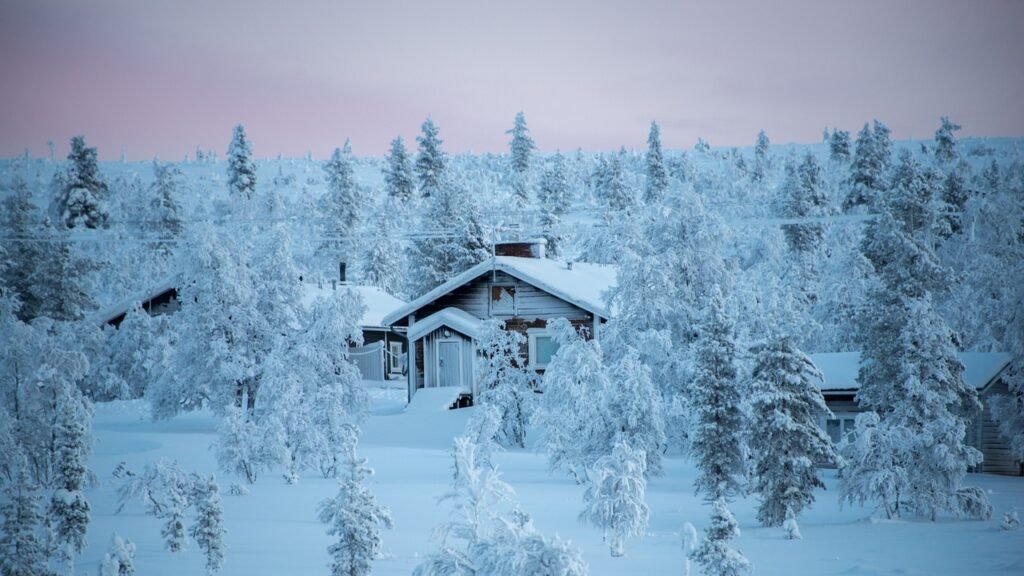
2. Saariselkä, Finland: Darker Skies, Cheaper DIY
Saariselkä is a small resort village in northern Lapland with much less light pollution than Rovaniemi.
- Getting there: Fly to Ivalo, about 25 to 30 km away. A seasonal airport bus runs between Ivalo Airport, Saariselkä, and nearby accommodation areas. Check the timetable before booking flights.
- Free viewing: Walk a short distance from the village to find open fells and dark fields. The edge of Urho Kekkonen National Park is worth a visit on clear nights.
- Budget move: Pick a self-catering cabin or apartment and cook your own meals. Split it with friends.
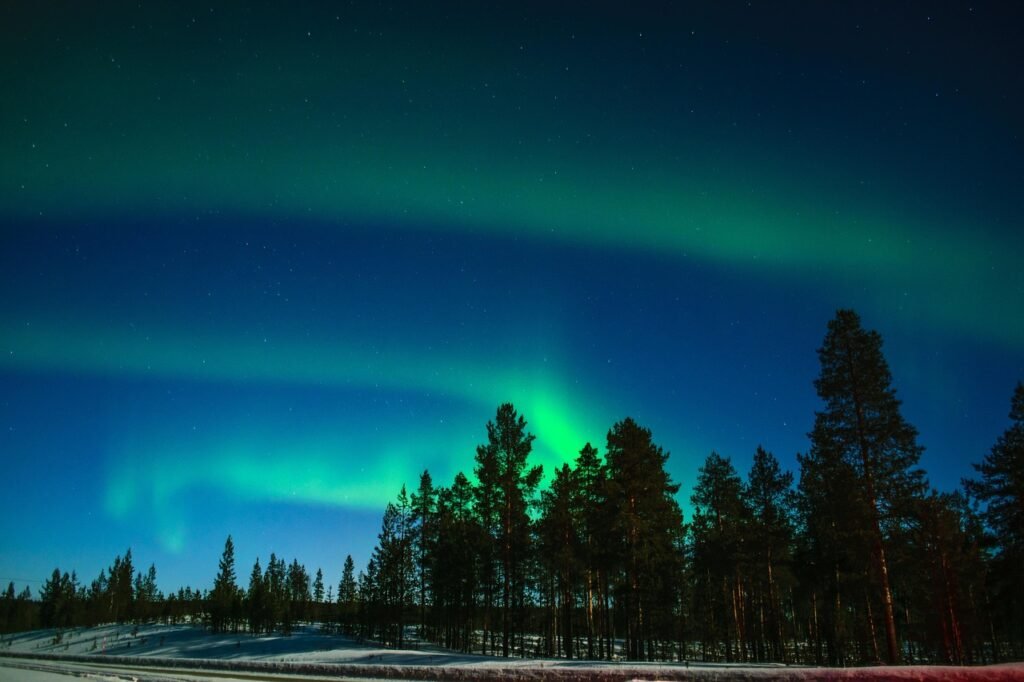
3. Inari, Finland: Quiet, Dark, and Good Value
Inari sits beside a huge lake and is one of the best DIY aurora towns in Europe. It’s quiet, so you won’t be fighting crowds.
- Getting there: Ivalo airport is 50 km south of Inari, and the airport shuttle must be booked in advance. Without a car, plan your transfer before you fly.
- Free viewing: The lake shore near the village is a classic spot. Even a short walk from your guesthouse can be enough.
- Worth a visit: The Siida Sámi Museum gives useful context on local culture. Check the current entry fee.
- Where to stay: Small guesthouses and cabins. Book early for peak winter.
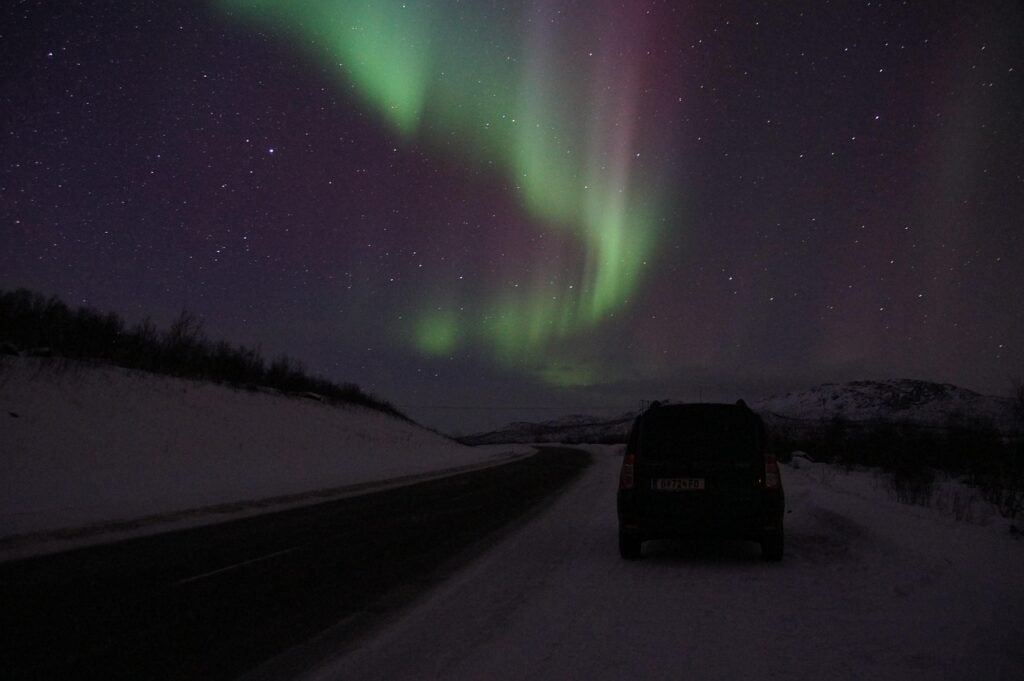
4. Abisko, Sweden: Best for Clear Skies
Abisko often has clear weather while the surrounding area is cloudy, which is why photographers love it.
- Getting there: The overnight train from Stockholm doubles as your bed. One departure leaves at 18:09 and arrives at 10:32 the next morning, a journey of 16 hours 23 minutes. A later departure takes about 18 hours and needs a transfer in Boden. From Kiruna, the train to Abisko takes about 1.5 hours.
- Free viewing: Walk to the Lake Torneträsk shore near the station. Entry to Abisko National Park is free.
- Paid option: The Nuolja chairlift runs 9:30 am to 4 pm. For the Aurora Sky Station at night, you need a guided visit. Last season it started from 1,070 SEK per person for STF members. The 2026-27 night visits run from 19 October 2026 to 27 March 2027. It’s a splurge, so treat it as optional.
- Where to stay: The hostel-style rooms at STF Abisko Turiststation cost far less than private cabins. Book early.
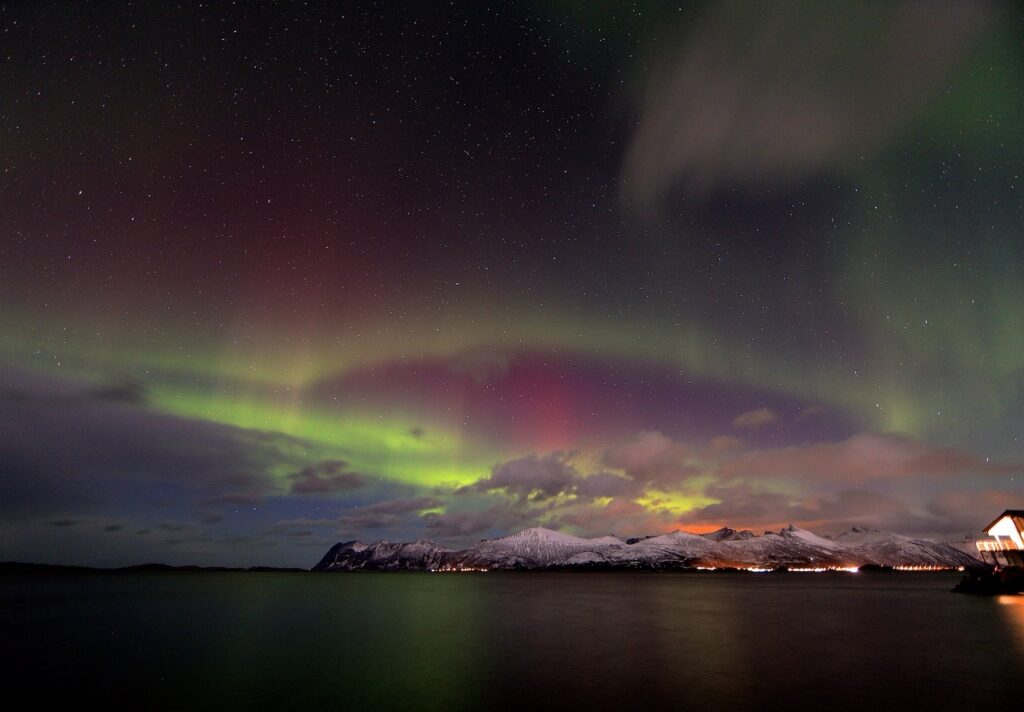
5. Tromsø, Norway: Doable Without Expensive Tours
Norway is expensive, but Tromsø works because you can see the lights from town.
- Getting there: Oslo to Tromsø is about 2 hours by air. Budget airlines serve Norway from several European cities, so compare routes.
- Free viewing: Prestvannet lake and Telegrafbukta beach are a short walk or bus ride from downtown.
- Tours: Big-bus chases are the cheapest. One budget bus chase costs 750 NOK for adults. Another large-bus chase costs 1,285 NOK for the 2026/27 season. Minibus tours start from around 1,759 NOK. Most tours offer no refund if the lights don’t show, though policies differ, so read the terms.
- Money move: Book a tour only when the forecast looks good, ideally on night two or three.
- Food: Supermarkets like Rema 1000 are your friend.
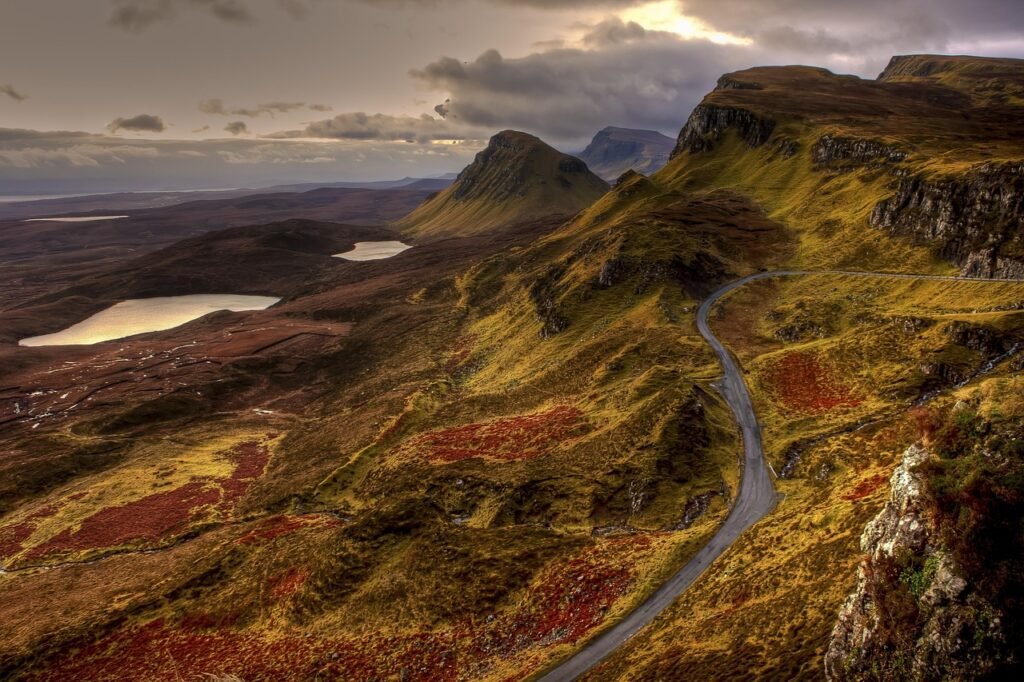
6. Scotland: Cheap and Close for Europeans
A strong solar storm can turn a regular Scottish road trip into an aurora night. It’s a bonus, not a guarantee.
- Where to go: Dunnet Head and the Caithness coast, Orkney, Shetland, and the Cairngorms all have open northern views. Galloway Forest Park is a certified Dark Sky Park, though it sits further south.
- Cost: Viewing is free. You pay for transport and a bed.
- Tip: Watch the forecast and be ready to drive at short notice. If you are lucky, it hits different.
7. Northern Ireland: A Surprising Aurora Spot
Northern Ireland sees the lights during strong storms, and its dark coastline helps.
- Where to go: Torr Head on the Antrim coast is a favorite. Davagh Dark Sky Park in the Sperrins is another good option.
- Getting there: Belfast is the main gateway. A rental car is the easiest way to reach the coast, so split the cost.
- Cost: Free viewing. Pick a guesthouse near the coast to cut travel time.
- Reality check: Clear skies and a strong storm both have to line up.
8. Ireland: Malin Head on Strong Nights
Malin Head is the northernmost point of mainland Ireland and the best bet for aurora in the Republic.
- Where to go: Malin Head in County Donegal, on the Inishowen Peninsula. It has open views over the Atlantic and very little light pollution.
- Getting there: You’ll need a car. It’s a long drive from Dublin, so consider basing yourself in Derry or flying into Donegal.
- Cost: Viewing is free. Combine it with the Wild Atlantic Way for a full trip.
- Reality check: Treat it as a bonus on a scenic road trip.
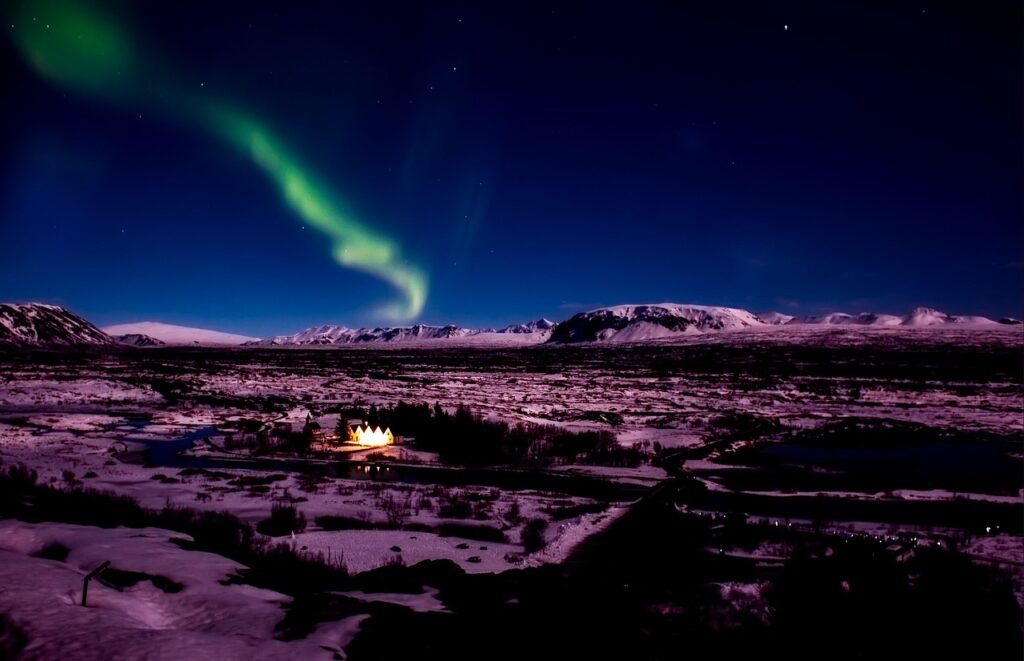
9. Iceland: Possible, but Plan Carefully
Iceland is among the priciest countries in Europe, so keep it tight.
- Free spots: Grótta lighthouse is a short ride from central Reykjavik. Check tide times before you go, since the path to the lighthouse floods at high tide. Even 20 to 30 minutes outside the city gives you much darker skies.
- Getting around: The Flybus from Keflavik airport to Reykjavik takes about 45 minutes. Group bus tours are the cheapest paid option. Splitting a rental car can beat tour prices, but winter driving takes experience.
- Þingvellir National Park: About 45 km from Reykjavik, roughly an hour’s drive. Entry is free, but a car with five seats or fewer pays 1,000 ISK for the day in parking. That’s roughly $8.
- Food: Use supermarkets like Bónus and self-catering guesthouses.
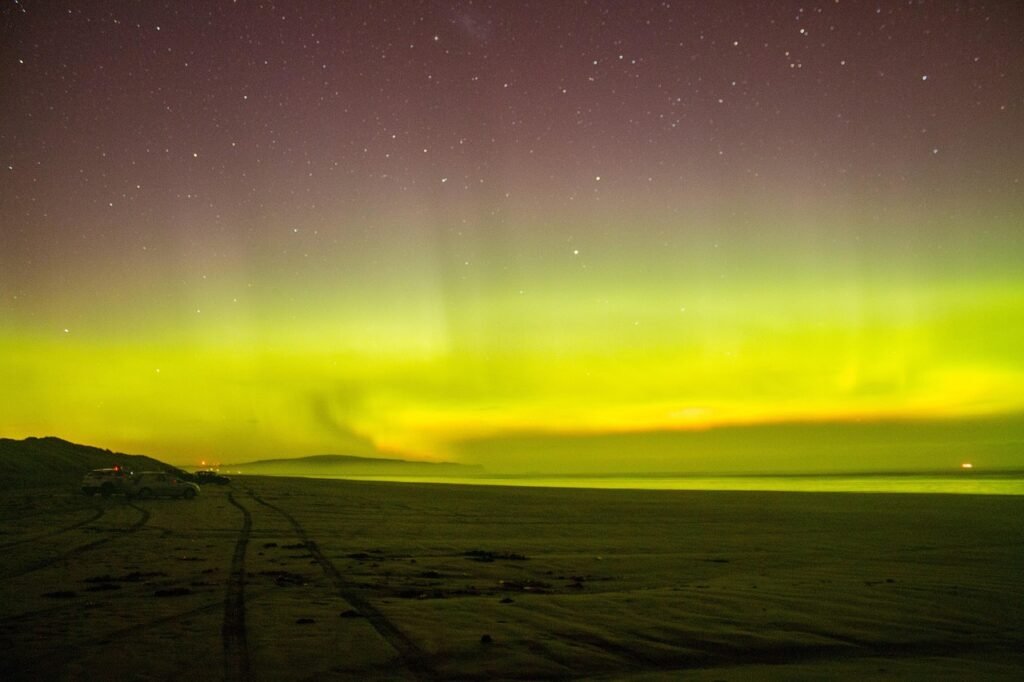
10. Tasmania, Australia: Aurora Australis for Southern Travelers
If you live in Australia, New Zealand, or nearby, Tasmania can save you a long-haul flight.
- Where to go: Bruny Island and the far south around Dover and Cockle Creek have the darkest skies.
- Getting there: Fly into Hobart, then rent a car or join a group tour. Some national parks need a pass, so check current fees.
- When: Roughly March to September, around the new moon.
- Honest note: Displays are fainter and rarer than in the north. Watch forecasts and stay flexible.
11. New Zealand: Dark Skies in the South Island
New Zealand has dark skies and a real chance of catching the Aurora Australis during strong storms.
- Where to go: Lake Tekapo sits inside the Aoraki Mackenzie Dark Sky Reserve. Stewart Island and the Catlins are other good options.
- Free viewing: Lake Tekapo’s lakeshore costs nothing. Guided stargazing tours are paid, so skip them if you’re on a tight budget.
- When: Roughly March to September, with the best chances in winter.
- Honest note: Like Tasmania, it’s a bonus for stargazers, not a guaranteed show.
How to Save Money on Any Aurora Trip
- Check entry rules early. Finland, Sweden, Norway, and Iceland are all in the Schengen area. The adult Schengen visa fee is €90, and the separate ETIAS authorization for visa-exempt travelers is €20, with a launch planned for late 2026. The UK also has its own entry rules, including an ETA for many visa-free visitors, so confirm for your passport before booking.
- Travel in shoulder months. Late September and March are cheaper than Christmas and February.
- Stay 4 to 5 nights in one place. More nights means more clear-sky chances and fewer transport costs.
- Take night trains. One ticket covers travel and a bed.
- Cook your own meals. Nordic restaurants are costly.
- Buy or rent winter gear secondhand. A good base layer, insulated boots, and warm gloves matter most. Some tours lend thermal suits.
- Use a no-fee card. The Nordics are close to cashless, so avoid exchange fees.
- Use free forecasts. The Space Weather Prediction Center and local cloud-cover maps are enough to plan your nights.
FAQs
What is the cheapest place to see the Northern Lights? For Europeans, free spots in Scotland, Northern Ireland, and Ireland cost the least. For long-haul travelers, Finnish Lapland and Abisko usually offer the best value.
Can I see the Northern Lights without a tour? Yes. Tromsø, Abisko, Rovaniemi, and Inari all have easy DIY viewing spots. Tours mainly help with transport and chasing clear skies.
Is 2026-27 still a good season? Yes. The solar peak was in October 2024, but strong storms can still happen in the declining phase. Expect fewer big displays than in 2024.
When is the best time to go? September to early April in the north, with September, October, and March often strong. Choose dates near the new moon.
How many nights should I plan? At least three, ideally four to five.
Do I need a special camera? No. Modern phones with night mode can capture the aurora. Use a small tripod and a few seconds of exposure.
Is Iceland too expensive for a budget trip? It’s the priciest option here, but self-catering, shared car rental, and free viewing spots make it manageable.
Prices, schedules, and entry rules change, so confirm everything before booking.