Vietnam is one of those countries that keeps changing the mood on you. You can leave a busy city, spend a few hours on a sleeper bus or train, and suddenly find yourself in a place that feels completely detached from ordinary life. Vietnam’s transport network makes that kind of movement surprisingly easy too, with buses, trains, limousines, motorbikes, and boats all part of the backpacker rhythm.
What makes the country especially rewarding is that its most surreal landscapes are not all the same kind of surreal. Some are quiet and misty, some feel massive and impossible, and some look so strange you almost have to laugh when you first see them. These five places are the ones that best match that feeling.
1. Ninh Binh
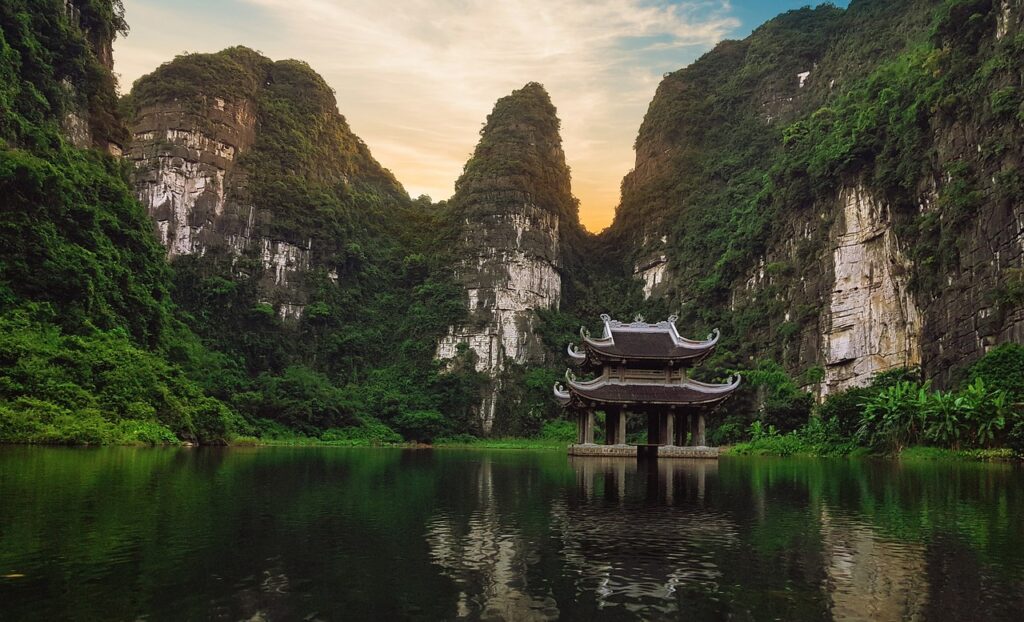
Ninh Binh has a way of getting under your skin without trying too hard. The limestone cliffs rise out of rice fields, rivers curve through the valleys in slow silver ribbons, and boat rides through Trang An or Tam Coc feel almost too quiet to be real. Hang Mua adds the grand finish, with a steep climb that rewards you with a wide view over one of the most beautiful karst landscapes in the country.
From Hanoi, this is one of the easiest escapes in Vietnam. It is about two hours away, and you can reach it by bus or train without any drama. Tam Coc makes the best base if you want to keep things simple, since that is where the transport, food, and guesthouses line up nicely for backpackers. A bicycle is the nicest way to explore once you are there, especially if you like drifting between rice fields rather than ticking off sights in a rush.
2. Ha Long Bay
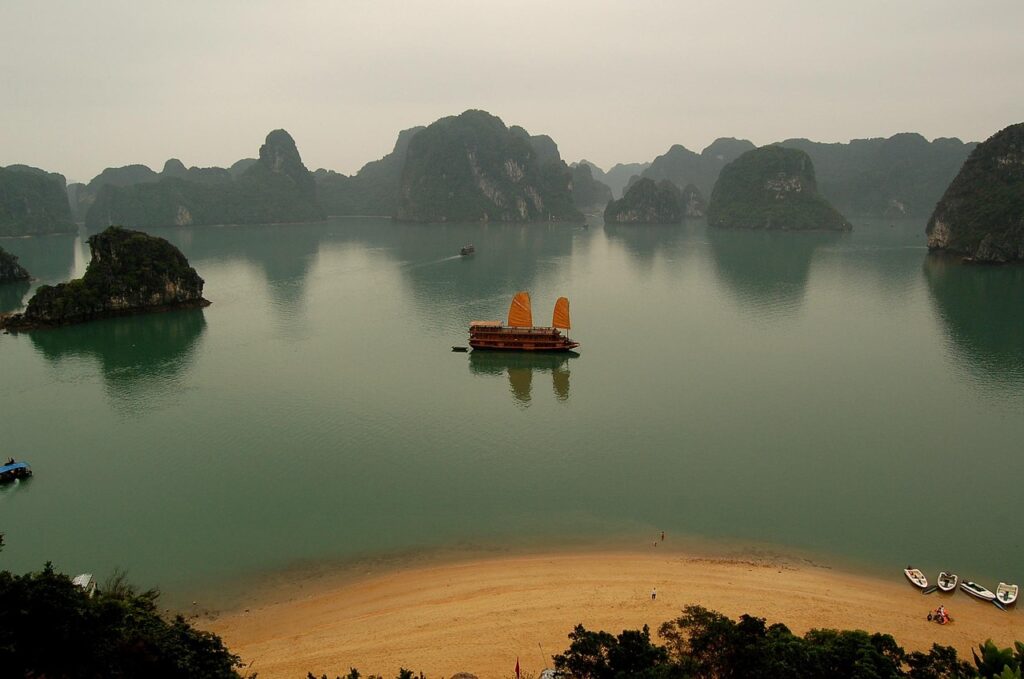
Ha Long Bay is one of the few places that really does look better than the photographs suggest. The limestone islets rise from the water like a strange stone city, and once you are out on the bay, the whole place feels suspended between calm and spectacle. Kayaking near sunset is particularly good because the water gets quieter, the boats disappear into the distance, and the bay starts to feel almost fictional.
It is also easy enough to reach from Hanoi that even a short trip makes sense. The bay is about a two-hour drive from the capital, so most travelers head out on a bus, shuttle, or cruise transfer. If you are keeping an eye on your budget, the smartest move is not to chase the fanciest cruise but to pick a simple day trip or a modest overnight boat and let the scenery do the rest.
3. Phong Nha
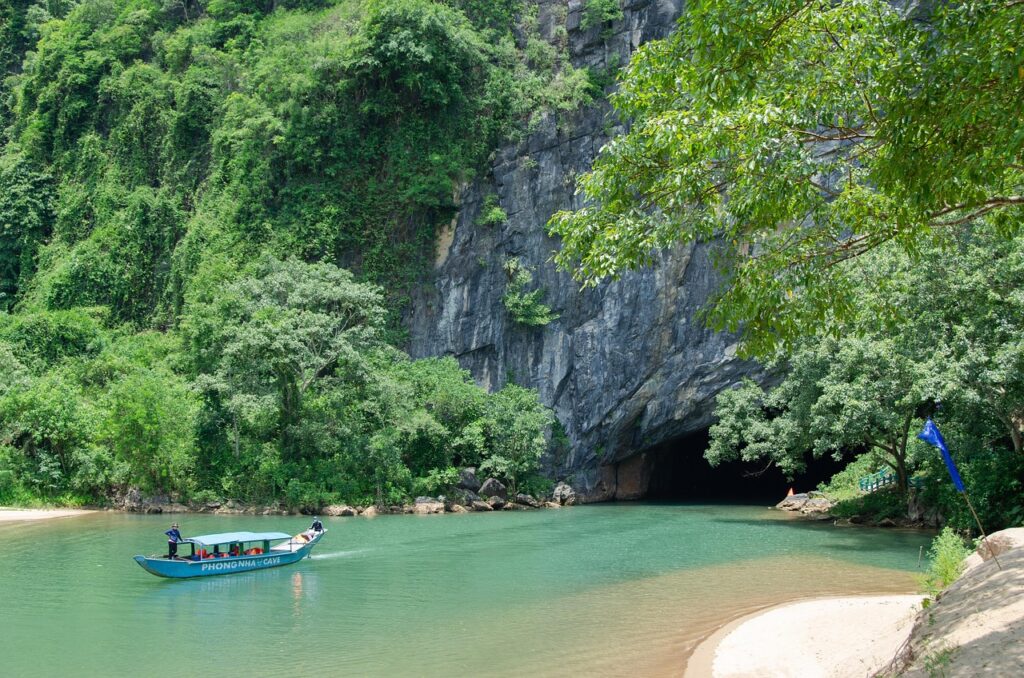
Phong Nha feels like Vietnam peeled back a layer and revealed something hidden underneath. The whole region is built around limestone mountains, huge cave systems, rivers, and jungle, so the atmosphere is naturally dramatic even before you start exploring the caves themselves. It has a kind of underground energy that is hard to find anywhere else in the country.
This is also one of the easiest places to travel on a proper backpacker budget. Overnight sleeper buses run daily from Hanoi and take about nine hours; the fare is VND 300,000, which is roughly $11.40 at current mid-market rates. If you are coming from nearby cities, there are also cheaper open buses from Hue and Da Nang, and once you reach Dong Hoi, local buses can take you on to Phong Nha for around VND 35,000, or about $1.33. The best part is that many places here are built for slow travel, so a homestay, hostel, or simple riverside guesthouse works perfectly, and bikes are often available for free or very cheaply.
4. Mui Ne
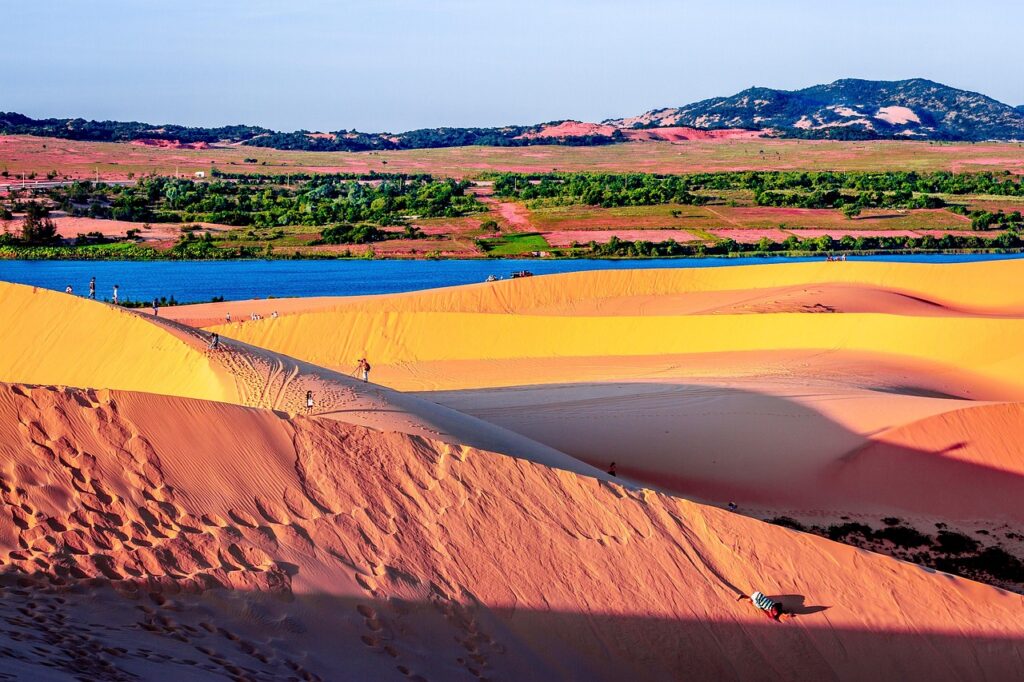
Mui Ne feels like Vietnam took a sharp turn into another planet. One stretch of coast gives you beach, wind, fishing life, and then suddenly you are standing on red or white sand dunes that look far more desert-like than tropical. The Fairy Stream and the dunes together give the whole area a strange, bright, almost dreamlike feel, especially early in the morning when the heat has not yet taken over.
Getting there from Ho Chi Minh City is easy enough for a short-budget break. Mui Ne is about four hours from the city, and you can reach the area by bus or by train to Phan Thiet, since the Reunification Express stops there. From Phan Thiet, it is only a short onward hop to Mui Ne itself. Once you are in town, a motorbike is the best way to move between the dunes, the stream, and the coast without depending on anyone else’s schedule.
5. Tra Su Cajuput Forest
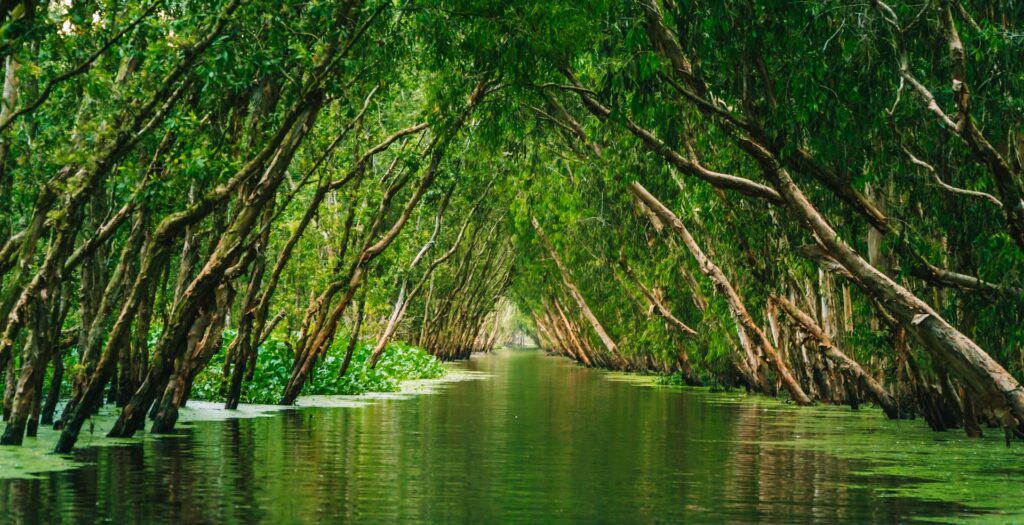
Tra Su Cajuput Forest is the quietest kind of surreal. It sits in An Giang province in the Mekong Delta and covers about 850 hectares of flooded forest, waterways, and thick green cajuput trees. A boat ride here does not feel like a sightseeing stop so much as a slow glide through a living green maze. It is especially beautiful when the water is high, because the reflections, the birdlife, and the narrow channels make everything feel softer and more dreamlike.
Chau Doc is the natural base for visiting it. If you are coming from Ho Chi Minh City, a direct bus or car takes about six hours, and from there the forest visit becomes a much more relaxed day trip or overnight stop. The best time to come is between August and November, when the high water season gives the forest its most vivid look. This is not the kind of place where you need a packed itinerary; a simple stay in Chau Doc, a boat through Tra Su, and time to watch the Delta life around you is more than enough.
Suggested Backpacker Route
If you want to connect these five in a clean north-to-south flow, the easiest route is Hanoi to Ninh Binh, then Ha Long Bay, then Phong Nha, before heading south to Ho Chi Minh City, Mui Ne, and Chau Doc for Tra Su. That sequence follows the natural travel line through Vietnam and keeps the long-distance movement manageable on buses, trains, and the occasional motorbike day.
Final Thoughts…..
The most memorable places in Vietnam are not always the loudest or the most famous. The ones that stay with you are often the places that feel slightly unreal when you first arrive: a valley that looks painted, a bay that seems carved from stone, a cave world hidden under the hills, a dune field by the sea, or a flooded forest that changes with the season. That is the kind of variety Vietnam does so well. It gives you beauty, but it also gives you surprise.
FAQ
What is the most otherworldly place in Vietnam?
Ninh Binh, Ha Long Bay, Phong Nha, Mui Ne, and Tra Su are the strongest fits for a surreal travel article. If you want the most “this does not look real” feeling, Phong Nha and Tra Su are especially strong.
Is Vietnam good for backpackers?
Yes. Vietnam works very well for backpackers because it has strong bus and train connections, open-tour routes, and plenty of places where simple guesthouses and homestays are easy to find.
How do you travel around Vietnam cheaply?
Sleeper buses, trains, local buses, bicycles, and motorbikes are the usual budget-friendly options. In many places, the journey is simple enough that you do not need to spend much to move around well.
How many days do you need for these five places?
Two weeks is a comfortable pace, but even a shorter trip can work if you focus on one region at a time. Vietnam is long, so the bigger challenge is not what to see, but how to arrange the route without rushing it.
When is the best time to visit Tra Su?
August to November is the high-water season around Chau Doc, which is the most atmospheric time to see Tra Su Cajuput Forest.